May 29, 2014 |
On May 29th 2014, we explored the stages of grief and discussed healthy ways of coping with the pain experienced by those who have been in religious life and returned to the world. We sincerely hope you benefit from this video! May God bless you.
May 11, 2014 |
Even though I don’t know what your plan is, I know you’re making beauty from these ashes.
“Broken Hallelujah” by the Afters
Broken, Blessed, and Beautiful: Isn’t this the Paschal Mystery we proclaim? Isn’t this also how the stories of our lives are written?
As we continue to celebrate this Easter season and look to embody this message of hope in daily life, the Alleluia quiets, the joy dims, and life’s daily struggles often begin again to filter and obscure the light. The promise of Spring found in the garden on Easter morning can fade and seem far off come nightfall.
As each of us knows, the landscape of life can shift dramatically, leaving us feeling lost, broken, and discouraged. The friends of Jesus knew this well as it played out before their very eyes. The Paschal Mystery has seasons, as do our lives. Personally I’ve lived these seasons through religious life, single life, marriage, and motherhood. I’ve felt the effects of these shifting sands. The benefit of time and experience has led me to the sure knowledge: God is taking me at my word, as I’ve so often prayed Psalm 51, “Create in me a new heart, O Lord, renew in me a steadfast spirit.” Each season has its own particular challenges and joys, its own blessings and brokenness. While the details of our individual stories may vary, the Author remains the same. He is in ALL the details, the brokenness and the blessing. We are reminded that life is a journey: We are ALL works in progress, perfectly imperfect, forgiven, redeemed, and loved beyond measure by a Wounded Healer.
Luke’s Gospel tells the story of the Risen Lord’s appearance to the disciples on the Road to Emmaus (Luke 24:13-35). Aren’t we like the disciples who walked the Road to Emmaus? To them, and to us, words can barely convey the heartfelt pain, loss, and grief of the past few days. But Jesus walks with these disciples and listens without judgment to their outpouring of emotion, unrecognized, just as He walks with each of us, listens to each of us. We and these disciples are exactly where we need to be.
When they arrived at Emmaus, they invited him with these words, “Stay with us, for it is nearly evening!”
And it happened while he was with them at table, he took bread, said the blessing, broke it, and gave it to them. Their eyes were opened and they recognized him, but he vanished from their sight.
He may have vanished from their sight, but most certainly not from their hearts. This encounter would provide hope and encouragement as these disciples lived out their renewed faith and Easter hope.
May each one of us invite the Risen Lord to walk with us, to stay with us. May we invite Him to open our minds and our hearts, so we may recognize Him, beautiful and broken, in our current circumstances. He will feed our spirits and fill our hearts with blessing.
By Meg
Meg left community after 8 years of serving as a professed religious sister. Discernment and transition were challenging for her, but three years after returning to the world, Meg met her future husband, Mike, with whom she now has three children. At present, Meg is “rediscovering” her love for all things creative, writing poetry, visual arts, and living a healthy lifestyle. She is grateful for the opportunity to offer encouragement to those who have left religious life.
May 4, 2014 |
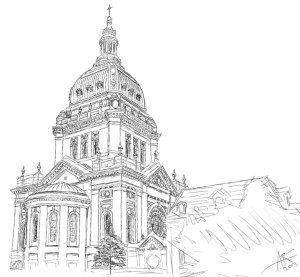 Leaving the atmosphere of religious life can feel like a big let-down. It’s easy to fall in love with that atmosphere, away from the seemingly pointless hustle and banality of our modern culture. It’s easy to think that you’ll never find the peace and tranquility you found “on the inside” again, and this fact alone drives many people who leave a community to near-madness. I know, it happened to me. But it doesn’t have to be like this.
One of the biggest problems I faced when leaving was despair. I worried about how I’d find work and where I would wind up and how I’d pay the bills. I worried that I’d failed God, or worse, that He and in particular His ministers in the Church had failed me. I wondered if He really cared about me or had a plan for me. I also felt that the world was completely against me, that worldly people would believe me to be a religious freak, and that without life in a religious organization I would be incapable of survival, in both the spiritual and material sense. Never in my life was I more wrong. What I desperately needed was a view of good things that can happen on the outside, and thankfully I got that.
I’m not advocating a foolhardy Pollyanna attitude, but I do know from first-hand experience that the world really isn’t quite so bad as that, and being a faithful and joyful Christian is possible out here. Here’s some things I discovered, in no particular order:
The world is a place filled with beauty. Beg, borrow, or steal a ride and go camping. Visit some place you’ve never been. Meet some new people. Or if you really can’t get very far, go for a long walk. Stare at the sky. Watch a squirrel closely. Listen to beautiful music. Then remember this: God made all this for you. God made you, and everything around you, because He loves you. This experience is His gift to you. This experience has been so necessary for me from time to time, because otherwise, if I’m trapped indoors or at work for a long time, I can easily assume that God isn’t close. When you’re in the convent or in a seminary it can be easy to forget to perceive beauty and God’s loving care for the world in places outside the Adoration chapel, the choir bench, or a beautiful traditional Mass. You’ll feel starved for love and beauty if you ignore the great beauty of the world around you.
Waste time with other people. It can be tempting to spend a lot of time working or praying, or working and praying, if you’re really into ora et labora. But humans are meant to be in relationship with others, and most often you’ll find that you can’t do that if you won’t just waste time with them. In a community it’s easy to take this for granted. You’re always together, doing the mundane things of life. When you’re outside, you won’t have this. So ask somebody to sit and eat with you in the break room at work. Talk about frivolous things and laugh. Even the most introverted of people can feel starved for this after leaving a community.
Remember that the world in a very real way needs you, and you will need the world. Remember that God has given you gifts, gifts that are meant to serve other people. Be prepared to be surprised at the ways your gifts get used by others. The skills that you thought would make you so perfect as a priest or a nun could very well make you an extremely effective counsellor or businessperson. Don’t be afraid to use these skills on the job and outside of it too. It will draw people to God in ways they do not expect, and He will reward you more than a human employer could do. There is little in this life that is more rewarding than that.
Finally, consider seeking new ways to pray. Without the community life of prayer you may find it very difficult to pray in the old ways. I found that after leaving seminary I could no longer pray the Office with anything other than a sense of reluctant recitation. I needed something else. So I learned lectio divina, and started taking a sketch pad with me to the parish Adoration chapel to draw what I meditated upon. God is a person who loves you and wants to spend time with you, so do not become discouraged if your old prayers seem lifeless and impossible. He will understand if things change.
By Anthony
Anthony is a thoroughly lovable former seminarian, artist, and Catholic blogger. He is not only the author of this week’s post, but also the creator of its featured image. If you’ve never seen his artwork, check out his blog at http://weaselsgonarf.blogspot.com/.
Apr 27, 2014 |

Especially during the first several months after I returned home from the convent, I spent a lot of time trying to figure out just what went wrong. Initially, I nearly exclusively blamed myself. I felt like it was my fault that I didn’t stay: I was too proud; I was too lazy; I wasn’t fast enough; I didn’t prepare myself well enough before I entered; I didn’t have enough experience dealing with people and life in general; I didn’t pray enough; I wasn’t detached enough; etc., etc., etc. I could go through a whole litany of other self-accusations that I made, but I think this small sampling gives you an idea of my state of mind.
But after a while, I came to a simple observation – one that now seems very obvious: The Sisters aren’t perfect! Perhaps it goes without saying that even the best, holiest community isn’t going to be perfect, since each community is made up of human, imperfect members. So maybe the system of formation should have been organized better, or communication could have been improved. This Sister could have been more patient; that Sister could have been more understanding. Of course, this isn’t an appropriate place for me to publicize the community’s shortcomings in detail. Nevertheless, I think it was important for me to realize that the blame (if the situation could even be considered to be one of “blame”) was not entirely mine.
During my time in the convent, one of the things I remember Mother and the Sisters emphasizing frequently was the importance of forgiveness. They especially taught us the importance of forgiving our parents for the mistakes they made in raising us. They pointed out that Mary and Joseph were the only perfect parents, and since they were not the ones who raised us, our own parents had most certainly made mistakes. However, we also have a lot to be grateful to them for. They worked hard and sacrificed much to provide for us, giving us the best they had. It took humility to accept this message, but it also brought a lot of peace.
As time has gone by since my return home, I have come to realize that I owe this same forgiveness to my former community. When I look back over the time I spent with them, I am filled with such gratitude for all they gave me, both materially and spiritually. They accepted me, they taught me, they were patient with my mistakes, they counselled me, they prayed for me, they took care of my physical needs. In innumerable ways they showed me love, affection, and support. Moreover, when I think of all the sacrifices the Sisters have made, I cannot help but be in awe of these beautiful, generous women I was blessed to live with for nine months. Yes, they had their shortcomings at times, but I really think they have more to forgive in me than I have to forgive in them. But truly, they gave me the very best they had, and for that, I am forever grateful.
So did I make mistakes during my time in the convent? Could I have done things better? Definitely.
Did the Sisters make mistakes? Were there things that they could have done better? Quite likely, yes.
Do I need to forgive both them and myself? Yes!
A few months ago, on the one-year anniversary of my entrance, I was having a hard time inside. I was blaming myself for all that had happened, feeling that if only I had tried harder, then everything would have worked out and I would still be in the convent like I was “supposed” to be. I was recording my feelings in my journal, then I paused. I offered up to Jesus everything that was in my heart, and I felt as though I and all my past was enveloped in Jesus’ Divine Mercy. At that moment I felt more peace than I had experienced in months; I knew that God had forgiven me and that everything was going to work out in His time and in His way. I just need to trust Him.
I confess that I don’t yet practice this trust perfectly. I still sometimes battle with feelings of guilt or with old hurts that arise once more in my mind. But deep down I know that God is going to use every part of this situation for good, and that everything I’ve been through is in some mysterious way part of His plan. I only need to put my hand in His pierced one, with all the confidence and love of a little child.
This childlike trust is so important. St. Peter Julian Eymard encourages us to “[a]bide in the home of the divine and fatherly goodness of God like his child who knows nothing, does nothing, makes a mess of everything, but nevertheless lives in his goodness.” I remember coming across this quote as an aspirant, and being very encouraged by it, since I so easily got discouraged by my mistakes and failings. It is not that we should deny responsibility for our sins, but rather, we must have total confidence that we are God’s little children. His tender, fatherly love and patience are so much greater than our human failings!
Jesus, I trust in You!!!
By Teresita
Apr 13, 2014 |
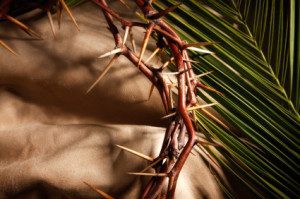
Hello to you all! I am Father David Hasser, a priest of the Diocese of Lafayette-in-Indiana. I was ordained a priest in 2007 and currently serve full-time as the Director of Vocations for our diocese. In anticipation of you reading this brief post, I wish I could have heard your personal story and written this just for you! Since I haven’t figured out how to do that yet, let’s ask the Holy Spirit be our guide today and during this celebration of Holy Week!
It is Palm Sunday, and when Jesus enters Jerusalem He intimately embraces and experiences our broken, blind but beautiful selves. He draws the closest to us ever in order to love us to the consummation of His original and enduring promise.
In the fourth Eucharistic Prayer of the Roman Missal we pray:
And you so loved the world, Father most holy, that in the fullness of time you sent your Only Begotten Son to be our Savior. Made incarnate by the Holy Spirit and born of the Virgin Mary, he shared our human nature in all things but sin. To the poor he proclaimed the good news of salvation, to prisoners, freedom, and to the sorrowful of heart, joy. To accomplish your plan, he gave himself up to death, and, rising from the dead, he destroyed death and restored life. And that we might live no longer for ourselves but for him who died and rose again for us, he sent the Holy Spirit from you, Father, as the first fruits for those who believe, so that, bringing to perfection his work in the world, he might sanctify creation to the full.
When all is said and done, this is the answer and invitation for which your heart searches! This was true 2000 years ago and still is today. You have been sanctified to the full! He has spoken His Word of salvation, freedom and joy to you! However, selfishly fallen angels may bother you with so much distraction and nonsense that your heart becomes restless again. You need to let yourself rest in Him, beauty ever ancient, ever new.
I don’t know how you originally discerned to enter the community which you eventually exited. I don’t know how you feel about that discernment and which direction you are now pursuing. If you are still looking for your next step, I’d encourage you to let the Holy Spirit move you rather than the expectations of the world. I wonder if you feel pressure to tie up your experience in the convent with a nice little ribbon bow and put it behind you. I wouldn’t be so quick to dismiss it. Use everything you’ve experienced so far to help you follow The Lord now, because He still calls out to you. He still invites you to follow Him and to be concerned for the things of the Kingdom of Heaven, maybe in a different community, maybe with a different charism, maybe in marriage and family life or maybe in private consecration.
Take the time you need to sit at the Master’s feet and rest in Him. He still calls you to come after Him and follow Him, to see where He is staying. He still calls you to communio through His intimate covenant with you. If outwardly it does not take the form of communal consecrated life, I would encourage you to keep your heart and life open to be consecrated to Him. He embraces your brokenness, blindness and beauty, and He invites you to share in the consummation of His promise. Let His message of salvation, freedom and joy be the invitation to which you next respond!
Apr 6, 2014 |
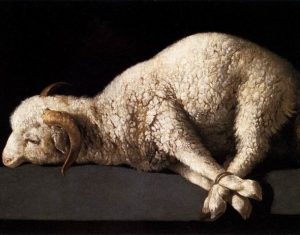
Sacrificing sacrifice. At first it sounds like a contradiction. After all, if a person who, having resolved to give up sweets for Lent, justifies eating a bowl of ice cream by saying that she is offering up the sacrifice of not avoiding desserts, it sounds silly. It sounds like the person is either looking for some kind of loophole, or maybe that whatever they decided to sacrifice in the first place just isn’t a big deal to them.
But could there be situations where having to give up the sacrifice we had anticipated making in fact costs us more interiorly than the original sacrifice would have? I think that for someone who has left the convent, this can frequently be the case.
The Song at the Scaffold, a novella written by German author Gertrud von Le Fort, is a fictionalized story using many historical facts about the Carmelite Martyrs of Compiègne. When, during the course of the French Revolution, the Civil Constitution of the Clergy commanded that all monasteries be suppressed, these brave nuns refused to obey, and ultimately were executed. Certain quotes from this novella give insight into what is really at work when a woman discerns that she is called to leave religious life.
When the French government began its persecution of priests and religious, one of the nuns in this convent, Sister Marie of the Incarnation, was filled with an ardent desire to offer her life to God in martyrdom. In her zeal, she even persuaded the other nuns to have a similar desire. Full of fervor, they made a vow to offer their lives in order to save France. However, as the events of the story unfold, Sister Marie is the only one of the nuns of the monastery who was not put to death. How devastated she must have been! The author of the story tells us:
Now, my friend, comes the real sacrifice of this great soul. We see Sister Marie of the Incarnation approaching it and disappearing into it as through a dark gate, disappearing entirely. This sacrifice has no proud name. No one admired her for it, noted it down, or even observed it. Yet she too sacrificed unto death, effacing the significance of a whole lifetime: she sacrificed sacrifice. (Von Le Fort, Gertrud. The Song at the Scaffold. New York: Sheed & Ward, 1993. Print. Pg. 69, emphasis in the original)
It is certainly no small thing to make the type of consecration that these Sisters made, and it shows Sister Marie’s generosity and nobility of spirit that she desired the grace of martyrdom so fervently. Surely it would have been a great and beautiful thing and given God much glory if Sister Marie had died a martyr’s death. However, God was calling her to make a different sacrifice; one that was even harder for her.
I doubt anyone will disagree that entering religious life, notwithstanding its great beauty, entails a good deal of sacrifice. You give up marriage, having children, being able to see and communicate with your family and friends as much as you might like, the freedom to decide your daily schedule, a career, and many other things. Daily living of religious life also brings with it many crosses, some small and some larger. Going into it, you were aware of this, and yet you embraced this new life with joy because Jesus, the one you love above all, was asking it of you. You pledged yourself completely to Him.
Then the time came, however it happened, that it became clear that it was not God’s will for you to remain in the convent. For many, if not all, it was probably a very hard time: I know it was for me! But know that in asking you to leave the convent, God was not rejecting the offering of yourself that you made to Him. Rather, God was asking of you a different sacrifice: a sacrifice that meant giving up some of the deepest desires of your heart. There was nothing wrong with your desire to give yourself completely to God through religious life: far from it! God still desires your total gift of self, but now in a different way.
Entering religious life is a visible, notable sacrifice, one that frequently draws the admiration of others. Even people who aren’t particularly religious might recognize, to some degree at least, the beauty of religious life. Not so with leaving. To an outside observer, it can perhaps look as though a woman who has left religious life is giving up, or, alternatively, that she is finally “coming to her senses” and getting back her “freedom.” They may not realize that for some, leaving the convent is a huge sacrifice: perhaps even greater than the sacrifices involved in entering in the first place.
The decision to leave the convent can indeed be a sacrifice with “no proud name, one that [n]o one admire[s], note[s] down, or even observe[s]. A sacrifice that no one knows, sees, or understands” save God alone, the loving God who sees what is hidden in the depths of your heart. He is so intimately united with you that not only does He know what you are experiencing, He has experienced it all Himself.
Earlier in The Song at the Scaffold, there is a scene where Mother Teresa, the monastery’s Prioress, is informing the Sisters of the government’s decree forbidding religious to make their vows:
Then she read the decree. You, my daughters, she said to the two novices, because of this cruel law, will offer up your perpetual vows to His Majesty by sacrificing the joy of pronouncing them solemnly. For it is not important to realize our own aims, even though they may be the most worthy, but to fulfill the will of God. Do not therefore rebel against this decree, my dear novices, but neither should you try to repress your sorrow by sheer force of will. Embrace your disappointment and it is justifiable in complete love of God, and you will be obeying the spirit of our order. You will be Carmelites in the full sense of the word at the very time that the world does not permit you to be Carmelites. (pgs. 34-35)
This quote really gets to the heart of the matter. Think about it: Why did you enter the convent in the first place? Wasn’t it because you thought that this was God’s will for you? And why did you leave? Was it not because you realized that God was asking you to do something different? In both cases, you were seeking God’s will. Without question, the desire we had or have for religious life is a good and holy desire. However, what matters ultimately is that we are striving to do God’s will. Thus, so long as we are seeking God’s will, we should be at peace.
Nevertheless, I think Mother Prioress makes a good point in saying that this disappointment we may experience is “justifiable” and that we shouldn’t “try to repress [our] sorrow by sheer force of the will.” I think it’s quite natural and normal to go through a certain grieving when we have to give up such beautiful, long-cherished desires. Yet that sorrow is part of the cross that Jesus is now asking us to bear. Each one of us, by our Baptism, is called to be a “bride of Christ.” Some Christians are called to live out this identity in a particularly striking way by means of religious life, but each one of us, without exception, is called to a spousal union with Christ. The cross is an integral part of this union. So by asking you to leave the convent, Jesus is by no means rejecting you as His spouse. Rather, He is indicating that He wants you to live out this spiritual union in a different way.
And isn’t that what it really means to be a religious, that you are seeking to conform your will entirely to God’s, even when it is difficult? After all, that is why you took the vow of obedience, or were preparing to take it, because you wanted to always be sure that you were doing the will of your Beloved. Truly, to paraphrase Mother Prioress, you will be the bride of Christ in the full sense of the word at the very time that you do not externally appear to be the bride of Christ. This “sacrificed sacrifice,” made with love, is something very beautiful and precious to God. This cross you are carrying is His gift to help you become more and more like Jesus as He prayed to His Father, “Not My will, but Yours be done.”
By Teresita


 As time has gone by since my return home, I have come to realize that I owe this same forgiveness to my former community. When I look back over the time I spent with them, I am filled with such gratitude for all they gave me, both materially and spiritually. They accepted me, they taught me, they were patient with my mistakes, they counselled me, they prayed for me, they took care of my physical needs. In innumerable ways they showed me love, affection, and support. Moreover, when I think of all the sacrifices the Sisters have made, I cannot help but be in awe of these beautiful, generous women I was blessed to live with for nine months. Yes, they had their shortcomings at times, but I really think they have more to forgive in me than I have to forgive in them. But truly, they gave me the very best they had, and for that, I am forever grateful.
 Hello to you all! I am Father David Hasser, a priest of the Diocese of Lafayette-in-Indiana. I was ordained a priest in 2007 and currently serve full-time as the Director of Vocations for our diocese. In anticipation of you reading this brief post, I wish I could have heard your personal story and written this just for you! Since I haven’t figured out how to do that yet, let’s ask the Holy Spirit be our guide today and during this celebration of Holy Week!
 Sacrificing sacrifice. At first it sounds like a contradiction. After all, if a person who, having resolved to give up sweets for Lent, justifies eating a bowl of ice cream by saying that she is offering up the sacrifice of n
Recent Comments