
Jun 21, 2017 |
 By LumenChristi.
May/June can be hard months for those of us still discerning our place in life. Weddings, ordinations, professions of vows, and entrances into religious communities are a painful reminder that another year has come without any such milestone in sight for us. We rejoice with our friends and families – do our best to put on yet another reception with love, and send yet another friend off to the convent/seminary with prayers. And sit through yet another homily about “celebrating a yes to the Lord and to one’s vocation.” And go to confession yet again for envy/self-pity/lack of trust in God.
Am I right? Or is that just me?
I read an article recently called “We said yes too” about the struggles of Catholic couples who struggle with a miscarriage or infertility. While those around them get celebrated for having many children, they often experience the implication that those who don’t have a wild 7+ member crew in tow “aren’t open to life” or “haven’t said yes.” The author goes on to explain how she and others like her have said yes – hidden yesses too deep and painful to share. Yes to giving back to God an unborn child gone too soon; yes to the surrender of hopes and dreams in the struggle with infertility; yes to allowing the gifts that God has given to be enough.
When I read her article, as a woman discerning her vocation who has hit many painful detours along the road, I identified deeply with what she said. Though my life and struggles are different, my heart leapt with bittersweet joy as every word resonated.
“I have said yes too,” I thought. Not the “yes” that gets celebrated during “vocation season.” Not the exhilarating “yes” of a vow to the Church or to another person to commit my life forever. But a silent, not-spoken-out-loud kind of yes, I had given.
The “yes” to surrender my will and my desires to God and trust him for the timing.
The “silent yes” to Him in not settling for a “celebrated yes” that I knew wasn’t His will for me.
The “yes” to being faithful in prayer even during the times where I was no longer sure who I was praying to. . .
As well as the little “yesses” too that can cost a lot at times. Yes, Lord, I will smile at my friend and share his/her joy right now even though I would rather run away and cry. . .Yes, Lord, I will bite my tongue and accept criticism in humility when a priest or leader in the church asks “haven’t I thought about my vocation?” (Believe me, I ‘ve thought about it!!! Too much maybe!”)
We, dear single, discerning ladies, have said our “yes” too. I am not arguing that these “yesses” become publically celebrated. Firstly, that would be awkward, but secondly, some yesses are meant to be hidden. As Christ lived the first 30 years of His life, so too are many of the yesses along the way to holiness, hidden – sometimes even disguised and misunderstood. Such is the brokenness of humanity and the mystery of God. But as I was reading this article and reflecting on my own “yes,” I realized how important it is to understand and treasure it myself . I think, in the future, it will help me to step back from others’ celebrations just long enough to pause, and pray. “I too have said yes, Lord and you know it. Give me the strength to keep saying yes, even when it is difficult.”
Each woman can fill in what her “yes” has been. . .
“Lord, I said “yes” to entering the religious life, following you while my family thought I was crazy. . .and then, when you sent me back to that same family, I said “yes” again just as generously, although this time it was with tears. . . “
“Lord, I followed you out of the convent and into the world, not knowing where it would lead. I’ve accepted every bump in the road and being “a fool for you” as I adjusted back to secular life . . .”
“Lord, I desire marriage and a family, but I’ve said YES to waiting for it to happen in your time and in your way. . .”
“Lord, I do not know where I’m going, but I’ve said “yes” to journeying joyfully even when I feel desolate. . .”
“Lord, being at Mass right now only brings me pain, but I say “yes” to being here with you anyway. . .”
Each of us can find a lot of these “yesses” in our lives, and I have realized it is important to remember them. I believe that for me such remembrances will be the key place where I will find the power to rejoice with those who rejoice, and to walk in faith when I would rather see.
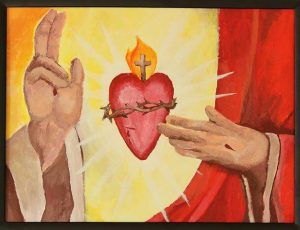
Of course, we are not alone in either the remembering or the resolving to do better. I hope it consoles you as much as it did me, to rediscover that no “yes” goes unseen by God. I think these yesses, that are the last to be thought of in this world, are the first to be remembered in His eyes, and the foremost to be felt by His heart. I think the more conscious of them that we become, the stronger we will be in remaining faithful to them.
God-willing, one day we too, will have the opportunity to make one of the “celebrated” yesses. But in the meantime, the silent ones are nonetheless real. Treasure your “yes” and allow the Lord to treasure you.
Oct 5, 2016 |
By J.E. Sigler
If you are one of those women who feels that her departure from the religious life means that God has rejected her from “the heart of the Church” and relegated her to “second-class holiness” in the world, you need to keep reading.
For a graduate course in the philosophy and theology of work, vocation, and calling, I am reading a wonderful volume called The Disciples’ Call: Theologies of Vocation from Scripture to the Present Day, edited by Father Christopher Jamison, OSB. The book is a collection of essays compiled from a conference of vocation directors and religious formators in the UK several years ago. It is a strikingly modern look at issues of critical import in calling and vocation today, and it is refreshingly frank in its discussion of “the hard questions” the Church is currently dealing with in this area.
What I find particularly interesting about this book are the two completely different, conflicting even, views of vocation that are constantly emerging in it. On the one hand, there’s the Thomistic view; on the other, the Ignatian. What’s the difference?
First, let’s review what we already know: All Christians are called to holiness. By our baptisms, we are all consecrated to the Lord and required to live out some form of poverty, chastity (though not necessarily celibacy), and obedience (to God and, if married, to our spouse; if religious, to our superior and sisters; if ordained, to our bishop; etc.). On this point, all Catholics, even Saints Thomas and Ignatius, agree. The two views of vocation emerge when we ask: In addition to this first call to holiness that we all share, is there a second, additional call to a particular vocation?
St. Thomas says that there is not, and what logically follows from this is that the religious life is one response to the universal Christian call to holiness. It is a choice each individual makes, her personal response to the call God makes to everyone. But to St. Thomas, religious life is always the surer (i.e., the easier) path to perfect charity and salvation, and so, he argues, all who feel even slightly inclined to it ought to at least try it. St. Thomas believes that, basically, nearly everyone is capable of living the religious life, and since it is the most perfect (meaning, again, the easiest!) way to fulfill the original, and only, call to holiness shared by all Christians, we ought all to give it a go.
On this view, a lack of perseverance in the religious life is truly a failure to achieve “the better way,” and to return to the world is really to return to something “less than perfection.”
However, St. Ignatius says there is a second call to a particular vocation, in addition to the universal Christian call to holiness. And so, on his view, one ought to wait for this call before embarking upon any vowed state in life. St. Ignatius agrees with St. Thomas that the religious life is objectively a better path to holiness, in the sense that it makes the attainment of holiness easier, but subjectively, the religious life may not be the better path for a particular individual. And so he concludes that all Church-approved vocations ought to be given consideration by each person.
On this view, a lack of perseverance in the religious life is not necessarily a failure to achieve “the better way,” but more likely simply a sign that one was not “built” (by God) for that life (at least not permanently). And a return to the world is not a return to something “less than perfection,” but to one’s real (permanent, God-given) vocation.
As Father Joseph Bolin, in chapter four of The Disciples’ Call, points out, the Thomistic view is the traditional view of vocation and the one most often implied in historic recruitment materials to the religious life: “God is calling you, daring you to follow Him. Are you generous enough?” (p. 74). But this view places all the onus for perseverance on the individual’s will, and as Father Bolin sees it, this is a severe weakness of the Thomistic view: True, such an approach will increase vocations to religious life, and likely capture all, or at least most, of those “true” religious vocations, i.e., people who really are called to the religious life. But it also has the effect of capturing a lot of people who are not suited to the religious life by guilting or inspiring them to embark upon “the (objectively) surer path to perfect charity and salvation,” even if that path is not subjectively the surer one for them. The consequences of these “false positives” are potentially very dangerous, and well known to us.
“The Thomistic approach… will cause people who consider religious life, perhaps enter for a time, and then cease pursuing this vocation to have a negative self-image, perhaps to give up Christian life altogether, or at any rate to be satisfied with mediocrity in living the Christian vocation. For, if the will to embrace and follow the religious life as a way to love God is all that is necessary for a vocation, then leaving the religious life would seem to indicate a lack of love, an unreadiness to serve God without reservation. This lends itself to the practical conclusion that if one is not capable of attaining holiness in the easier and better way, there is really no hope of becoming holy in the lay state” (p. 80).
Of course, Father Bolin argues that this conclusion is patently false.
Many of us are familiar with these two views of vocation. But what, at least in my experience, many people do not realize is that we often conflate the two perspectives. And this, I believe, is where vocational distress begins.
Think about it: You probably felt that you had a second call to the religious life, an Ignatian assumption, as St. Thomas says there is only one call. But when you returned to the world, you may have felt, as many women do, that you somehow “failed” in or had been rejected from “the perfect way” and so are “less than,” a distinctly Thomistic assumption, as Ignatius does not hang the perseverance in religious life entirely on the individual’s will. On the one hand, you may have assumed that people are either built for the religious life, or they are not (Ignatian), and that those who are built for it love more, or are destined for more holiness (Thomistic).
But to collapse these two views is both wrong and harmful. Remember: St. Ignatius requires a second call, but he also strongly emphasizes the subjectiveness of the call to holiness, i.e., that there is a better path to holiness for each individual person, and this path is not necessarily the religious life. On Ignatius’ view, some people are built for religious life, and others are not, and both are best suited to attain holiness in the ways God made them for. St. Thomas, on the other hand, emphasizes the objective superiority of the religious life, for all or at least most, but his view also entails that the choice of religious life is just one way to respond to the universal Christian call to holiness that we all share. Whether a person responds to that call by committing to the evangelical counsels, marriage vows, or whatever else, she’s still got the same call everybody else does: “The difference between those entering consecrated life and those who do not is not a difference in the degree of their love, but a difference in the ways they choose to grow in love” (Frather Bolin, p. 81).
Personally, I am an Ignatian when it comes to discernment. Whatever you are, I hope that you can see how both views provide consolation for the woman who has returned to the world, provided you keep them straight: Either you have a second call to something other than religious life, and following that call is the best possible way for you to attain holiness. Or else you have the exact same call as religious sisters, and the degree of holiness you attain out here in the world will depend entirely upon how hard you work at it!
Aug 11, 2016 |
By AfterEpiphany.
“Do not cling to me,” (c.f. Jn 20:17
The post-Resurrection encounter between Jesus and Mary of Magdala is one of my very favourite Scriptural accounts. Yet it poses a gentle challenge that I found very helpful upon returning to the world, if a little hard to hear, at first.
I’d invite you to step into Mary’s shoes for a moment. That moment of recognition at being called by name would obviously bring an unspeakable joy, an excitement, an awe. But I think there might also perhaps have been a sense that “now that He’s back, things will be just like they used to be…” Perhaps Mary was clinging to a set notion of the pre-Resurrection Jesus? She had to let go, to allow Him to return to His Father.
The words “do not cling to me” speak to me, also, as I ponder this account. I had certain ideas about my relationship with the Lord when I was in the convent. When I returned to the world, it was tempting to cling to these ideas. They were comforting, familiar. But they were my own ideas about Jesus – they weren’t actually Jesus.
How is Jesus revealing Himself to me in the present moment? Who am I before Jesus, now? How do we relate? Is my relationship with Him stagnating, because I am clinging to those old ideas? Perhaps it’s time for me to invite Him back in, to allow Him to love me, to grow in love for Him… a different kind of love…
Q: What is “From My Inner Cell” all about?
A:Â From My Inner Cell: Conversations with God for convent-leavers
Aug 5, 2016 |
By Amata
Some years ago, I was talking with a dear friend. She and her husband had been struggling to conceive, and she was sharing with me how painful this experience was. However, she said, if this was something that she needed to go through, to suffer, so that she could become holy, then so be it. She said she’d rather go to Heaven than have a baby, if that was what it took to get to heaven, if this experience of infertility was purifying her and sanctifying her through her pain.
Her words that day stuck with me. She’d rather go to heaven than have a baby, if that was what it took. I continued to ponder and to be amazed by those words. I grew up in a large family, where babies are seen as one of the greatest gifts God can give, and now I feel myself drawn to marriage. I love babies, and I could see the pain in my friend’s eyes as she spoke. And yet, she would rather go to Heaven than have a baby. Her desire for God, for sanctity, and for doing God’s will was greater than her desire to have a child of her own.
St. Ignatius talks about the indifference that is necessary for sanctity. He is not talking about a world in which we have absolutely no desires. Rather, he is talking about a world where our desires match God’s desires for us, where we make decisions based on God’s will, and where we subject our own desires to God’s desires for us. When I first heard of this idea, I struggled to understand what it really means. What does this holy indifference really look like in today’s world?
I think I saw it in my friend’s eyes that day. She’d rather go to Heaven. She was placing her own desires at the feet of God and accepting His will for her as necessary for her own salvation. And even as she spoke, there was a joy behind the pain. Nobody was twisting her arm making her accept the will of God. Rather, mingled with her tears there was a genuine desire for Heaven and an excitement at the thought of seeing God Himself face to face for all eternity. She’d rather go to Heaven.
I think that, in many ways, the greatest sufferings in our life come from a lack of this holy difference. If we are really
able to say “blessed be God” no matter what comes, if we can learn to let go of something because it does not correspond with God’s will for us at this moment, then I think our lives would be so much easier. Easier said than done, I know.
As I continue to ponder my own journey of discernment of religious life, through living active life and nearly joining a cloistered community, these words have stuck with me. Would I like to still be in my religious community, joking that I’ll be buried out back? Yes. But, I’d rather go to Heaven, and if living in the world as a layperson is my path to sanctity, then so be it. Would I rather have had that cloistered vocation that I explored? Somedays, yes. But, I’d rather go to Heaven.
And now, as I discern married life and am surrounded by friends and siblings with families of their own, it is easy to be frustrated. I never imagined that at this point in my life I would still be so… unsettled. Would I absolutely love to have a family of my own right now, or at least a serious boyfriend, so that I can be closer to the vocation God seems to have in mind for me? Oh, yes, by all means!
But, I’d rather go to Heaven.
Jun 28, 2016 |
By AfterEpiphany.
I think Joseph is quite a comfort to the average convent/seminary leaver. I’m not talking St. Joseph the Foster-Father of Jesus… he’s awesome, yes. But right now I’m talking about the owner of a certain Technicolour Dreamcoat.
We all recall that he was sold into slavery by his brothers who were offended that he seemed to think himself better than he really was. He was thrown into prison because he turned out to be better than the Pharoah’s wife thought he was. And if the irony of all of that wasn’t enough, throw in the fact that he was accompanied in his unjust fate by two others who deserved their punishment!
Unlike the Event for which this was a pre-figurement, where one of the thieves asked to be remembered by the Innocent One when He entered His Kingdom, in this case rather it was the innocent one who asked to be remembered:
“Only think of me when all is well with you, and please do me the great favor of mentioning me to Pharoah, to get me out of this place.” (Gen 40:14)
This request was made of the “chief cupbearer,” who promptly forgot all about Joseph when he left the prison. Joseph remained in prison for another two years.
What on earth went through Joseph’s mind and emotions over that two year period? What do you think he prayed about during that time? Did he give up hope that he would be remembered and freed? Was there some point at which he decided there was no way he was ever getting out of there, and was that belief something that sparked off the grief cycle for Joseph? Do you think He got angry at God? Perhaps he felt as though he had been forsaken? I wonder if that first little while after leaving the convent/seminary isn’t just a little bit like Joseph’s time in prison?
In the story of Joseph, we cannot help but notice that he did not return to Canaan. Yet as the adventure played out, albeit in a place other than that which Joseph had planned, it is worth remembering that God provided him with the means to put things right with his brothers, to be reunited with his father and to live a full and happy life.
Apr 21, 2016 |
Here it is, folks!
Bonus: blooper reel and out-takes at the end!


 The “silent yes” to Him in not settling for a “celebrated yes” that I knew wasn’t His will for me.
 Of course, we are not alone in either the remembering or the resolving to do better. I hope it consoles you as much as it did me, to rediscover that no “yes” goes unseen by God. I think these yesses, that are the last to be thought of in this world, are the first to be remembered in His eyes, and the foremost to be felt by His heart. I think the more conscious of them that we become, the stronger we will be in remaining faithful to them.
 individual makes, her personal response to the call God makes to everyone. But to St. Thomas, religious life is always the surer (i.e., the easier) path to perfect charity and salvation, and so, he argues, all who feel even slightly inclined to it ought to at least try it. St. Thomas believes that, basically, nearly everyone is capable of living the religious life, and since it is the most perfect (meaning, again, the easiest!) way to fulfill the original, and only, call to holiness shared by all Christians, we ought all to give it a go.
 view is the traditional view of vocation and the one most often implied in historic recruitment materials to the religious life: “God is calling you, daring you to follow Him. Are you generous enough?” (p. 74). But this view places all the onus for perseverance on the individual’s will, and as Father Bolin sees it, this is a severe weakness of the Thomistic view: True, such an approach will increase vocations to religious life, and likely capture all, or at least most, of those “true” religious vocations, i.e., people who really are called to the religious life. But it also has the effect of capturing a lot of people who are not suited to the religious life by guilting or inspiring them to embark upon “the (objectively) surer path to perfect charity and salvation,” even if that path is not subjectively the surer one for them. The consequences of these “false positives” are potentially very dangerous, and well known to us.
 better path to holiness for each individual person, and this path is not necessarily the religious life. On Ignatius’ view, some people are built for religious life, and others are not, and both are best suited to attain holiness in the ways God made them for. St. Thomas, on the other hand, emphasizes the objective superiority of the religious life, for all or at least most, but his view also entails that the choice of religious life is just one way to respond to the universal Christian call to holiness that we all share. Whether a person responds to that call by committing to the evangelical counsels, marriage vows, or whatever else, she’s still got the same call everybody else does: “The difference between those entering consecrated life and those who do not is not a difference in the degree of their love, but a difference in the ways they choose to grow in love” (Frather Bolin, p. 81).
 By Amata
 I think that, in many ways, the greatest sufferings in our life come from a lack of this holy difference. If we are really
Recent Comments