Dec 11, 2015 |
 By Guadalupana.
I have a confession to make. My name is not really “Guadalupana.” However, Our Lady of Guadalupe played a role in my name in religious life and I am going to pray that she guides me in this blog post; to share what is on my heart!
Near the end of postulancy, I had a “home visit”. During this visit, my beautiful maternal grandmother whom I was very close to gave me a book about Our Lady of Guadalupe titled “Am I Not Here?” This encounter and book are special to me. It was the last time I saw my grandmother alive; she ended up passing away during my first year of novitiate. As my grandmother pointed me to Mary, Mary would want to point us to Jesus. Am I not here? This is true for Our Mother but also for her Son, Jesus. He is here with us and wants us to more deeply know of His love and for us to receive it.
God is Love. We hear this phrase often. I’ve said it often. Yet, here is confession: A part of me struggled with this even though I’ve had many graces that should lead me to do otherwise. I won’t go into the details why, but off & on during the past few months when hearing Gospel passages where it sounded as if Jesus was “yelling” at the Pharisees, fear & worry would surface and a question which was semi-hiding in my heart would come out. How would Jesus treat me? Would He have treated me, for instance, in the same manner as a sister who at times had lost her temper at me over little things? Were they little things? Is God displeased at me? Does He look at me like His beloved daughter and treat me gently or does He look at every mistake I make waiting to “pounce”?! This uncertainty that was in my heart would cause me to lose my peace when “bad things happen” or when someone would speak harshly or when hearing certain Gospel passages. Uncertainty can lead to a cycle of questioning God’s love, being hard on self, & being unforgiving towards others when it arises.
A few weeks ago, I had a meeting with a priest for spiritual direction that had a really good impact on me as well as a meditation and talk on the topic of “Forgiveness of Self.” This brought greater clarity, peace, and healing to my soul. This post would be too long to share everything (and it is probably too long now!), but here are five main points from this night that may be of help to anyone else who has been in a similar situation (religious life or not) or who has had similar questions lingering in their hearts.
- I tried, I desire to love & serve the Lord, and I need to enjoy His Company.
The priest told me how he had suffered through novitiate. Novitiate is a drastic shift. We are not sure what to do. He reassured me that I had given it a sincere try. He said that I love God a lot (I do?!) & God appreciates it (yay!). He told me that in my desire to love & serve God, be careful not to get over analytical. Drop it when I start to worry & analyze. Worrying is a cross that is self-afflicted. Enjoy God’s company. I’m not a Pharisee. I need to distinguish shortcomings from hypocrisy; which entails not trying & only being interested in the facade. Let God love me. I cannot earn God ‘s love but I don’t have to; He just loves me.
- I am not closing the door on God & He will make something beautiful out of all of this.
The priest assured me that by closing the door to religious life, I am not closing it on God. Rather, God has closed the door on religious life for me. (In the past, being told that would have bothered me…I would have felt rejected by God. However, now it brought me comfort. God has not rejected me. God knows what’s best for me. As I typed this, I recalled something a religious sister shared with me after I had told her that I was not called to make first vows. This sister told me that while she was before the Blessed Sacrament & telling the Lord that she didn’t understand why I wasn’t called to vows, she heard the Lord say: “I know better. I will take care of her.”) The priest also told me that I had a rough journey and it’s a mystery why God allowed it, but He would only allow it if He can draw something good & beautiful from it and it was not a punishment. Confide in God’s mercy & grace. He is a loving God.
- Have a healthy social life & be open to God’s will, which may be to marriage.
Have the freedom to enjoy self without worry. Also, we love Jesus by doing His will, such as getting married. If it’s not His will, He’ll let me know. God willed me to exist and He is involved with the dating process because He is involved in my life.
- Let go of shame and welcome “DTC”
In Luke 5:1 (the calling of St. Peter), St. Peter told Jesus to depart from him because he’s a sinful man. (Peter was hard on himself. Jesus instead told Peter to not be afraid and that he’ll be catching men. Jesus held Peter still. Peter could have given into great shame. Shame: “should have mastered everything”. We tell ourselves that we should have been better by now, etc. Rather, I belong to the “deserving of tenderness club” (DTC)! I deserve to be affirmed and to affirm self. Self-inflicting torture can take up room where the Lord wants to dwell. Don’t go to bed without forgiving yourself. Wrap yourself in your Father’s arms and let the Lord affirm you. Let Him show you how He sees you.
- Accept God’s mercy and love.
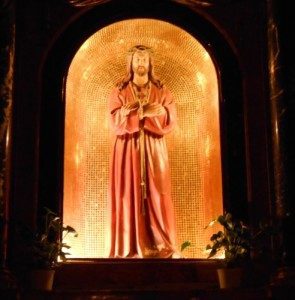
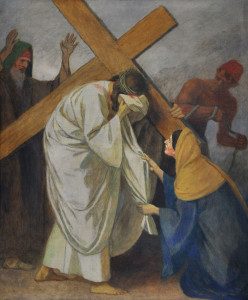
One way to accept God’s mercy is to accept Him looking at you. Look at Jesus crucified & take the time to let Him look at you, to accept the gift of Himself on the cross. He loves you by giving Himself to you. It’s done. You’ve been forgiven. We can use a crisis to reaffirm our identity: I’m a beloved daughter of God; You gave Your life for me. It’s an opportunity to go deeper through the struggle. There may be lies such as “I’m not worthy to be loved” or “there are so many things I didn’t do well.” Reality: You are a beloved daughter of God and He loves you. St. Therese of Lisieux offered herself to the love of God, not to His justice. God has a lot of love to give but not enough to receive it. St. Therese’s Little Way, confidence in God, acceptance of His love, being His child. She accepted to be loved. Receive His love.
We can always go deeper into the reality of God’s love for us. “Am I Not Here?” Yes, Mary is with us. Yes, God is with us. Yes, all those in Heaven are with us. They want us to know that we are not alone in our struggles AND that God wants to set us free from the worries that stop us from enjoying His Company and to be at peace. “…the thing that disturbs you, the thing that afflict you, is nothing. Do not let your countenance, your heart be disturbed. Do not fear… Am I not here, I who am your Mother? Are you not under my shadow and protection? Am I not the source of your joy? Are you not in the hollow of my mantle, in the crossing of my arms? Do you need anything more? Let nothing else worry you, disturb you…” – Our Lady of Guadalupe to St. Juan Diego (1531)
Dec 7, 2015 |
By Josepha.
The Immaculate Conception was a big feast day in the convent I had entered. We had our letter-writing day for all of our Christmas cards on that day and it was a mad race to try and write to every person that we did not often have the chance to write the rest of the year. There was Christmas music on and different Christmas treats around in the midst of all the Advent preparations. I always enjoyed this day in the convent, and I found it difficult the first year I was home again during Advent and had to write Christmas cards whenever I chose to make time for them. There is something to be said for the beautiful way feast days are often celebrated in the convent.
Mary was someone who was difficult for me to relate to and understand prior to entering Religious Life. I did not have much of a devotion to Mary, and I often prayed the rosary half-heartedly because I felt it was a “good” thing to do. During my time in the convent, my devotion and love for Mary grew and grew. I am grateful for that gift that Religious Life gave to me.
After returning home, I found I couldn’t even speak with Jesus in prayer most of the time because I felt so completely rejected by Him. I had laid down my life and made my vows only to discern Him asking me to leave a year later. Mary was the one solace I had in leaving because I felt like she could understand my pain of feeling so separated from Jesus while still knowing in my mind that He did love me and want what was eternally best for my soul. I’m grateful for her taking my hand and leading me through the darkness of leaving Religious Life. On days when I couldn’t bear to spend a minute in prayer, I was able to say a prayer to Our Lady and find some peace with her.
Nov 27, 2015 |
By Ignatia.
For three years before entering the convent, I had worn a chapel veil at Mass. As a child, I’d been attracted to the beauty of the veils themselves, and in college I became exposed to the theological reasoning behind the practice, which cinched the deal for me. I bought my first veil (a real mantilla!) in Madrid at World Youth Day and I’d worn one ever since. I loved veiling and adhered to it religiously (pun very much intended!), and I eagerly hoped and prayed that the day would come where I would wear a veil not just in the chapel, but “full time” as a religious sister.
When I finally heard and accepted God’s concrete invitation to join a religious order, I was ecstatic. Of course, there were difficulties with the decision to enter: Shortly after requesting entrance, I was offered several full scholarships for graduate study at prestigious universities, the Order asked me to do an additional “optional” year of formation as a prepostulant at a house in a foreign country, I needed to change my lifelong vegetarian diet in order to be able to eat “from the common table.” And I was asked not to wear a chapel veil as a prepostulant. While this last difficulty was not the hardest of those decisions (after all, I had the prospect of soon becoming a fully-habited religious sister in front of me!), I will admit that I struggled with it. It was one of the first tests of obedience that the Lord asked of me in religious life.
I grew a lot over the course of prepostulancy and during my two months as a postulant. And when I returned home from the convent, while it felt natural for me to continue veiling in the presence of the Blessed Sacrament, it was with a very different mindset than when I’d begun the practice.
Thus, a week after leaving the convent, I found myself at daily Mass trying to push aside my anger with myself, my anger with some of my former Sisters, my feelings of deep vulnerability, abandonment, and loss, and basically just an overwhelming amount of inner turmoil. While I was kneeling in thanksgiving after Mass was over, an older gentleman approached me. “It’s so nice to see a young woman with her head covered at Mass! The Lord is granting you many graces for wearing that,” he said to me. Whereas before, this comment would have spoken to my pride and made me feel flattered (“I know! I’m such a good Catholic!”), now I just felt irrationally angry. I wanted to yell at him that “With that mindset, the Lord would probably be granting me far more graces if I were still in the convent! You don’t know anything!” Noting my anger and resolving to take it to prayer to examine it later, I responded instead with a weary smile and as much restraint as I could muster: “I hope the Lord grants me graces regardless of what I’m wearing on my head.”
During a personal Holy Hour a little later, I returned to that interaction. “The Lord is granting you many graces [for wearing a veil]”, I quoted in my journal. “Well,” I continued writing, “I personally hope the Lord is granting me graces because He loves me and because I love Him and try to follow His will, not because of some piece of lace on my head. In fact, I have a feeling that I received more graces in not wearing a veil as a prepostulant than I do now in wearing a veil as a laywoman, since the former was done in obedience.”
“But God doesn’t love me because I veil or because I pray or because I entered the convent. He loves me because that is Who He is. And because Who He is doesn’t change, His love for me will never change. His love for me is not dependent upon what I do or don’t do, on what I wear or don’t wear. I am loved no matter what because He is love and He loves me.”
Until that moment, I’d never realized or admitted to myself that I’d been trying to earn God’s love, but that’s what I’d been trying to do. I didn’t feel worthy of the Lord’s love, so instead of accepting that I am unworthy and He loves me
anyways, I tried to make it “worth it” for Him to love me. But somehow, in that place of brokenness, of realizing just how weak and sinful I am and how insufficient all my “great big efforts” to make myself “worthy” of being loved by God actually are, the Lord spoke Love into my heart. “Oh, little one,” I heard Him say, “My dear, sweet little one, you don’t need to try to win My love, you don’t have to earn it. You can’t earn it. My Heart is already yours and nothing you do will ever alter that.”
I am eternally grateful to that older gentleman for helping open my eyes to the reality of the Lord’s love for me and for helping open my heart to His healing. His comment led to a moment of deep insight and consolation that has been helping me navigate the stormy waters of these first few months of post-convent life.
I still wear a veil at Mass. I continue to love the tradition, and it helps remind me that I am both beautiful and His bride, even if I’m not a religious sister. But I now veil with more humility and less rigidity because I realize that it won’t “earn” me anything. It’s one of the many precious insights that the Lord has so graciously granted me since leaving my former community.
“You have ravished my heart, my sister, my bride;
You have ravished my heart with one glance of your eyes.”
(Song of Songs 4:9)
Oct 30, 2015 |
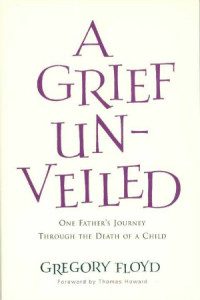
A Grief Unveiled by Gregory Floyd
reviewed by Grace.
“There is a difference between early grief and later grief. Early grief is acute; later grief is more diffuse. Early grief smacks, stings, punches; later grief is more gentle. Early grief is a stalker; later grief is a companion. Early grief is crags and crevices; later grief is furrows softened by the passage of time” (Gregory Floyd).
Each of us experiences this mysterious phenomenon of grief in our lives, to which I am certainly no stranger. In the early months after leaving the community I had discerned with, my mom, who spent many years in the field of social work, gently said to me, “I think you’re grieving. You need to let yourself grieve. To cry. To work through what has taken place. You lived a very beautiful and yet difficult life and it is a loss for you.” To which I responded, “No, I’m not. I’m fine. The Lord called me to leave and there is grace for me to transition. I’ll get through this.” Little did I realize that while there was a tremendous amount of grace, that I was in fact certainly going through the grief process, but didn’t want to admit it.
A dear friend of mine passed away during my canonical year and as I was trying to make sense of it all, A Grief Unveiled was given to me. In my opinion, it is one of the best written works on grief available as it articulates the rawness of feelings and emotions one can experience as well as a magnificent integration of our Catholic beliefs to anchor and carry us through the storm of loss, whatever form it may take. As I read it again for the second time in the different context I now find myself in, I receive new insight to what often lies unable to be articulated by my heart. How grateful I am to the Floyds for writing their journey of the Cross so that others might be led to the glory of the Resurrection, the fulfillment of Calvary.
From the back cover of A Grief Unveiled: One Father’s Journey Through the Death of a Child
A candid account of sudden grief and recovery
It was a lazy afternoon in April, 1995, when the unthinkable happened. Six-year-old John-Paul, the youngest son of Gregory and Maureen Floyd, was playing in the front lawn with his brother David when both were struck by an out-of-control car. Rushed to separate hospitals, David survived with bruises, but John-Paul died instantly. In A Grief Unveiled, Floyd reveals with painstaking candor his journey through the sorrow of losing a young child – dealing not only with his own broken heart, but also with the struggle to reconstruct his role as husband, father and protector.
Sep 17, 2015 |
By Emily.
“Come, let us return to the Lord, for it is He who has rent, but He will heal us; He has struck us, but He will bind our wounds.” (Hosea 6:1)
We know by faith that God has a plan for our lives and that nothing happens unless God wills or permits it. But for so long after I left the convent, I had a hard time having the faith and the humility to accept and believe that this goes also for my weaknesses and mistakes too. In many ways, my time in the convent was very beautiful and full of many graces, but I cannot deny that I also experienced a lot of emotional and spiritual pain while I was there, as well as after I left. For a long time I felt much guilt and shame. I was convinced that it was my personal incompetence that was the sole reason that everything happened the way it did. I felt like I had messed up God’s plan for my life. I knew He’d draw good out of it, somehow, but I struggled to forgive myself for messing up the way my life was “supposed to” go.
Did I make a mistake in entering the convent? Was I supposed to have followed a different path but I was just too blind to see it? Or was perhaps this indeed God’s plan for me, but through my own fault I ruined it? These questions tormented me.
A few months ago, in a flash of insight that I knew could only have come from the Holy Spirit, God gave me the grace to understand my past and especially my time in the convent in view of His love, mercy, and providence, and most especially, His desire to bring me deep inner healing.
I realized that everything from my past, particularly my experiences in the convent, was all part of God’s plan to bring me where I am today. He knew that my time in the convent would bring to the surface and open many of the wounds that I carried inside, many of which I wasn’t aware of previously. I realized that as painful as it was sometimes, it was necessary so that Jesus could begin the healing process in me. I think that this was a big part of why He called me to that particular community, as well as back out to the world: precisely because He wants to heal me!
One comparison I use to try to understand this is to think of God as being like a surgeon. A surgeon’s desire is to heal his patient, but in order to heal, the surgeon must make an incision so that he can access the underlying problem that the patient has. That is to say, the surgeon must wound the patient in order to heal him. As the prophet Hosea writes, “Come, let us return to the Lord, for it is He who has rent, but He will heal us; He has struck us, but He will bind our wounds.” (6:1)
God does not heal us in spite of the crosses we bear. He heals us precisely by means of those crosses. Even when it feels like the crosses we’re carrying are our fault alone. They say hindsight is 20-20, and looking back I can see much more clearly both my shortcomings as well as those of my former community. It’s a constant temptation to beat myself up for not seeing all that ahead of time – but looking at it from deeper perspective, I truly see God’s providence at work even there. God’s plan isn’t conditional on our perfection. As St. Paul says, “God works all things together for good for those who love Him.” All things – both the positive and the negative. Nothing, absolutely nothing, in our lives takes Him by surprise or leaves Him scrambling to figure out how to fix it. What at first seemed to me like “plan B” for my life was really God’s “plan A” after all. He knew beforehand all about everything that would happen and has led me through it all, both good and bad. He knew about all of it, and it was all part of His plan from the beginning to heal me and bring me closer to Himself, because it was necessary for the negative things to come to light so that He, the Divine Physician, could begin the process of healing me. He permitted the imperfections of it all because it was all part of His plan that is leading to something so beautiful. One thing in particular I’ve learned these past several months is that God is indeed guiding me and healing me, in His own time and in His own beautiful way, even, and perhaps especially, when He does it differently than I would’ve expected. But I see now how even our imperfections are incorporated by God into the tapestry of His loving plan for each one of us. May God fill your heart with His healing and peace!
Sep 3, 2015 |
aka the Should Syndrome.
By Grace.
Transition TimeLion
noun: The anxious/nagging/unsettled/perturbed feeling that arises when one experiences tension between current reality and where they think they ought to be
synonym: “Should Syndrome”, examples may include:
I should be ready for a job. I should be ready to date. I should be ready to go out with friends on a Friday night. I should be able to pray like I used to. I should be able to stop crying. I should be ok with shopping in stores or being out in large crowds.
Taming the Transition Time(line)lion and, consequently, Should Syndrome is no small feat. Often it rears its roaring head or utters its almost inaudible growls at the most inopportune times. This concept is in no way specific to the unique experience of transitioning from religious life to the lay state. Those who are going through the process of grieving a loved one’s death experience this, stay at home moms as the size of their family increases, those who struggle with infertility, professionals changing jobs or careers; all experience this phenomenon at some point in their life. The focus of this little reflection, however, will be directed toward the specifics of what you and I have been uniquely called to – continuing our relationship with God after discerning a different path to Heaven outside of religious life.
Three years later, with some time to process and a bit of distance, I offer these thoughts. In the early days after leaving the community I discerned with, almost every moment was a reminder that I wasn’t there. Not a day went by that I didn’t think of the sisters, that I didn’t have dreams that I was supposed to be in habit and wasn’t and that while there was great freedom without an horarium, being devoid of any schedule was ultimately offsetting. The only prayer I could utter for months was simply the name of Jesus. The mere sight of a Breviary broke my heart in two and the Transition TimeLion growled, “It’s been 6 months already, I should feel more stable than I do. I need to re-enter the workforce, but I feel incapable of entering the previous career I had. Surely, I should be ready by now.”
The interesting thing I found with the Transition TimeLion is that the expectations I felt pressured by or the things I felt I ought to be doing were not coming from anyone other than myself. I was the one disregarding the need of my heart that simply called for time and space to transition. The roaring and growling were insecurities that arose because I felt uncomfortable in this place of utter vulnerability that I had never encountered before. I wanted out! I wanted the fog to lift and the heartache and the unknowing to be over. However, this was an invitation to something deeper, to a new stage of my relationship with the Lord – to suffer being patient with myself. To trust, truly trust, that He has my greatest good at heart. I often am not able to see it in the moment, but those grueling, agonizing moments are the “stuff” of redemption. So are the moments of great joy and peace that follow.
Many times in the last three years, the TimeLion has appeared and reappeared in my life. So, what does one do in these moments and how does one tame this creature? I offer only the aids I have come to know through personal experience. You perhaps also have insightful wisdom which I welcome you to share for the Timelion can be tamed in a multitude of ways.
- Laugh. Yes, even if it is a forced laugh. I envision Beast from Beauty and the Beast when he is getting gussied up for his dinner with Belle and dons ridiculous curls with bows as one of the possible hair do’s. Puts the whole roaring lion of the interior life into perspective.
- Enter into beauty. Beauty allows us to encounter new aspects of our Creator that surprise us and almost immediately lift the soul, in delight, out of itself. Beauty will look different for each of us (and our Creator knows that). For some it will be a majestic sunset over the mountains, for others the smell of fresh baked chocolate chip cookies out of the oven, the giggle of a niece or nephew or a blossoming wild flower we unexpectedly encounter on our path. Whatever it is, He created it for you.
- Recreate. I apologize if even the sight of this term we encountered in religious life makes you cringe, but stick with me. Engage in activities you loved doing before you entered religious life and do them just for the sake of doing them (and because you can). Paint, play your musical instrument, go for a run, canoe, drink a cup of coffee while you’re getting ready in the morning. Utilize some of those new gifts/skills you learned in religious life for fun now. I learned to sew and now thoroughly enjoy making all of my niece’s gifts by hand.
- Trust. God has never been, is not now and will never be in crisis about your vocation. All of what He allows us to experience in this transition is part of Plan A. There isn’t a Plan B. It is not the case that we discerned incorrectly or failed. In fact, this discernment was actually successful despite the possible feeling that the Lord duped us (and perhaps, like me, you let yourself be duped). He loves us infinitely and has given us a particular grace specific to only those who transition from religious life to lay life. There will be a time and a place when He reveals the details of our vocation to us, but for now, He is simply calling each of us more closely to Himself.
So, when the Transition TimeLion begins to roar, know that you are already infinitely loved by the Triune God who loved you into existence and desires to be in relationship with you regardless of how quickly you get back on your feet, what you do or don’t do, achieve or don’t achieve. Let us rest a bit, be gentle with our hearts and take our time discovering who we are in the eyes of the Father.

 ‘s love but I don’t have to; He just loves me.
 By Josepha.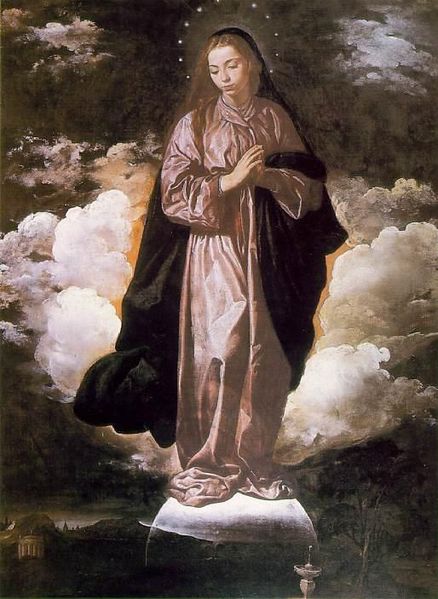

 anger with some of my former Sisters, my feelings of deep vulnerability, abandonment, and loss, and basically just an overwhelming amount of inner turmoil. While I was kneeling in thanksgiving after Mass was over, an older gentleman approached me. “It’s so nice to see a young woman with her head covered at Mass! The Lord is granting you many graces for wearing that,” he said to me. Whereas before, this comment would have spoken to my pride and made me feel flattered (“I know! I’m such a good Catholic!”), now I just felt irrationally angry. I wanted to yell at him that “With that mindset, the Lord would probably be granting me far more graces if I were still in the convent! You don’t know anything!” Noting my anger and resolving to take it to prayer to examine it later, I responded instead with a weary smile and as much restraint as I could muster: “I hope the Lord grants me graces regardless of what I’m wearing on my head.”
 During a personal Holy Hour a little later, I returned to that interaction. “The Lord is granting you many graces [for wearing a veil]”, I quoted in my journal. “Well,” I continued writing, “I personally hope the Lord is granting me graces because He loves me and because I love Him and try to follow His will, not because of some piece of lace on my head. In fact, I have a feeling that I received more graces in not wearing a veil as a prepostulant than I do now in wearing a veil as a laywoman, since the former was done in obedience.”
 for helping open my heart to His healing. His comment led to a moment of deep insight and consolation that has been helping me navigate the stormy waters of these first few months of post-convent life.
 A Grief Unveiled by Gregory Floyd
 By Emily.
 myself up for not seeing all that ahead of time – but looking at it from deeper perspective, I truly see God’s providence at work even there. God’s plan isn’t conditional on our perfection. As St. Paul says, “God works all things together for good for those who love Him.” All things – both the positive and the negative. Nothing, absolutely nothing, in our lives takes Him by surprise or leaves Him scrambling to figure out how to fix it. What at first seemed to me like “plan B” for my life was really God’s “plan A” after all. He knew beforehand all about everything that would happen and has led me through it all, both good and bad. He knew about all of it, and it was all part of His plan from the beginning to heal me and bring me closer to Himself, because it was necessary for the negative things to come to light so that He, the Divine Physician, could begin the process of healing me. He permitted the imperfections of it all because it was all part of His plan that is leading to something so beautiful. One thing in particular I’ve learned these past several months is that God is indeed guiding me and healing me, in His own time and in His own beautiful way, even, and perhaps especially, when He does it differently than I would’ve expected. But I see now how even our imperfections are incorporated by God into the tapestry of His loving plan for each one of us. May God fill your heart with His healing and peace!
Recent Comments