Dec 13, 2024 |
 By Mikayla.
“I am the Lord’s poor servant; to him alone, the living God, I have offered all in sacrifice; I have nothing else to give; I offer him myself.”
Antiphon for the Canticle of Zechariah, Memorial of St. Lucy
On this feast of St. Lucy I would like to take a moment to reflect on the virgin martyrs. The martyrs are the foundation.
In my own discernment after leaving religious life, I have lately been thinking of how the original form of the consecrated vocation began with the virgin martyrs. I think sometimes we talk about them in a way as if to say, “Well, their society didn’t allow religious so they had to wait until it was allowed, and they are so valiant for standing firm even when they knew it would not be accepted.” There are some precursors in the Old Testament, but as a whole virginity for the sake of the kingdom especially in large groups with a formal community was a very new concept once it started forming after the end of the persecutions in the tradition of the desert fathers. At least we can say for certain there were no vocation fairs (1) proposing the idea once Christianity was legalized. Religious life was not this preconceived notion, it was something that gradually took shape through the lives of the saints. When we look back it’s the virgin martyrs who are the foundation of religious life just as the martyrs in general were the foundation for the Church–“the seed of Christians.” (2)
Sometimes for those of us in transition, or those who perhaps feel called to a consecration to Christ but are not able to live as a religious for some reason, when the vocation fair comes around or the prayer for vocations in the petitions at Mass, we do feel forgotten. (3) For me even when a “singleness” vocation is mentioned it strikes the wrong chord because of how the secular world typically sees what it means to be single. To the secular mind it’s all about not letting yourself be burdened by other people, which is the very antithesis of a vocation. But here I am, single, desiring to be completely given to God but in a spousal way with no formal outlet that makes sense to anybody else. Or perhaps you are in a different situation and feel called to marriage, but you spent those years of your life when people normally meet their spouse in a habit, and socially you have to completely start over. This can be very daunting as well. Whatever your situation is, I think many of us can relate to feeling like we don’t have a place until we find that vocation that we were supposed to be in and it can be recognized by everybody.
To those around her in her own culture, St. Lucy’s call to remain unmarried must have seemed very strange and not a type of life that was recognizable. But she knew herself to be recognized by the Lord where she was. It was not about fitting into some sort of category, but about living to the full the radical vocation to holiness. All vocations are at the service of our primary vocation to holiness. And each person’s vocation is entirely unique. It’s not as if we could say, “Oh everyone’s called to holiness so that means it’s not that special of a vocation. It’s like the participation award for vocations. You didn’t make it in one of the other ones that gets mentioned in the petitions at Mass but you still slid into heaven!” Your call to holiness is completely radical. It is completely unique to you. And it doesn’t start tomorrow when you figure things out. It starts now. Saint Lucy became a cornerstone of consecrated life in the Church not because she knew what was going to happen, but because when God called she said yes in the here and now–even if she didn’t understand what it meant. This radical living of the Gospel by the saints was the seed.
Be those saints for this generation. The saints that are fully given to God in the here and now. It’s not as if St. Lucy and the other virgin martyrs were planning how their choice to follow Christ in this particular way would shape the world. Or even how they had to find the perfect situation in which to do God’s will. Could you imagine St. Lucy? “I can only do God’s will once this suitor lets me live my life of virginity in peace, once Christianity is legalized.” But no. God’s very will was for her to be misunderstood, for everything to seem to fight against her call, and it was in this very struggle that He made His power manifest.
 As we celebrate this feast, let’s pray through St. Lucy’s intercession that those of us who are shrouded in the darkness of uncertainty may cling to the light of Christ which shows us the way to heaven. Lucy’s name – meaning light – comes to us in the liturgy at one of the darkest moments of the year physically. She also lived at a rather dark time for Christians as well – it being in the midst of persecution. However, in both cases she brings the light of Christ which she herself has experienced to those around her and to us today. I can’t help but think of the parable of the wise and foolish virgins which also very fittingly ties into this blessed Advent season. (And this parable is not just for the consecrated persons or religious, it’s for everybody.) Let us not be afraid this Advent and in our transitions from religious life to practice the “art of waiting.” Let us follow in St. Lucy’s footsteps, with our lanterns burning bright–no matter our situation, so that when Christ comes we will be ready to give Him everything. Because that is the radical call of every Christian.
- To this day I still love a good vocations fair.
- Yes, the Apostles are the foundation, but they were all martyrs by blood except St. John who received his white martyrdom, living through its attempt. Also. Yes, that’s a Tertullian reference.
- This of course is not through anyone’s fault, I think it just comes from a diversity of calls with so many different people. Only God knows every call that He’s going to make, so it can be hard for us as humans to include everyone. But that shouldn’t stop us from praying for vocations.
- A reference to Mother Mary Francis’ book Come Lord Jesus: Meditations on the Art of Waiting.
A good article on the life of Saint Lucy: https://www.newadvent.org/cathen/09414a.htm
Nov 29, 2020 |
An Advent reflection by Emma.
As I watched Disney’s Frozen II I felt, at some level, understood. Some friends who saw the movie also noticed themes that resonate very much with what it is like to discern religious life, or to have a friend who is discerning religious life. The below is less of a review and more of a spiritual exploration of a few of those themes through soundtrack lyrics paired with scripture. To those who may feel a little frozen in their discernment journey after having left the monastery, I hope these reflections help you to see that you are not alone – that others are frozen too – and that there is hope, for indeed “We know that in everything God works for good with those who love him” (Romans 8:28)
I’ve had my adventure, I don’t need something new
I’m afraid of what I’m risking if I follow you
Into the unknown
“Lord, if it is you, command me to come to you on the water.” Matthew 14:28
Elsa rules peacefully rules over Arendelle in the company of her dear sister Anna and friends. She already had an adventure of self-knowledge, self-acceptance, and sisterly love, yet there is still more to be learned and growth to be had. She still doesn’t understand why she has cryokinetic powers and is simultaneously longing for a life where having such a gift makes sense, but that might mean leaving behind her tranquil, easy-going life… again.
Similarly, many of us who have been in religious life may feel like we have already had our adventure. We already made the sacrifice. We left home behind and followed Jesus out onto the water. We followed the calling with everything we had, and everything the Spirit was willing to give us. We grew in self-knowledge and matured in other ways through living religious life.
And now we’re back.
It’s too easy to think that I have already had the adventure of religious life and I don’t need anything new. It is hard to listen and discern when I’m not sure if I trust those movements in my heart anymore. It is be hard to consider risking everything… again. Yet I do have the qualities of a contemplative soul and desire to find a place where those gifts fit in. I am different. Not many people would be willing to leave family, friends, career, and everything else to wake up before 5 am every day and never again be able to choose what’s for breakfast. Of course, the secret is that underneath the sacrifice is a deep love and longing for God – a spousal love.
And so the call remains… to something. I remain confident that Jesus is calling me to consecrated life, yet the context remains unclear. So I try to trust. And ask Jesus to bid me come to Him on the water if indeed He is the one who is calling.
And with the dawn, what comes then?
When it’s clear that everything will never be the same again.
Then I’ll make the choice to hear that voice
And do the next right thing.
“But on the first day of the week, at early dawn, they went to the tomb, taking the spices which they had prepared.” Luke 24:1
Another theme that appears in Frozen II is grief. This is definitely an emotion that I felt after leaving the monastery, especially toward the sister I was. Each sister is so unique in the way she loves God and the way she loves the other sisters, and the way she is loved by God and is loved by the other sisters. The fact that I left means that there will never be a sister in that monastery who is like that. Indeed, when a sister leaves the monastery or convent, things will never be the same again, and I remember wondering what is on the other side of grieving that loss.
I encourage you, wherever you find yourself, to do the next right thing. Perhaps the next right thing is spending a few minutes in prayer. Perhaps it is reaching out to a friend or priest for guidance. Perhaps it is going to Mass or Adoration. Perhaps it is simply finding enough motivation to go for a walk. The next right thing may not seem particularly remarkable, but each step taken out of love for Jesus is heroic. I encourage you, like Mary Magdalene and the other Mary, to go to the tomb. Because if you do, you will find the Resurrection – it just might not be right away though. Things will never be the same again, and that’s okay.
Show yourself
I’m dying to meet you
Show yourself
It’s your turn
Are you the one I’ve been looking for
All of my life?
Show yourself
I’m ready to learn
“Jesus said to her, ‘Woman, why are you weeping? Whom are you looking for?'” John 20:15
I’ll refrain from commenting on the context of this song so as to avoid spoilers, yet I wanted to include it because of how it mirrors contemplative prayer so well (note: the full song does contain spoilers). More than anything else after having left religious life, I needed to re-encounter the God I fell in love with. I needed to know that I was still loved by Jesus, when my emotions after leaving the monastery had me feeling rejected and abandoned. I found much healing here through praying in a way described by a bishop. His prayer in difficult moments was, “Lord show me how you are good here. Lord I want to see you in this situation” and he assures that when we pray in this way “God always comes through. And I mean always.” Through this prayer I was asking Jesus to show Himself, which is at the heart of the cry of a contemplative soul. I wanted to learn how he loved me through the difficult moments. I wanted to see how He was living His mysteries within my own life. I wanted to see God. As I began to pray in this way, moments of great suffering turned into moments of great intimacy with Jesus, and I’ve grown much in understading who I am to Him and who He is to me.
Where the north wind meets the sea
There’s a mother full of memory
Come, my darling, homeward bound.
When all is lost, then all is found.
“And Mary kept all these thing, pondering them in her heart.” Luke 2:19
This opening song of the film actually makes quite a beautiful Marian hymn. Mary, our mother, is full of memory. She watches over us and ponders moments of our lives in her heart. As St. Mary of Jesus Crucified says, “Mary counts your steps.” We have a mother who cares for us. Loves us. Nurtures us. Heals us. This Advent, I invite us to ask Mary to lend us her heart. I invite us to ask her to permit us to see as she sees. To feel as she feels. To know as she knows. To hear as she hears. To love as she loves. To ponder as she ponders. We have a Mother who is counting our steps to our eternal home, where truly all that we long for will be found.

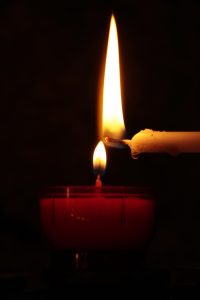 As we celebrate this feast, let’s pray through St. Lucy’s intercession that those of us who are shrouded in the darkness of uncertainty may cling to the light of Christ which shows us the way to heaven. Lucy’s name – meaning light – comes to us in the liturgy at one of the darkest moments of the year physically. She also lived at a rather dark time for Christians as well – it being in the midst of persecution. However, in both cases she brings the light of Christ which she herself has experienced to those around her and to us today. I can’t help but think of the parable of the wise and foolish virgins which also very fittingly ties into this blessed Advent season. (And this parable is not just for the consecrated persons or religious, it’s for everybody.) Let us not be afraid this Advent and in our transitions from religious life to practice the “art of waiting.” Let us follow in St. Lucy’s footsteps, with our lanterns burning bright–no matter our situation, so that when Christ comes we will be ready to give Him everything. Because that is the radical call of every Christian.
 An Advent reflection by Emma.
 Similarly, many of us who have been in religious life may feel like we have already had our adventure. We already made the sacrifice. We left home behind and followed Jesus out onto the water. We followed the calling with everything we had, and everything the Spirit was willing to give us. We grew in self-knowledge and matured in other ways through living religious life.
  Another theme that appears in Frozen II is grief. This is definitely an emotion that I felt after leaving the monastery, especially toward the sister I was. Each sister is so unique in the way she loves God and the way she loves the other sisters, and the way she is loved by God and is loved by the other sisters. The fact that I left means that there will never be a sister in that monastery who is like that. Indeed, when a sister leaves the monastery or convent, things will never be the same again, and I remember wondering what is on the other side of grieving that loss.
 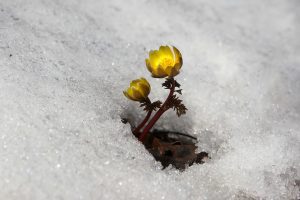 I’ll refrain from commenting on the context of this song so as to avoid spoilers, yet I wanted to include it because of how it mirrors contemplative prayer so well (note: the full song does contain spoilers). More than anything else after having left religious life, I needed to re-encounter the God I fell in love with.
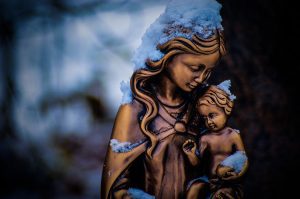 This opening song of the film actually makes quite a beautiful Marian hymn. Mary, our mother, is full of memory. She watches over us and ponders moments of our lives in her heart. As St. Mary of Jesus Crucified says, “Mary counts your steps.” We have a mother who cares for us. Loves us. Nurtures us. Heals us. This Advent, I invite us to ask Mary to lend us her heart. I invite us to ask her to permit us to see as she sees. To feel as she feels. To know as she knows. To hear as she hears. To love as she loves. To ponder as she ponders. We have a Mother who is counting our steps to our eternal home, where truly all that we long for will be found.

Recent Comments