May 6, 2019 |
By Belle.
One of my favourite passages in Lewis Carroll’s Through the Looking Glass (the sequel to Alice’s Adventures in Wonderland) recounts an incident between Alice and the Red Queen. The Red Queen starts to run, holding Alice by the hand. The Queen keeps crying out: ‘Faster! Faster!’ Just as Alice is beginning to feel that they are going as fast as they possibly can, so fast that they are almost flying, they come to a standstill. Alice is taken aback to see that they are in exactly the same place as before. She questions the Red Queen, who replies promptly:
‘If you want to get somewhere else, you must run at least twice as fast as that.’
The Red Queen’s comment, although frustrating for poor, tired Alice, feels very applicable to my spiritual life sometimes. With a perfectionistic temperament, I often have the nagging feeling that I have slowed down too much in my spiritual efforts and that if I ‘just did more’, all my problems would go away. My answer is to redouble my efforts, applying myself even more intently to daily spiritual exercises. Sooner or later, I discover to my exasperation that I still have the same problems. Just as for the Red Queen and Alice, determined sprinting seems to have left me in the same place.
At different times, the Lord in His great kindness has shown me that this isn’t His will. In fact, it is often the exact opposite that He is asking of me. He is asking me to wait, to slow down, and to let Him act in His own time.
Fr Robert Spitzer, in his great book on enduring suffering with faith, The Light Shines On in the Darkness, points out that one of the Enemy’s tactic, when he sees Christians making some improvement in a virtue like humility, is to suggest that they could do even better, go a little faster, apply themselves harder. In doing so, he tries to push them into ‘exhaustion or spiritual pride—or both’. These insinuations that we need to go ‘faster, stronger, harder’, Fr Spitzer writes, are ‘usually the tactics of the Evil One’. The answer? ‘Go back to who God is – the Father of the prodigal son.’
The psychologist Dr Gregory Bottaro talks a lot in his Catholic Mindfulness lectures about the failure of the ruminating, ‘doing mind’ to solve our problems. Sometimes, he explains, the reality is counterintuitive: we have to exert less effort to move in the right direction.
As St Thérèse wrote, doctors put their patients to sleep before they operate on them. In the same way, the Lord who ‘gives to His beloved sleep’ (Psalm 127) can work miracles when we are not looking. Some of the greatest graces I have received have been when I felt spiritually exhausted and inactive.
Fr Jacques Phillippe, in his beautiful book In the School of the Holy Spirit, says: ‘The only commandment is to love. We can suffer in love, but we can also rejoice in love and rest in love.’
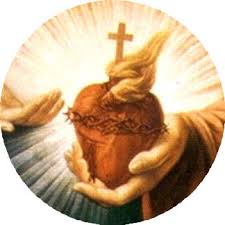
It is very true that the ‘love of Christ urges us on’ (2 Corinthians 5:14) But at the same time, He ‘gives us rest in green pastures’ and ‘leads us near restful waters’. And sometimes it has been at the very hardest times in my life that He desired that rest for my spirit.
This Palm Sunday, listening to Luke’s account of the Passion, I was struck by the last words of the reading: ‘And they rested on the Sabbath according to the commandment.’ (Luke 23:56)
These holy women were in deep grief and mourning. Their hearts were broken; Jesus was dead. But they still faithfully did the one thing that God was asking them to do: they rested. And how great was their reward the next day! On Easter Sunday, the time would come for action again. The holy women would begin running again in joy to spread the news of the Resurrection.
Good Friday was the time to suffer in love. On Holy Saturday, the call was to rest in love. And on Easter Sunday, the call was new again: this time to rejoice in love.
As women, we can easily feel guilty for not ‘doing’ enough, whether in our personal, professional or spiritual lives. It is beautiful and freeing to discover that at times, all the Lord might be asking of us is to fulfil our daily tasks peacefully, even restfully, and wait for Him to ‘make all things new’.
Apr 25, 2019 |
By Penny.
Written for Autism Acceptance Month, April 2019.
‘I am very pleased with Marie; she is a great comfort to me. I only wish my poor Léonie were more like her. I cannot understand her character; the wisest sages would be out of their depth with her. But I hope that some day good seed will sprout in that soil.’ (A Difficult Life p. 17)
Saints Louis and Zélie Martin had five daughters who survived to adulthood. Four were bright, pretty, affectionate, and charming. One wasn’t.
Marie and Pauline, the two eldest, were very close; Céline and Thérèse, the youngest, were like ‘two little bantam chicks’ that could not be separated from each other. Léonie, in the middle, spent much of her childhood on her own, getting kicked out of school because of her strange and rebellious behaviour and causing more worry to her parents than the other four put together. At the time that Zélie wrote to her brother about her ‘poor Léonie’ in 1871, the girl was an awkward, angry nine-year-old who struggled to understand her lessons or control her overwhelming emotions. Were she alive today, she would doubtless be diagnosed with moderate to severe learning disabilities, but in the late nineteenth century she was simply a slow, ‘trying’ child.
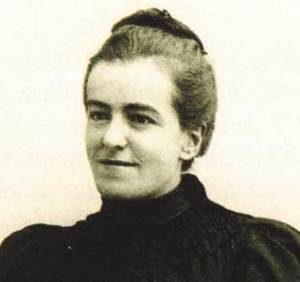
Like all of her sisters, Léonie would eventually grow up to become a nun. Unlike her sisters, however, she became a nun on her fourth attempt. Today, she is known as the Servant of God Sister Françoise-Thérèse Martin VHM, and the cause for her canonisation is underway in France. She is the patroness of our apostolate, named Leonie’s Longing in her honour, which provides support for women around the world who have left the religious life at any stage of formation. Interestingly enough, there is also another Catholic lay association which holds her as its patroness: the Leonie League for the Advancement of Autistic Persons.
Posthumous diagnosis of someone who lived over a hundred years ago is an ambiguous exercise at best, of course. Nonetheless, Léonie’s social difficulties, academic struggles, ‘loneliness of spirit’ (as she described it in her own words) and lifelong difference from others have made her an instantly familiar, approachable older sister to autistic Catholics who have experienced all of these things themselves. I know. I’m one of them.
When I was a child in the 1990s, autism was still largely seen as an exclusively male phenomenon: the province of small boys who sit and rock in corners, refuse physical contact, and recite train timetables to themselves over and over. Even now – though this is improving – the diagnostic criteria are still heavily weighted toward the male presentation of symptoms, meaning that boys are often diagnosed and supported in early childhood while girls (who present the same patterns but in different ways) tend to flounder along on their own until their twenties, thirties, or even later. I began to wonder whether I might be on the autism spectrum while I was at university in my early twenties, but concluded from my reading that I couldn’t possibly be: I can hold a normal conversation, make eye contact, feel empathy for other people, and I have a rich and complex inner world, all of which are supposedly beyond the reach of autistic people.
Except when they aren’t.
A short video (now sadly removed from public view) popped up in my recommended list on YouTube in October 2017 and changed everything I thought I knew about myself. The host was a young woman from the UK, and watching her on screen was like watching myself – lively, quick-talking, and animated in a way I’d been told that autistic people couldn’t be, but with the admission that this social persona had been developed through years of deliberate trial and error, and aimed at camouflaging the fact that she was most often out of her depth when communicating with other people. Exactly the way that my persona was. I had few friends as a child and none (except online) as a teenager because I was so odd that others my age avoided me; my brain was a powerful computer attached to the social awareness of a child less than half my age, excitable and tactless, and with a sense of humour involving things that weren’t funny to other people and vice versa.
I started changing in my last year or so of high school, which was – not coincidentally at all – also the time I began discerning a vocation to the religious life. For the first time, I began to want to fit in with other people and get along with them. I learned to mask the physical mannerisms, odd laughter and blunt social comments that had made me stand out, and by the time I got my first job in my early twenties, I could usually pass for normal. (Like many people on the autism spectrum, I object to being labelled ‘high-functioning’ – dammit, I work hard for that functioning!) Every now and again, I’ll still slip up and someone will look at me oddly and say, ‘That was weird,’ but by and large as an adult I manage to roll the dice and land on ‘endearingly quirky’ rather than ‘fruitcake.’
I went through the psychological testing process for autism in November 2017, and was diagnosed formally in early December that year. (Under previous versions of the Diagnostic and Statistical Manual, I‘d have been diagnosed with Asperger Syndrome. In the current version, Asperger Syndrome has been folded into the umbrella diagnosis of Autism Spectrum Disorder.) My response? Pure relief. Suddenly, I could explain why I do peculiar things like borrow forty non-fiction books at a time from the library and read them at every spare moment (information being my brain’s version of crack), quote textbooks verbatim Hermione Granger-style, and struggle so much with time management (because the executive function of the brain, which is responsible for organising things, works more slowly in autistic people). Even more importantly, it also began to help me understand why I had crashed and burned out of religious life at twenty-four with a force that wrecked my physical and mental health, along with my spiritual life, for years afterward.
It’s a myth that autistic people don’t feel emotions. We do. Almost unbearably, so deeply we could drown in them, but rarely in a way that we can put into words at the time. Think of Léonie, who loved her family beyond measure but had no idea how to express that love in a form that they could see or understand. Or me, crying silently in my cell because I had no idea why I was failing so badly and being corrected all the time. I’m not writing this for sympathy, but because I know that you, my sister in Christ – even if you’re not on the spectrum yourself – will understand exactly what I’m talking about when I describe sleepless nights, mysterious stress-related illnesses, bewilderment at how something so longed-for could hurt so much, and the deadening grief for your vocation that begins even before you leave the convent. That part is common ground for all of us.
What diagnosis gave me was that all-important why. Why I had caused the Sisters such frustration with my slow working style and hesitation in moving from one task to another: when I was told to do something, the delay that my executive function needed to process the instructions and come up with a plan of action would have looked from the outside like foot-dragging. Or why I was sometimes corrected for mistakes as though they had been deliberate acts of disobedience: because the Sisters had been signalling me with their eyes or gestures not to do something, and I either hadn’t seen their signals or didn’t understand what they meant, because non-verbal hints are almost invisible to people on the autism spectrum. So I went ahead and blundered headlong across the community’s rules and customs, over and over and over, and kept not learning because I couldn’t identify a pattern in the things I was doing or failing to do. The Sisters’ corrections were justified – if I had seen their directions and carried on anyway, it really would have been disobedience – but it took an autism diagnosis five years later to reveal to me how much I must have been missing under the surface of things.
I would watch others to see what they did, but without knowing which of those numerous things I was supposed to do as well (is the way she pours her glass of water a community custom, or her own personal preference?), imitation was largely a matter of guess-work. Interestingly, by the time I left, the novice who sat next to me at meal-times had started to pick up on this and developed a system of signals with meanings that she explained to me directly: ‘When I do this, it means you need to do that.’ I’ve never forgotten the courtesy she showed me; it became one of my anchors in the refectory, which had nearly as many customs as the chapel.
I’d been studying the principles of religious life intensely for more than half a decade before I entered – forty books at a time from the library, remember? – and that was a convenient mask for the fact that, in day to day community life, I actually had very little idea what was expected of me or why. Could I have asked for help? Perhaps, if I had known why I was floundering. Lacking the understanding that my brain structure was actually objectively different from that of the women around me, however, all I could see was that there was a method to all of this somewhere, but not what it was or where it was. Looking back now, I can see that I was trying to live within a system of unspoken rules and norms, ancient and modern traditions, and the complex social interactions required when a group of people live in such close proximity to each other… and I was oblivious to most of it. I therefore carried on doing what autistic women do best: camouflaging my difficulties with a smile and trying to appear normal. Until, finally, I couldn’t keep going.
I left the convent just before my mask broke: I had a cell inspection and a mid-postulancy review coming up within a couple of days of each other, and knew beyond doubt that one or the other of them was going to be the end of my ability to cope. I wanted to stay. No, strike that; I needed to stay. My whole heart was in the religious life, and I wanted nothing else. I had friends among the Sisters, enjoyed my studies, and immersed my soul in the deep, ancient rituals of convent life, just as Léonie Martin had over a hundred years before. So what do you do when desire isn’t enough?
‘O my God, in my life, where you have put so little that shines,’ Léonie wrote in 1934, ‘grant that I, like You, may choose true values, disdaining human values to prize and desire only the absolute, the eternal, the Love of God, through constant Hope.’ (A Difficult Life p.96.)
I now have the benefit of knowing that I’m on the autism spectrum; there are hundreds of books and websites out there that help me to understand the unique wiring of my brain, compensate for my blind spots, and make best use of the many unusual strengths that come with the territory. I finally understand that (apart from those caused by my own character flaws) the worst difficulties that I had in the convent weren’t my fault. They weren’t the Sisters’ fault. They weren’t anyone’s fault. I was just wired differently, and nobody (including me) knew it.
Léonie’s path was far harder: doggedly conquering her social difficulties, sensory sensitivities and overwhelming emotions minute by minute for the rest of her life without ever knowing why she was different, but slowly learning endurance and fortitude by following the Little Way of her younger sister Thérèse. In a letter to her Carmelite sisters in 1936, five years before her death at the age of seventy-eight, she described herself jokingly (but with a quiet air of wistfulness) as a ‘broken window’ in the convent (A Difficult Life p.112). She was loving and loved in her community, but the constant work of being different never got easier. A year later, in her retreat resolutions, she wrote:
‘It is inappropriate for me to moan over my faults, as I have done until now; I realise now that it is pride. As our Holy Founder said, it is no wonder that weakness is weak; so I must humble myself, not vex myself. I want to be little, so little! Little children fall without hurting themselves badly – they are too small for that; this is the example I want to follow. I can feel that this is what Jesus expects of me.’ (A Difficult Life p.96).
Like me, and like all of the women who read this blog, Léonie knew what it meant to fall, and fall hard. When desire wasn’t enough to match some external or internal circumstance that forced us out of the religious life, we went through every stage of grief – denial, anger, bargaining, depression, and finally, please God, acceptance – just as she did. Through all her struggles within the convent and without, it was in God that Léonie found the ‘constant Hope’ of which she wrote in the final decade of her life. She struggled too much to have any confidence in herself, so she gave herself up to His mercy and turned to Him for the strength she lacked. Autistic or not, we’re all in the same boat here: as the Superior of my community said to me just before I left, sooner or later, in any vocation, God is going to require sacrifice.
The nature of sacrifice is that it hurts. Léonie surrendered herself to God even (and especially when) she was in pain; even (and especially when) she felt in her soul that she had failed. This is what makes her such a beautiful example for autistic people, who live by means of an ongoing process of trial and error in a world where most of the rules are hidden from us, and for women of all neurotypes who have had to re-construct a life outside the convent where they once hoped to remain forever. I’m in an area of overlap between the two groups – how’s that for a minority within a minority? – and with April being Autism Acceptance Month, this seemed like the right time to describe my own experience in religious life as a person on the autism spectrum, and to honour a woman who has therefore become my patroness twice over.
Back in January 2015, on the day that Léonie Martin received the title Servant of God, I wrote an article on the blog describing her as ‘the patron of the awkward, the naturally contrary, those whose personalities didn’t quite “fit” in the convent, those who didn’t get it right the first time (or the second, or the third) but somehow keep crashing their way up the narrow path that leads to heaven.’
Four years, an autism diagnosis, and much hard work of healing later, Léonie is still one of the people I most look forward to meeting after I die; a black sheep of Christ’s flock, a very human woman, and above all a faithful daughter of the Church.
‘Well, provided I have enough wit to love God with all my strength, living only by love and humility, that is enough for me.’ – Léonie in 1910. (A Difficult Life, p.103.)
Servant of God, Sister Françoise-Thérèse Martin, pray for us!
Unofficial Checklist for Autism in Women by Samantha Craft: https://the-art-of-autism.com/females-and-aspergers-a-checklist/
References: Baudouin-Croix, Marie. Leonie Martin: A Difficult Life. Veritas Publications, Dublin 1993.
Apr 3, 2019 |
By Rosemary Kate.
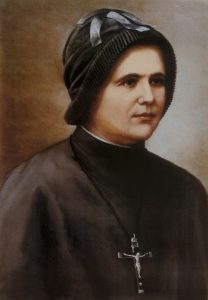
Recently, I was invited to attend a Mass of Thanksgiving for Blessed Clelia Merloni, foundress of the Apostles of the Sacred Heart of Jesus. I knew nothing about her, but who doesn’t like attending a special Mass with great pomp and circumstance? Besides, I work in Catholic education and thus have a connection to her community today. The program for Mass had a one page biography, which was nice. More importantly, there was a short book at the back of the Cathedral that I picked up afterwards and have since been reading, titled, “I Bless You with a Hundred Hearts.” I discovered that Blessed Clelia could certainly be another intercessor for Leonie’s Longing readers!
Even her biography on the Apostles of the Sacred Heart of Jesus webpage does not have the details that caught my eye. It merely states,
“After various experiences of religious life in different congregations, Clelia entered the Congregation of the Daughters of St. Mary of Divine Providence…Immersed in a life of self-giving and prayer, she sensed a strong calling to establish a new congregation dedicated to works of charity which would visibly express the love of Christ.”
“Various experiences” refers to short stints (usually less than a year) with 6 different congregations! SIX! For those of us who have entered and left one or two, I imagine Blessed Clelia may have had thoughts similar to our own along the way. In between some of those, she also opened and closed a couple of ministries of her own as a laywoman. The whole time from her first entrance to her founding of the community was about 10 years.
Her life was certainly guided by Divine Providence, because most of her leavings were due to illness. For example, her first attempt was at the Monastery of the Visitation, where she became so ill it seemed she was at the point of death but following a dream that upon reception of Holy Communion she would recover, that is what happened. She still returned home as all advised her to seek a less rigid congregation. Her stint with the Daughters of St. Mary of Divine Providence came to an end after an illness where the orphans prayed for her recovery as a sign that she was indeed called to follow her inspiration of founding a community herself.
Perhaps most of us have not had such unusual guidance in our vocational discernment, yet, her example of perseverance is worthy of emulation. No matter where our vocational journeys lead us (whether as a consecrated religious or into holy matrimony), her life can inspire us to continue to trust God, especially when the path seems unclear. I quote from the book:
It seems that Clelia’s life may have been purified above all by the suffering of obscurity. God tested her faith by immersing her in large part on a path of darkness. Doubt, “a hot-bed of purification,” existed for a long time in Clelia’s heart. As we often see in the lives of saints, she possessed gifts of light, of graces that enlightened the path for others; the ground on which she herself walked, however, was often poorly lit.
Who of us has not felt the same about our own lives? As I continue to seek my next steps, now several years after leaving my community, Blessed Clelia’s life reminds me that I don’t need to have it all figured out yet. In fact, my next steps seem to be taking me further from religious life. Nevertheless, this Blessed has encouraged me to keep moving forward.
After the founding of her community, Blessed Clelia’s trials did not come to an end. I haven’t finished reading the book, but the little I do know already is inspiring. Some of those details are found here. What her story says to all of us is, never give up hope as we trust God and strive to live His Mercy – while the path does not appear straight to us, we are guided by the Hand of our Loving Father.
Blessed Clelia Merloni, Pray for us!
Image credits: By ASCJ.Roma – Own work, CC BY-SA 4.0, https://commons.wikimedia.org/w/index.php?curid=67168692






 It is very true that the ‘love of Christ urges us on’ (2 Corinthians 5:14) But at the same time, He ‘gives us rest in green pastures’ and ‘leads us near restful waters’. And sometimes it has been at the very hardest times in my life that He desired that rest for my spirit.
 I went through the psychological testing process for autism in November 2017, and was diagnosed formally in early December that year. (Under previous versions of the Diagnostic and Statistical Manual, I‘d have been diagnosed with Asperger Syndrome. In the current version, Asperger Syndrome has been folded into the umbrella diagnosis of Autism Spectrum Disorder.) My response? Pure relief. Suddenly, I could explain why I do peculiar things like borrow forty non-fiction books at a time from the library and read them at every spare moment (information being my brain’s version of crack), quote textbooks verbatim Hermione Granger-style, and struggle so much with time management (because the executive function of the brain, which is responsible for organising things, works more slowly in autistic people). Even more importantly, it also began to help me understand why I had crashed and burned out of religious life at twenty-four with a force that wrecked my physical and mental health, along with my spiritual life, for years afterward.
 The nature of sacrifice is that it hurts. Léonie surrendered herself to God even (and especially when) she was in pain; even (and especially when) she felt in her soul that she had failed. This is what makes her such a beautiful example for autistic people, who live by means of an ongoing process of trial and error in a world where most of the rules are hidden from us, and for women of all neurotypes who have had to re-construct a life outside the convent where they once hoped to remain forever. I’m in an area of overlap between the two groups – how’s that for a minority within a minority? – and with April being Autism Acceptance Month, this seemed like the right time to describe my own experience in religious life as a person on the autism spectrum, and to honour a woman who has therefore become my patroness twice over.
 By Rosemary Kate.
Recent Comments