Apr 3, 2019 |
 By Rosemary Kate.
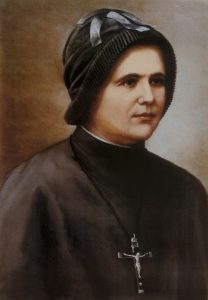
Recently, I was invited to attend a Mass of Thanksgiving for Blessed Clelia Merloni, foundress of the Apostles of the Sacred Heart of Jesus. I knew nothing about her, but who doesn’t like attending a special Mass with great pomp and circumstance? Besides, I work in Catholic education and thus have a connection to her community today. The program for Mass had a one page biography, which was nice. More importantly, there was a short book at the back of the Cathedral that I picked up afterwards and have since been reading, titled, “I Bless You with a Hundred Hearts.” I discovered that Blessed Clelia could certainly be another intercessor for Leonie’s Longing readers!
Even her biography on the Apostles of the Sacred Heart of Jesus webpage does not have the details that caught my eye. It merely states,
“After various experiences of religious life in different congregations, Clelia entered the Congregation of the Daughters of St. Mary of Divine Providence…Immersed in a life of self-giving and prayer, she sensed a strong calling to establish a new congregation dedicated to works of charity which would visibly express the love of Christ.”
“Various experiences” refers to short stints (usually less than a year) with 6 different congregations! SIX! For those of us who have entered and left one or two, I imagine Blessed Clelia may have had thoughts similar to our own along the way. In between some of those, she also opened and closed a couple of ministries of her own as a laywoman. The whole time from her first entrance to her founding of the community was about 10 years.
Her life was certainly guided by Divine Providence, because most of her leavings were due to illness. For example, her first attempt was at the Monastery of the Visitation, where she became so ill it seemed she was at the point of death but following a dream that upon reception of Holy Communion she would recover, that is what happened. She still returned home as all advised her to seek a less rigid congregation. Her stint with the Daughters of St. Mary of Divine Providence came to an end after an illness where the orphans prayed for her recovery as a sign that she was indeed called to follow her inspiration of founding a community herself.
Perhaps most of us have not had such unusual guidance in our vocational discernment, yet, her example of perseverance is worthy of emulation. No matter where our vocational journeys lead us (whether as a consecrated religious or into holy matrimony), her life can inspire us to continue to trust God, especially when the path seems unclear. I quote from the book:
It seems that Clelia’s life may have been purified above all by the suffering of obscurity. God tested her faith by immersing her in large part on a path of darkness. Doubt, “a hot-bed of purification,” existed for a long time in Clelia’s heart. As we often see in the lives of saints, she possessed gifts of light, of graces that enlightened the path for others; the ground on which she herself walked, however, was often poorly lit.
Who of us has not felt the same about our own lives? As I continue to seek my next steps, now several years after leaving my community, Blessed Clelia’s life reminds me that I don’t need to have it all figured out yet. In fact, my next steps seem to be taking me further from religious life. Nevertheless, this Blessed has encouraged me to keep moving forward.
After the founding of her community, Blessed Clelia’s trials did not come to an end. I haven’t finished reading the book, but the little I do know already is inspiring. Some of those details are found here. What her story says to all of us is, never give up hope as we trust God and strive to live His Mercy – while the path does not appear straight to us, we are guided by the Hand of our Loving Father.
Blessed Clelia Merloni, Pray for us!
Image credits: By ASCJ.Roma – Own work, CC BY-SA 4.0, https://commons.wikimedia.org/w/index.php?curid=67168692
Mar 5, 2019 |
 By Sean O’Neill.
So heed me now, though all my quondam whimpers rise
From darknesses and little deaths You did despise,
Or seemed to. Your tremendous volte-face preyed each year
Upon my gullibility to bend Your ear
And racked this ruined soul with frames of phantom guilt.
Your accidental turning broke the barns I built
To store unrealised the mildewed fruit I bore.
I listened and ran bleating to Your closing door.
But when you turned I never saw your fabled smile
But wept upon Your thorny brow, to lose my guile
Where rivulets of blood do still obscure Your eyes
And gather where my hopes and weathered dreaming dies.
But here I lie, and ever did I, catlike, do.
For once, I now remember, where the olives grew
With mists between the small hills and dawn on the felled
Ancient castellations of the Marches, You held
My eyes and opened them on glimpses of Your face.
And have You changed? Is this now why there is no trace?
But now I think I mind a moonlit path I walked
Where all the trees were dancing with your voice and talked
Between themselves and lifted their long-fingered praise.
And You stopped me like a traveller with your gaze
And bade me lift this old, old burden from my back.
You have not changed. But surely I must learn my lack.
Then other places where Your love drew near, precious
And strong , or weeping and long, like milestones, conscious
Of me, spread along these dusts. I pine in my sleep,
Now. Now Your mercies crowd upon me from some deep
And dead forgotten cavern of my wayward heart.
I am the lost sheep. But no sooner do we start
Back on the pasture than I stray among the rocks
Or bandy words with here a wolf or there a fox.
Brand my hide with Your blood-red love, sacred shepherd.
Teach me the strong timbre of your speech that, once heard,
Will ever be obeyed; and lead me, lead me now
To grasses greener, sweeter than the heart knows how.
This poem first appeared in First Things, June/July 2004. Poem and image © Sean O’Neill, used with permission from the author.
Feb 13, 2019 |
By Katita Luisa
“Go to the desert and you’ll understand”.
So I went there this year.
I dipped my toes in that hot sand
and out of love for Him,
I was soon all in
with each grain rubbing against me,
scratching and removing what I wanted most,
purifying me
and my dreams
and my will.
I went there.
I stuck my neck out in that unrelenting heat,
feeling the burn on the most delicate of skin,
reddening,
but out of love for the Son,
I continued-
realizing He was not merciless
but rather merciful,
exposing and toughening
my weaknesses
for the path that would unfold.
I went there.
I reached for my canteen
only to find it empty,
surrendering
my own preparations,
expectations,
wishes
and comfort,
and was invited
to rely solely on Him,
embracing the unknown,
thirsting for Him alone.
And out of love for me,
we went there.
We grew closer rather than apart.
I found refuge in His Heart.
I even saw flowers bloom in that desert-
promises fulfilled,
so unexpected
yet expected,
because I can take Him at His word.
Lessons taught and learned,
my heart broken only to start to heal,
making room for Truth to sink in,
deeper than the cracks of my sin
and the holes of my doubt.
Yes, my cup overflows,
only because it had to be emptied first.
And as we left and I dusted off the sand from my sandals,
I took His hand and said,
“Out of love for You,
I’d do it all again.”
He looked at me, smiled, and said,
“Now you’re beginning to understand.”
Sep 5, 2018 |
By Bernadette Monica.
Three years after leaving my former community it seemed like all the pieces in the puzzle of my life were finally coming together. I had found another community and everything appeared to be indicating that this was truly what the Lord had planned for my life. The community’s spirituality and charism resonated with my heart in a way I never could have imagined. With each faltering step forward I took, each time expecting to find myself falling flat or hitting a dead end, I was surprised to find myself filled with a peace and joy unlike anything I had ever known. The whole experience was so different to discernment the first time around – where formerly I had discerned out of external pressure, anxiety and fear, here instead I found freedom, beauty, and goodness. Even when facing the remnant fears I had from my previous discernment of religious life, I felt more exhilarated than afraid at the possibility of taking a leap of faith and placing everything in the hands of our Lord, trusting everything to His grace and providence. And so it was that, after spending 6 months or so discerning with the local mission of this new community, I found myself on a plane from Sydney to the US to visit the community’s Motherhouse, and discern if this was really where I was being called.
I half expected to arrive and feel like a fish out of water, having the realisation that I was not where I was meant to be, like when I had visited other communities in the past. Instead I felt completely at home, and fell in love with the community and their way of life. One of the postulants and one of the novices even remarked how well I fit in with the community and how they hoped to see me enter in a few months, God-willing. It seemed that the only obstacle remaining was that my family were not supportive, and even on this front I was sure that in time they would come around, even if there might be some challenges in the meantime.
Imagine then my surprise and shock on the day before my departure when I finally had an interview with the vocation director only to be informed that she didn’t think I would be able to cope with the demands of their community life. I always knew it was a possibility that a community might discern such, or that I might decide myself that it wasn’t the right fit, but her impression was so at odds with the peace and sense of belonging that I felt, and I wasn’t satisfied with the vague reason she gave as justification. Even so, it wasn’t an absolute no, and it was agreed that on my return home I needed to really take everything to prayer and discuss things with my spiritual director, and that I could continue to be in contact with the vocation director to discern a path forward.
After a challenging day filled with confusion and heartache I awoke on the final morning of my 12-day visit aware of the challenges that lay ahead, but also full of hope and trust that the Lord would remove this obstacle if it was His will. I returned home and it felt like I had a foot in each of two worlds. I prayed and sought spiritual direction, and after two months, though aware of the possibility of refusal or the likelihood of being asked to undergo a longer period of discernment to discuss and work through her concerns, I contacted the vocation director asking to speak with her again, and expressing that I felt I was being called to take the next step in discernment. We arranged to speak on the phone, and in the 20 minute conversation that ensued it was made clear to me (albeit in the kindest and gentlest way possible) that the door to discerning with the community was no longer open for me. In the space of a few minutes all the growing hopes and dreams I had treasured in my heart were dashed, and the Pearl of Great Price was pulled far from my reach. To say I was heartbroken would be an incredible understatement. I was recently struck by a line from Ted Danson’s miniseries adaptation of Gulliver’s Travels that seemed to sum up where I was at very poignantly:
“We love words, we humans; we use so many, so easily, ‘til they’ve lost all their meaning. But when I say as that last day dawned my heart was breaking – I have never known such awful pain and loneliness.”
I cannot describe my emotions and the testing of my faith over the past few months. I have never really dated, but I imagine that on some level this is akin to enduring a breakup of a longstanding relationship when from your own end you thought everything was going really well and were perhaps even expecting a proposal. After the traumatic experience of leaving my former community and all the growth and healing of the following years, to find a community that was healthy, vibrant, on fire with love for the Lord, and seemingly such a perfect fit for me only to be turned away even from applying felt almost too much to bear.
Over the last month or so the initial intensity of emotions and the agony of rejection has ebbed somewhat, but I’ve been painfully aware that around this time is when sisters will be receiving the habit and professing vows, and that in a few short weeks a new group of postulants will be entering various communities.
Upon learning that the postulants I knew during my brief time at the Motherhouse would have received the habit and their new religious names in the past day, and that the novices will be making their first profession of vows tomorrow, I sat down this morning to pray a rosary for them. It’s a Saturday, so it seemed very appropriate that I should be praying the Joyful mysteries for them. I’m so happy for these women reaching these milestones in their own vocational journeys, but I was aware of parallels I could see with the mysteries I was praying and the experiences of these women, and how this contrasts with my own experience. My own discernment feels more suited to the Sorrowful mysteries. I took this to our Lady as I prayed, and she gave me some beautiful insights which I want to share in the hope that it might bring others a little bit of peace and hope in their own struggles and confusion.
Firstly, on the Joyful mysteries. Perhaps many of you can relate to how these seem to tie in with religious formation, at least as I was seeing it.
The Annunciation: That unexpected and surprising moment when the Lord first presents to a young woman’s mind and heart the possibility of a call to religious life. “How can this be…?” she might ask. But like Mary she is exhorted to not be afraid, and assured that nothing is impossible for God, and that it is through His power that His will will be done, if only she gives him her Fiat.
The Visitation: The vocation starts to become more concrete. A woman finds a community she feels drawn to, and her apparent vocation begins to be affirmed by others – friends, family, her spiritual director, members of the community. And with Mary, the woman rejoices at the marvels the Lord is working in her life.
The Nativity: A birth; new life. The time comes for a woman to enter her community and leave her old life behind. A time of change and growth as she starts out on the new road she has been called to walk.
The Presentation in the Temple: At the appointed time, the woman begins her formal initiation into the community. First she receives the habit and her religious name; later she will make her first profession of vows, offering her life to “be designated as holy to the Lord” (c.f. Lk 2:23) and having her gift accepted by Him through her superiors. It strikes me only now as I sit down to write this that it was at 8 days that our Lord was circumcised, given his name and was formally initiated into the Jewish community, and at 40 days that he was presented in the Temple and redeemed according to Jewish custom and law – there is surely a parallel here with the process of being initiated into a religious community!
The Finding of Jesus in the Temple: Perhaps some might tie this in with a woman’s final profession of vows when she becomes forever a bride of Christ. I see it as something a little more abstract – those moments perhaps years down the track when she grasps a deeper understanding of the mystery of her vocation, or reaches a more profound level of intimacy with her bridegroom. This might perhaps come after a period of spiritual dryness, just as Mary spent three days searching for the missing Jesus, and like Mary, on finding Jesus once again the woman will be filled with joy, and is left to ponder the mysteries of God’s workings, and the purposes He fulfils in all things.
In contrast to this I can see in my own recent experiences a shadow of the Sorrowful mysteries:
The Agony in the Garden: That fateful conversation with the vocation director where she initially questioned my suitability for the community’s way of life; my wrestling with this, questioning, “Why me?” and wondering what it was that she saw in me that she hadn’t seen in the others who did end up applying, or alternatively, what she hadn’t seen in me that she had seen in them; wondering if there was a red flag over my head because of my having previously been in a community; the confusion over how everything had seemed to lead to this point and everything seemed to fit so well only to have the shadow of doubt cast over it all; and finally, reaching the point in prayer of being able to accept the cup I was being asked to drink, and coming to an understanding that if this truly was my vocation then the Lord would remove all obstacles at the appointed time, and that if it wasn’t then nothing I could do on my part could it make it so.
The Scourging at the Pillar: The return home and the months of prayer and discernment. Grappling simultaneously with the very real possibility of rejection and the hope that things might still work out; having others affirm that they thought I was on the right path, while knowing the odds were stacked against me. The feeling of flesh being torn from my side as I prepared to speak with the vocation director once again, laying my heart on the line while knowing there was a very real possibility that I may not receive the answer I was so desperately hoping for.
The Crowning with Thorns: That definitive moment of having the door of what I had hoped to be my vocation closed and bolted on me. Being prepared for the possibility did little in the moment to ease the pain of having thorns pushed cruelly into my flesh. In the hours and days that followed that fateful phone call it felt like there was a ring of thorns around my heart, slowly shredding it to pieces.
The Carrying of the Cross: The weeks and month following my rejection have involved a long process of coming to terms with the situation, working through my emotions, and trying my best to keep moving one step at a time, to get back up when I’ve fallen, to accept help from the Simon’s of Cyrene in my life, and to place myself at the foot of the cross. I’ve had to learn to see this as a way of becoming more united to Him, and to trust more and more in His plans, even when they make no sense to me. I’ve had to make a conscious decision to trust in His promises and to believe that He is indeed working for my good.
The Crucifixion: I can see here an invitation to lay down my life in a radical way to the will of God. An earlier Leonie’s Longing blog, Sacrificing Sacrifice, has proved very helpful in coming to an understanding that, where I had hoped to lay down my life for God through religious consecration, perhaps what is more pleasing to Him and sanctifying for me is accepting His will and choosing to trust even when it proves painful, or when I’m being asked to let go even of the truly good and honourable desires of my heart. Like Christ on the Cross we are invited to place our lives completely into our Father’s hands, accepting and trusting in whatever His will might be.
On another level I can see in the Sorrowful mysteries parallels with the experience of leaving my former community. Perhaps you may relate to some of these:
- Troubles, doubts or difficulties in the lived experience of community life
- Perhaps a difficult conversation with a superior, or some painful growth in self-awareness
- The experience of actually deciding to leave, or particularly of being asked to leave where that has been the case
- The aftermath of leaving your community and readjusting to lay life
- Learning to accept and surrender to God’s will, and for those who have left dysfunctional communities, healing and learning to forgive and let go.
While praying the rosary I had a few insights from our Lady in light of all of this which I found comforting and encouraging. Firstly, she affirmed to me that the Sorrowful mysteries don’t make sense on their own. It is only in the light of the Resurrection that our Lord’s Passion and death have any meaning or salvific effect. Without the Resurrection and the Glorious mysteries, none of the other mysteries take on their full meaning and power. Without the Resurrection the Sorrowful mysteries would also cast shadow, doubt and confusion on both the Joyful and Luminous mysteries, as well as these mysteries not making any sense in and of themselves. What could be the purpose in the Nativity by itself for example, let alone if it was all only to end in our Lord’s painful and humiliating death on the cross?
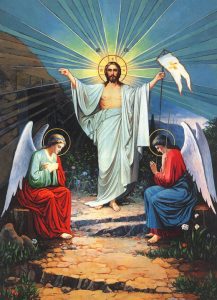
The Resurrection gives us hope, and is a promise of things to come. Perhaps we are now in a luminous period in which we are slowly having the Lord’s will revealed to us, and through which He has something to teach us and areas in which He wants us to grow. In the meantime we can look to the Glorious mysteries as a promise of the hope that is surely to come. I am reminded that, after all, my vocation is not the final destination but only a pathway to aid me in reaching it, and if the Lord is allowing a few detours en route I can still trust that in the end He will bring me to the final destination of perfect union with Him, and that we will be united all the more closely through the times He has allowed me to carry the cross alongside Him through the sorrowful mysteries of my own life.
Aug 22, 2018 |
I entered into reading Jennifer Fulwiler’s book One Beautiful Dream with a bit of apprehension. From my perspective as a single woman, most Catholic media are focused on spouse and family and have little that relate to my life experiences. However, I was pleasantly surprised to find this story of self-discovery challenging and inspiring for my state of life as well.
The book is an easy and fun read filled with amusing stories and anecdotes. But behind the silliness are some very important messages. One of the main concepts explored in the book is the idea of the “blue flame.” This is the thing that you are passionate about. It gives you energy to participate in it. It’s what you’re “made for.” She posits that married women with kids often leave these things behind in order to be a perfect parent, Catholic woman, etc. In my opinion, it seems as though this is an easy thing for any woman to slip into as she gets older and has increased responsibilities. Furthermore, entering religious life made me let go of my dreams and aspirations, and it’s been incredibly difficult to reconnect with them after returning to lay life. One must ask, “What am I passionate about? What do I need to make time to do?”
She also talks about guilt and comparison. How often do we make choices because we feel guilty? We think, “I shouldn’t do this because…” (it’s not holy, it’s not Catholic enough, what would people think?? etc). On the flip side is, “[insert name of model holy woman at Church] would never consider doing such a thing. What is wrong with me?” and other statements of comparison. Yuck. There’s no peace there.
In confession, she talks to a priest about her struggles with balancing her life, and he shares some beautiful thoughts, including: “‘We always think like individuals, like the work that we do has nothing to do with anyone else. God wants us to see what we do as just one small part of something greater…’” (pg 129). He then goes on to encourage her to really make her family a part of what she is doing. As someone without a family of my own, it’s easy to dismiss this concept as irrelevant. However, it is true that I approach things as an individual but it should not be that way. Who should I take into account as I consider my “blue flame?” Who can I ask to support me in these endeavors?
Next, I was buoyed by the idea that having constraints on my time is a good thing. I often lament the fact that I have to work full time, do my own laundry, cooking, and all the rest, and therefore have little time for hobbies or personal advancement. In her busy life, Jen Fulwiler feels similarly. However, she comes to realize this lack of time and forced pauses required her to be very focused while working and also gave her mental breaks in between which allowed her to “come back with a fresh, new perspective” (page 174).
Finally, she discusses the idea of “Resistance” from the book The War of Art by Steven Pressfield. The concept is that there is a force in the world trying to keep you from creating. Once you recognize that, you can combat it. I know I certainly have felt this way and I dealt with it rather badly – vacillating between anger and self pity. But once you know that this is a universal problem, you can take bold steps against it. How exciting!

 By Sean O’Neill.
 By Bernadette Monica.
 After a challenging day filled with confusion and heartache I awoke on the final morning of my 12-day visit aware of the challenges that lay ahead, but also full of hope and trust that the Lord would remove this obstacle if it was His will. I returned home and it felt like I had a foot in each of two worlds. I prayed and sought spiritual direction, and after two months, though aware of the possibility of refusal or the likelihood of being asked to undergo a longer period of discernment to discuss and work through her concerns, I contacted the vocation director asking to speak with her again, and expressing that I felt I was being called to take the next step in discernment. We arranged to speak on the phone, and in the 20 minute conversation that ensued it was made clear to me (albeit in the kindest and gentlest way possible) that the door to discerning with the community was no longer open for me. In the space of a few minutes all the growing hopes and dreams I had treasured in my heart were dashed, and the Pearl of Great Price was pulled far from my reach. To say I was heartbroken would be an incredible understatement. I was recently struck by a line from Ted Danson’s miniseries adaptation of Gulliver’s Travels that seemed to sum up where I was at very poignantly:
 The Resurrection gives us hope, and is a promise of things to come. Perhaps we are now in a luminous period in which we are slowly having the Lord’s will revealed to us, and
  I entered into reading Jennifer Fulwiler’s book
Recent Comments