Apr 4, 2015 |
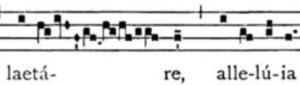
Oh good, I thought to myself when the words Regina Caeli appeared in the list of chants for choir practice before my one and only conventual Easter. I know how to sing the Regina Caeli. It’s easy. You just go –

Until, that is, everybody else sings:
Wow.
Oh dear.
Easter in the religious life came on in a heady rush of music: the Exultet sung by Father at the vigil on Saturday evening, the vibrant Invitatory Psalm at Morning Prayer, and the familiar (thank heavens!) words of “Alleluia, Sing to Jesus!” at Mass on Sunday. In the midst of it all, though, was one song that initially didn’t seem to fit.
Christ the Lord is ris’n again! Christ hath broken ev’ry chain!
Hark, the angels shout for joy, Singing evermore on high, Alleluia!
All those exclamation marks make it look lively enough, but the melody to which we sang it is something completely different; slow, subdued and with a plaintive tone that somehow seems better suited to Lent than Easter.
https://www.youtube.com/watch?v=DIH01Vx-KeE
It was sung by the community every day throughout the Octave, and I loved it, but couldn’t quite grasp what it was doing there amongst all the cheerful music that surrounded it.
Then I left the convent, and the next Easter, the mixture of joy and sorrow was easier to understand. The words were written by German Protestant theologian Michael Weisse in the 16th century, a time of upheaval and confusion among the faithful as the rift between Catholicism and Protestantism grew deeper. For his optimistic words, he chose a haunting ancient chant tone that expressed something of the sense of loss that must have filled Christianity as theological conflicts tore families and monasteries like his own apart. We rejoice in a world that is redeemed by Jesus’ death and Resurrection, it says, but with a sense of loss and a yearning that cannot be filled until His return at the end of time. In an incomplete and imperfect world, even joy aches. Will there ever be an Easter that’s not shadowed by the wish that I were celebrating it in the convent?
And yet, even through the sober melody, the hymn reminds us that Christ hath broken every chain! – the chains of our grief included. For all the sorrow of our world, every Easter is a sign that the turning point of history has already occurred, and every celebration of the Resurrection brings us another year closer to the Kingdom of God.
Now He bids us tell abroad, How the lost may be restored,
How the penitent forgiv’n, How we, too, may enter heav’n, Alleluia.
And, from the breviary for the morning of Holy Saturday: Come, let us return to the Lord. He has torn us to pieces, but He will heal us; He has struck us down, but He will heal our wounds; after a day or two He will bring us back to life, on the third day He will raise us and we shall live in His Presence (Hosea 6:1-3a).
By Cinnamon.
Mar 24, 2015 |
Shape us in the likeness of the divine nature of our Redeemer,
Whom we believe to be true God and true Man,
since it was Your Will, Lord God,
that He, Your Word, should take to Himself our human nature
in the womb of the Blessed Virgin Mary.
Through the same Christ our Lord. Amen.
Mar 16, 2015 |
By Penny.
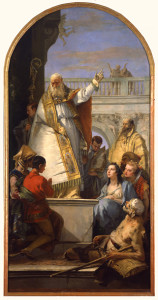
“I, in my old age, strive after that which I was hindered from learning in my youth… therefore I blush to-day and greatly dread to expose my ignorance, because I am not able to express myself briefly, with clear and well-arranged words, as the spirit desires and the mind and intellect point out.” – From The Confession of Saint Patrick.
He wasn’t joking, either: modern versions of Patrick’s Confession are frequently prefaced with complaints about the clunky and ungrammatical Latin with which the translators have had to work. Nonetheless, God called him to be a bishop and a missionary – raised him, in Patrick’s own words, like a stone from a deep mire – to confound the wise and learned.
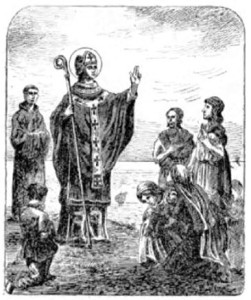
Like the (much) later Saint John Vianney, Patrick had a strong and decisive vocation, but struggled to acquire the practical skills needed to fulfill it: unlike his companions in formation for the priesthood, Patrick had had his education interrupted at the age of fifteen by a six-year period of slavery in the hills of Ireland, and spent the rest of his life knowing that he could never really make up for what was lost in that time. Beneath the saccharine songs about his subsequent triumphant return to Ireland as a free man and a bishop lie several harder realities that Patrick does not try to gloss over:
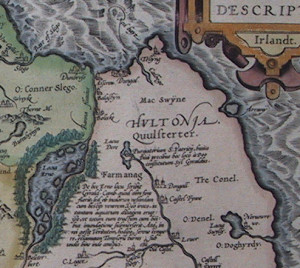
– He was in his early twenties when, in a dream, he saw the pagan peoples of Ireland begging him to come and walk among them once more, but between this dream and its fulfillment lay over a decade of priestly and monastic formation in Gallia (modern France). Every day of those long years he must have ached to begin the work that God had given him, but understood that he wasn’t yet equal to the task set before him. If you ever feel as though your whole life is on hold, waiting for God to pick up the other end of the line and tell you when and where to go, this may be a comfort: one of the greatest missionaries who has ever lived was in exactly the same boat, hearing the voices of the Irish people calling to him across the sea and waiting to return to them. “Thanks be to God,” he writes as an old man, “that after very many years, the Lord has granted them their desire!”
– He experienced the same wrenching separation from his family as anyone whose loved ones don’t support their vocation. He thanks the Lord for “the great and salutary gift to know or love God, and to leave my country and my relations, although many gifts were offered to me with sorrow and tears. And I offended many of my seniors then against my will. But, guided by God, I yielded in no way to them, not to me, but to God be the glory, who conquered in me, and resisted them all.” The first time he left, he was snatched from them abruptly by slave traders, but the second time, he left of his own accord to follow a burning sense of vocation that they could neither perceive nor understand – and none escaped without pain.
– Even with a clear vocation, Patrick didn’t find the long separation from home and family easy. For decades afterward, “though I could have wished to leave (the Irish church), and had been ready and very desirous to go to Britannia, as if to my country and parents, and not that alone, but to go even to Gallia, to visit my brethren, and to see the face of my Lord’s saints; and God knows that I desired it greatly. But I am bound in the spirit, and he who witnesseth will account me guilty if I do it, and I fear to lose the labor which I have commenced, and not I, but the Lord Christ, who commanded me to come and be with them for the rest of my life.”
Patrick was a Saint who learned to wait for his calling from God to be fulfilled in its own time, to accept with true humility the shortcomings and failures that he experienced, and to cope day by day with loss and loneliness. On his Feast day, may we ask him to help us in our own struggles to come nearer to God.
“But I beseech those who believe in and fear God, whoever may condescend to look into or receive this writing, which Patrick, the ignorant sinner, has written in Ireland, that no one may ever say, if I have ever done or demonstrated anything, however little, that it was my ignorance. But do you judge, and let it be believed firmly, that it was the gift of God. And this is my confession before I die.”
Dec 24, 2014 |
By Father David Hasser.
Christmas blessings to you all! What a day of joy! With all of God’s promise from the beginning, today begins the age of joy as the world sees His greatest promises come to life! This great day of celebration gives flesh to the hope that we have, allows faith to grow and charity to be restored.
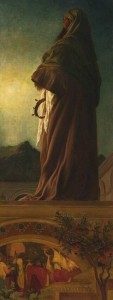
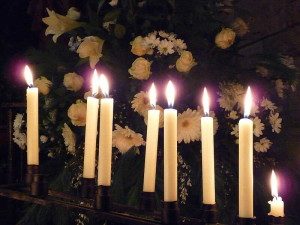
By His coming among us, being with us, Emmanuel the Christ Child gives us hope that we are wed to God. We look at the Star of Bethlehem, and that quintessential light hangs over the Light Himself and leads us to Him. Knowing about THAT star, every star in the sky reminds us of Him and of the reality of our Communion with Him. Every candle light reminds us of Him. The starry Christmas tree lights in the dark remind us of Him. It all reminds us that our hearts are made by and for God Who completely outshines the current creation. His star and all of the stars remind us that we can see as far as Heaven, beyond the limitations we might feel around us. We are reminded that we can make the journey along the narrow path with the Christ Child at our side. We walk to the Heavenly Emmaus speaking with the Lord along the way and entering into Him in every Eucharist. The ornaments that we fondly place upon the tree are memories of people or experiences, and we unite them with the evergreen tree of life and light, with Jesus, with those starry lights of hope. The wonderful compilation of tree, ornaments, lights, the manger, the Christ Child…it all inspires faith in our heart. It all is a public witness of our faith and our hope. It all reminds us to give freely of the charity that we have received. This majestic moment is not a dream; it is a real moment in history, one small light that once lit has illuminated the entire world and has breathed life back into our souls.
When Jesus was born nine months after He took flesh in the womb of the Blessed Virgin, love was revealed. He has moved from resting in His Immaculate Mother to resting in a manger in the hearts of us all. As He rests here and we gaze upon Him, I invite you to contemplate and adore Him in mystery. We know what happens next in His life for thirty-three years. As we celebrate this day of His birth, our eyes can already see the rest of His life with us, and yet our hearts await Him still more. Come, let us adore Him!


 Wow.
Wow.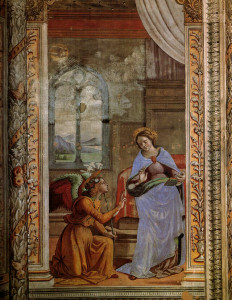 Shape us in the likeness of the divine nature of our Redeemer,
 By Penny.
 among them once more, but between this dream and its fulfillment lay over a decade of priestly and monastic formation in Gallia (modern France). Every day of those long years he must have ached to begin the work that God had given him, but understood that he wasn’t yet equal to the task set before him. If you ever feel as though your whole life is on hold, waiting for God to pick up the other end of the line and tell you when and where to go, this may be a comfort: one of the greatest missionaries who has ever lived was in exactly the same boat, hearing the voices of the Irish people calling to him across the sea and waiting to return to them. “Thanks be to God,” he writes as an old man, “that after very many years, the Lord has granted them their desire!”
 h I could have wished to leave (the Irish church), and had been ready and very desirous to go to Britannia, as if to my country and parents, and not that alone, but to go even to Gallia, to visit my brethren, and to see the face of my Lord’s saints; and God knows that I desired it greatly. But I am bound in the spirit, and he who witnesseth will account me guilty if I do it, and I fear to lose the labor which I have commenced, and not I, but the Lord Christ, who commanded me to come and be with them for the rest of my life.”
 By Father David Hasser.
 Every candle light reminds us of Him. The starry Christmas tree lights in the dark remind us of Him. It all reminds us that our hearts are made by and for God Who completely outshines the current creation. His star and all of the stars remind us that we can see as far as Heaven, beyond the limitations we might feel around us. We are reminded that we can make the journey along the narrow path with the Christ Child at our side. We walk to the Heavenly Emmaus speaking with the Lord along the way and entering into Him in every Eucharist. The ornaments that we fondly place upon the tree are memories of people or experiences, and we unite them with the evergreen tree of life and light, with Jesus, with those starry lights of hope. The wonderful compilation of tree, ornaments, lights, the manger, the Christ Child…it all inspires faith in our heart. It all is a public witness of our faith and our hope. It all reminds us to give freely of the charity that we have received. This majestic moment is not a dream; it is a real moment in history, one small light that once lit has illuminated the entire world and has breathed life back into our souls.
 er to resting in a manger in the hearts of us all. As He rests here and we gaze upon Him, I invite you to contemplate and adore Him in mystery. We know what happens next in His life for thirty-three years. As we celebrate this day of His birth, our eyes can already see the rest of His life with us, and yet our hearts await Him still more. Come, let us adore Him!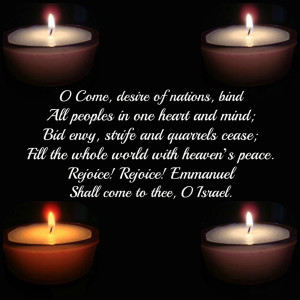
Recent Comments