Jan 1, 2015 |
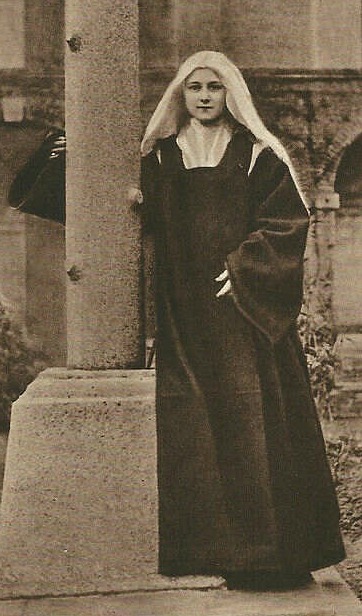
Saint 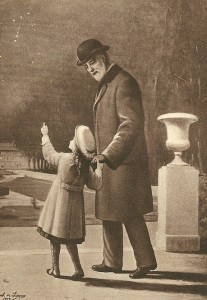 Thérèse of the Child Jesus and the Holy Face, January 2nd 1873 – September 30th 1897.
From the preface to the 1912 edition of The Story of a Soul by H.E. Cardinal Bourne, Archbishop of Westminster:
From the cradle all the Martin children were dedicated to Mary Immaculate, and all received her name: Marie Louise, Marie Pauline, Marie Léonie, Marie Hélène, who died at the age of four and a half, Marie Joseph Louis, Marie Joseph Jean Baptiste, Marie Céline, Marie Mélanie Thérèse, who died when three months old, and lastly, Marie Françoise Thérèse.
Zélie Martin’s whole ambition as a mother was directed to Heaven. “Four of my children are already well settled in life,” she once wrote; “and the others will go likewise to that Heavenly Kingdom enriched with greater merit because the combat will have been more prolonged.”
Never did her husband allow the meannesses of human respect to degrade his Christian dignity. In whatever company he might be, he always saluted the Blessed Sacrament when passing a church; and he never met a priest without paying him a mark of respect. A word from his lips silenced whoever dared blaspheme in his presence.
In that house the “Little Flower of Jesus” first saw the sunshine. Again and again, in the pages of her Autobiography, she calls herself by this modest name of the Little Flower, emblematic of her humility, her purity, her simplicity, and it may be added, the poetry of her soul. On the manuscript of her Autobiography she set the title: “The Story of the Springtime of a Little White Flower,” and in truth such it was, for long ere the rigours of life’s winter came round, the Flower was blossoming in Paradise.
Saint Thérèse, pray for us!
Nov 1, 2014 |
Almighty, ever-living God,
we are celebrating with joy
the triumph of Your grace in all the Saints.
With so vast a multitude praying for us,
may we receive from You
the fullness of mercy we have always desired.
We make our prayer through our Lord Jesus Christ. Amen.
Oct 31, 2014 |
 With the end of October, we conclude our themed posts about the lives of Leonie and Therese Martin. This last theme post shows an exchange of letters between the Martin sisters a year after Leonie left the convent for the third time in July 1895, aged thirty-two. The two letters from Leonie are found on pages 65-66 of A Difficult Life by Marie Beaudin-Croix, and the reply from Therese is from a copy of The Story of a Soul that is now in the public domain.
Leonie to Therese, 1st of July 1896.
My dear little sister, if only you knew how often I think of you, and how sweet these thoughts are to me; they bring me closer to God. I understand your desire to go to meet Him soon, to be completely lost in Him; I, too, desire this. But you, my darling, are ready to go to meet God; you will surely be well-received. But I will face Him empty-handed; and yet I have not the temerity to be afraid. Do you understand that? …
If only you knew how much help I need, if I am not to abandon myself to the pleasures and vanities of the world. All the good will in the world cannot prevent one from being almost imperceptibly drawn to them; and if one does not find death there, then at the very least, all one’s piety and love for Jesus are spoiled, and one has nothing left to offer Him but faded flowers – how many have I offered Him! Dear sister, you will prevent me from making my old mistakes, won’t you? I am so weak; you know how I rely on you.
I beg of you, ask God very specially to deliver me from my scruples; I am always turning in on myself, and this does me terrible damage, and hinders my attempts at perfection. You may be sure I am showing you my wounds as clearly as I can.
Your little sister, who loves you with all her heart,
Leonie.
Leonie to Celine, 9th of July 1886.
Only twenty days left in La Musse; I am not unhappy about it, although I have made the same life for myself here as in Lisieux. More and more, I see the meaninglessness of all that passes, and this does me good, gradually increasing my detachment; but there is always this sadness, deep within me, which I can never completely overcome. Although I feel that I am, for the moment, where God wants me to be, I suffer – I suffer terribly – and my exile seems very long to me. Only Jesus knows what it costs… When you write to me, my dear, give me all the news of my little Therese. Please, don’t hide anything from me; I want to know everything.
Therese to Leonie, 12th of July 1896.
MY DEAR LITTLE LEONIE, I should have answered your letter last Sunday if it had been given to me, but you know that, being the youngest, I run the risk of not seeing letters for some considerable time after my sisters, and occasionally not at all. I only read yours on Friday, so forgive my delay.
You are right, Jesus is content with a tender look or a sigh of love. For my part, I find it quite easy to practise perfection, now that I realise it only means making Jesus captive through His Heart. Look at a little child who has just vexed its mother, either by giving way to temper or by disobedience. If it hides in a corner and is sulky, or if it cries for fear of being punished, its mother will certainly not forgive the fault. But should it run to her with its little arms outstreteched, and say; “Kiss me, Mother; I will not do it again!” what mother would not straightway clasp her child lovingly to her heart, and forget all it had done? . . . She knows quite well that her little one will repeat the fault—no matter, her darling will escape all punishment so long as it makes appeal to her heart.
Even when the law of fear was in force, before Our Lord’s coming, the prophet Isaias said, speaking in the name of the King of Heaven: “Can a woman forget her babe? . . . And if she should forget, yet will I not forget thee.” What a touching promise! We who live under the law of Love, shall we not profit by the loving advances made by our Spouse? How can anybody fear Him Who allows Himself to be made captive “with one hair of our neck”?
Let us learn to keep Him prisoner – this God, the Divine Beggar of love. By telling us that a single hair can work this wonder, He shows us that the smallest actions done for His Love are those which charm His Heart. If it were necessary to do great things, we should be deserving of pity, but we are happy beyond measure, because Jesus lets Himself be led captive by the smallest action. . . . With you, dear Leonie, little sacrifices are never lacking. Is not your life made up of them? I rejoice to see you in presence of such wealth, especially when I remember that you know how to make profit thereby, not only for yourself but likewise for poor sinners. It is so sweet to help Jesus to save the souls which He has ransomed at the price of His Precious Blood, and which only await our help to keep them from the abyss.
It seems to me that if our sacrifices take Jesus captive, our joys make Him prisoner too. All that is needful to attain this end is, that instead of giving ourselves over to selfish happiness, we offer to our Spouse the little joys He scatters in our path, to charm our hearts and draw them towards Him.
You ask for news of my health. Well, my cough has quite disappeared. Does that please you? It will not prevent Our Lord from taking me to Himself whensoever He wishes. And I need not prepare for that journey, since my whole endeavour is to remain as a little child. Jesus Himself must pay all its expenses, as well as the price of my admission to Heaven.
Good-bye, dearest one, pray to Him without fail for the last and least of your sisters.
Oct 12, 2014 |
The following excerpt is from Collected Little Flower Works by Albert H. Dolan O.Carm, published in 1944. An American Carmelite priest, Father Dolan travelled across France in the 1920s, and managed to charm, wheedle, and shamelessly beg interviews from just about everyone who had known Saint Therese while she was alive. His incredible persistence has paid off: almost a century later, we have the accounts that he wrote of his interviews with Pauline, Marie, Celine and Leonie Martin at the Carmelite and Visitation monasteries. This is his encounter with Leonie…
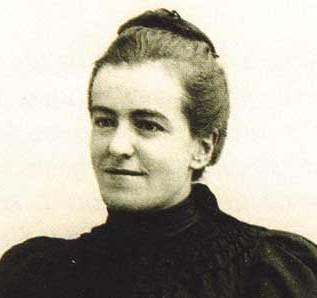
In a few moments an elderly Sister entered the parlor. It never occurred to me that it might be Leonie, but I inquired her name and to my great surprise, I found that it was Leonie. We are inclined to think of the Little Flower’s sisters as being of the same age as she was when she died, twenty-four, but they were all older than she and she has been dead now for twenty-nine years. Leonie is 61 years of age now. She is thin and short and dark and her face, at least when it is in repose, is not especially attractive or distinguished. In fact the personal appearance of Leonie would be disappointing were it not for three redeeming features: bright, black eyes full of kindness and amiability, a most attractive and pleasing smile, and a most courteous and charming manner. It was easy to understand why the Little Flower’s father always called Leonie “My good Leonie.” She was goodness and kindness itself, and throughout the interview there was always that willing readiness to do everything asked.
I explained my work in America and she was most interested and asked many questions about the Little Flower Society. Leonie was very pleased with the design of our reliquary which I showed her, the reliquary being in the form of a golden rose branch, each rose of which contains one of the five major relics of the Little Flower. I asked her if she would autograph the picture which had already been autographed by her three sisters. She agreed and I passed the picture to her through the bars of the grille and when she returned the picture she gave me with it a little relic of the Little Flower.
Then, knowing that she had been present in the Little Flower’s girlhood when Saint Therese was miraculously cured by the smiling statue of the Blessed Virgin, I said to her, “Sister, did you see that smiling vision of our Blessed Mother when Therese was cured?”
“No,” she answered.
“But you were in the room with her, were you not?” I questioned.
“Yes,” she replied, “but I saw nothing. Marie saw everything because she was kneeling at the head of the bed next to the Little Flower, whereas I was kneeling at the foot of the Little Flower and Therese had taken such a sudden turn for the worse that I, thinking that she was dying, buried my head in the bedclothes, weeping and praying at the same time, and so I saw nothing until we all saw a few moments later that she had been instantly cured.”
Then I said to her, “Sister, are you not lonely here sometimes in this convent so far from your other sisters?”
She answered, “No, Father, I am where God wants me to be and I wouldn’t be imitating my little sainted sister if I were to be sad in doing God’s will. Of course all who leave home are a little lonely sometimes, n’est-ce pas, Father, but it is necessary to smile, n’est-ce pas? And the Little Flower helps me to smile.”
I said, “But Sister, do you not regret sometimes that you did not enter the Carmelite Convent instead of the Visitation Convent? It seems to me that if I had a sister who had become a saint and who had made a convent famous for its sanctity and had three sisters in that convent, I would regret that in my youth I had not entered that convent. Do you not feel that way?”
“No, Father, I have no such regrets because I had no vocation to the Carmelite Convent but to the Visitation rule and instead of regrets I have nothing but gratitude to God for having given me my Visitation vocation which I love.”
I then said, “I suppose, Sister, that the Little Flower bestows many favors upon you, her sister.”
“Yes,” she answered, “many, many favors.” And then, with a twinkle in her eyes, she added by way of a “come-back” to my doubts about her happiness in the Visitation Convent, “And not least of the favors she gives me, Father, is to preserve my love for my Visitation vocation.” All this was said with the most charming gentleness and that ever-present exquisite smile which gave her some resemblance to the Little Flower in spite of her advanced age of 61.
I then asked her to write a little message, a little spiritual bouquet, in her own handwriting, as a souvenir of my interview with the sister of the Little Flower. She readily agreed and asking the loan of my fountain pen, wrote as follows, “I shall daily ask my little sainted sister, Saint Therese of the Child Jesus, to bless your mission of promoting devotion to her amongst the Americans.” She signed her religious name, which is “Sister Frances Therese,” and under it, at my request, she wrote her family name, “Marie Leonie Martin.”
Then I asked her would she sent a message to the members of the Little Flower Society in America and to all lovers of the Little Flower. Unlike the other three sisters, she didn’t hesitate a moment. She must have been asked similar questions before because immediately she said, “Give them this message, Father: tell them that if we would please the Little Flower, we must be humble as she was, and we will be humble if we will repeat frequently every day the ejaculation, “Jesus, meek and humble of heart, make my heart like unto Thine.”
The Little Flower’s sister’s message to us, my dear friends, will bear many a meditation and much pondering. Let us heed that message; we may indeed be sure that we will not be proud or haughty, if we say frequently every day, “Jesus, meek and humble of heart, make my heart like unto Thine.”
Leonie had nothing more to say that is important and I left the Visitation Convent with a prayer of thanksgiving in my heart to the Little Flower for having made it possible to talk at length with all four of her sisters.
Oct 7, 2014 |
By Penny.
Few women in the twenty-first century would be able to enter the convent in the way that Leonie did a hundred and twenty-eight years ago today: on impulse, while on holiday with her family. On the sixth of October 1886 she was sightseeing around Alencon, and the next morning she woke up in the cloister. Later, Therese was to write that, “Leonie’s surprising entry into the convent distressed me; I was very fond of her, and I never had the chance to kiss her goodbye before she left. I will never forget the kindness and bewilderment on my poor father’s face when he came to tell us that Leonie was already wearing the habit of the Poor Clares.” (Leonie Martin: A Difficult Life by Marie Beaudin-Croix, page 39.)
The world has changed so much since then that this scenario now seems almost inconceivable. Even a woman who has managed to avoid a vocation-crippling college debt will usually spend months on “live-in” retreats with a community before being accepted as an aspirant, and will typically also be subjected to every psychological examination from a stack of inkblots to the Myers-Briggs Type Indicator. What could Leonie have done to convince a Poor Clare abbess to admit her to the cloister within a single day?
Despite the difference in time and culture that separates us, I think it’s possible to guess. The abbess approved her for the same reason that the senior Sisters of your community ultimately voted to grant you admittance: they saw a sincere, concrete desire for God, and they wanted to see where it would lead. Do you remember how hard it was to sit with your future superior, even one who was gentle and encouraging, and try to pin down for her in ordinary words something that God had been forming in you for so long? Quite probably, it wouldn’t have been your hesitant speech that convinced her to let you in, but something larger than you that she sensed behind the words.
Like many of the women who visit this website, Leonie had spent years thinking about becoming a nun, having longed for a religious vocation since childhood – that impulsive entrance was an aberration in the slow, difficult process of discernment throughout her young adulthood – and she would have sat before the grille with a quiet, compelling fire in her voice as she tried to explain her desire to give herself to God. And so she was granted admittance. Therese adds:
“Poor Leonie, in her new outfit, was very sweet. She told us to look into her eyes, because we would never see them again: Poor Clares keep their eyes lowered. But God was satisfied with two months of sacrifice, and Leonie came back to us, to show us her blue eyes again, although they were often wet with tears.” (Ibid.)
The austere Poor Clare life took its toll on Leonie’s health, leaving her with no choice but to return home to her family, and her years of prayer and preparation boiled down to just eight weeks in the cloister. Sick and heartsore, Leonie once again walked up the path to the front door of Les Buissonnets: two major life changes, entry into and departure from the religious life, followed each other with a speed that must have left her reeling. She had wanted to follow God’s will, and instead found herself back at square one, grieving the loss of something that had barely begun. Perhaps, in the early stages of grief, she regretted having made such an attempt in the first place.
And yet, she tried again. In June the following year, she set out for the Visitation Monastery – with her family’s blessing this time. It wasn’t a miraculous bounce-back: Leonie’s biographer notes that her arrival at Les Buissonnets was followed by a period of depression which impeded her return to health. Her story after leaving the religious life, like many of our readers’ stories and perhaps like yours as well, was one of holding on, of getting up in the morning and simply putting one foot in front of the other until God calls again.
Calls to do… what? Email another religious community? Write to the archdiocese for information about becoming a consecrated virgin? Introduce yourself to that good-looking fellow you’ve seen at Holy Hour? What if you find yourself ten years down the track, reasonably secure financially and with a job you enjoy… and suddenly feel that God wants you to give it all up to make another attempt at the religious life? If Leonie didn’t ask these questions after her first experience of returning to the world, they must surely have preyed on her mind the third time the monastery door swung closed behind her. Nonetheless, she kept putting one foot in front of another, and discovered at last that she had actually, against all appearances, been walking in the right direction all the time.
Here’s a final thought to go with. Whatever unique, passionate, unworldly quality it was that your superior saw to make her want to admit you to the community, it is still part of you. It may not feel like that anymore if your heart is cut up by pain or anger – or maybe you’re just so damned weary in body and soul that any vocation might as well be Mount Everest for all the chance you can see of climbing it. Nonetheless, the Divine Hand that once took hold and propelled you into the religious life, and then guided you out again, has not once let go of you. It never will.
Saint Therese of the Child Jesus, pray for us.
Leonie Martin, pray for us.


 t instead of giving ourselves over to selfish happiness, we offer to our Spouse the little joys He scatters in our path, to charm our hearts and draw them towards Him.
 The following excerpt is from Collected Little Flower Works by Albert H. Dolan O.Carm, published in 1944. An American Carmelite priest, Father Dolan travelled across France in the 1920s, and managed to charm, wheedle, and shamelessly beg interviews from just about everyone who had known Saint Therese while she was alive. His incredible persistence has paid off: almost a century later, we have the accounts that he wrote of his interviews with Pauline, Marie, Celine and Leonie Martin at the Carmelite and Visitation monasteries. This is his encounter with Leonie…
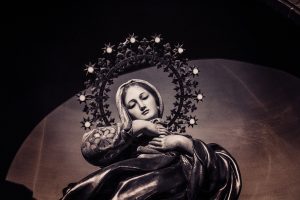 statue of the Blessed Virgin, I said to her, “Sister, did you see that smiling vision of our Blessed Mother when Therese was cured?”
 Then I asked her would she sent a message to the members of the Little Flower Society in America and to all lovers of the Little Flower. Unlike the other three sisters, she didn’t hesitate a moment. She must have been asked similar questions before because immediately she said, “Give them this message, Father: tell them that if we would please the Little Flower, we must be humble as she was, and we will be humble if we will repeat frequently every day the ejaculation, “Jesus, meek and humble of heart, make my heart like unto Thine.”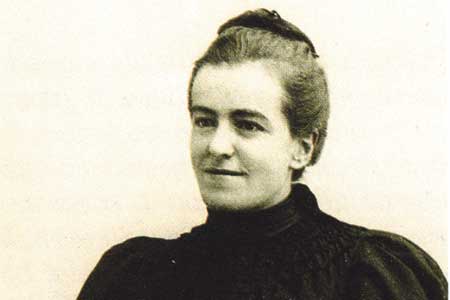
 longed for a religious vocation since childhood – that impulsive entrance was an aberration in the slow, difficult process of discernment throughout her young adulthood – and she would have sat before the grille with a quiet, compelling fire in her voice as she tried to explain her desire to give herself to God. And so she was granted admittance. Therese adds:
Recent Comments