Oct 18, 2014 |
 By AfterEpiphany.
I experienced God’s indisputable sense of humour (hey – He’s the AUTHOR of humour!) on the day that I left the convent. Through a strange act of Providence, I was rostered to do the First Reading at Mass with the Community on the morning that I left. Attending Mass was my very last act in Community – afterwards, I was whisked away to gather my things, eat a quiet breakfast and prepare to leave for the airport, whilst the rest of the community all went to community breakfast.
The fact that I was the reader for the day meant that I absolutely couldn’t become distracted or zone out during the reading. The significance of every word I read is even still with me. But what has me gobsmacked (yes, even now!) is the particular reading it was that day – Is 62:1-5. Here is a snippet from it:
“No more shall people call you ‘Forsaken’ or your land ‘Desolate’, but you shall be called ‘My Delight’ and your land ‘Espoused.’ For the Lord delights in you and makes your land his spouse. As a young man marries a virgin, your Builder shall marry you; and as a bridegroom rejoices in his bride, so shall your God rejoice in you.”
Um… WOW.
I really don’t think it was an accident that this particular Scripture passage was the reading for my last day wearing a religious habit, responding to a religious name, and belonging to a religious community. I think He had a message of comfort, and hope and deep, intimate love for me that day, one to carry within my heart for the rest of my life. Perhaps He also intended this message for each of you – my brothers and sisters in Christ who have experienced similar life changes of late in “discerning out” of your religious order or seminary.
Those questions that so many of us ask upon returning to the world: does God still love me? Doesn’t He want me to have an intimate relationship with Him anymore? If I have to be out in the world, can I still make my life all about God? Can I still bring others to Him as a lay member of the faithful?
This reading is His answer to me…
… and maybe to you as well?
He calls each of us to intimacy with Him. And even if we are not being wed to Him in the same mystical sense described in Canon 607, there is still a spousal element to our relationship with Him, by virtue of our membership in the Church, His Bride, for whom He freely laid down His life.
“Religious life manifests a wonderful marriage brought about by God… a gift of self by which their whole existence becomes a continuous worship of God in love…” ~ from Canon 607
But aside from all of that, He is my Builder and my God, and HE DELIGHTS IN ME!! *shakes head* I still don’t get that! It’s a mystery, but I trust that it is true. He delights in you too.
Yes, you!
To conclude, here are some passages to sit with; as scattered as they might seem at first glance, they unite in a very definite, and comforting, message of hope and promise:
Mt 28:20 | Songs 3:1-4 | Jer 29:12-13 | Is 54:4
AfterEpiphany spent 1.5 years living religious life, half a world away from her homeland, convinced that God was calling her. He was: to a deep conversion of heart. Out in the world again, and with a professional background in IT Project Management, it would be remiss of A.E. not to have a 5-year plan for herself! her twofold plan consists of the completion of a PhD in Theology, and securing a job in an academic library as her interim livelihood. She cares deeply about faith education and the spiritual formation of young adults.
Oct 16, 2014 |
 By Spiegel.
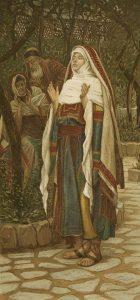
The Annunciation
A woman who has fallen in love with God will sometimes start laughing during Mass for no real reason… or she might start crying instead. She might write long journal entries in praise of God, or secretly arrange a towel around her head to see what she would look like in a veil. The beginning of discernment can be an incredible time to be alive, an experience of heady, overwhelming love. Like Mary, the young woman who has drawn the attention of God can only stand still in amazement, and ask, “How can this be?” Her awe and gratitude become a song of joy: My soul glorifies the Lord, and my Spirit rejoices in God my Saviour. He looks on His servant in her lowliness; henceforth all ages will call me blessed.
It would be wonderful to be able to rewind to that stage of discernment, to be that achingly young and hopeful person again even for a little while. But instead, women who have left the convent have followed Mary’s journey far past that point: the joyful anticipation in those early days became the Nativity, as all that we longed for was gathered into our arms for the first time, and slowly, the path led from there to the foot of Calvary. Christ vanished into darkness, and a stone was rolled over the tomb. As night fell early, she went home to wait for morning, and so have we.
We know how this story ends, however… He returned to her, as He is quietly coming back to us. If we had remained in the innocent happiness of the Annunciation, we would never grow wise enough to share His suffering, and one day witness the Resurrection.
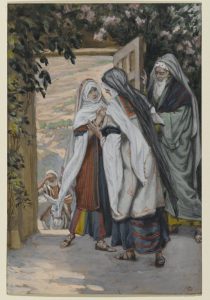
The Visitation.
Discerning a vocation can be immensely lonely: imagine a tidal wave going through your soul, sweeping away familiar landmarks and permanently changing the face of the world, and then imagine that everyone else insists that the tidal wave is just a figment of your imagination.
“It’s a phase that young Catholic women go through.”
“You’ll forget about it once your exams are out of the way.”
“Why can’t you just work in a soup kitchen or something?”
Mary kept her secret close for the same reason: who would have understood the mysterious way in which God has spoken to her, let alone a pregnancy with such an implausible explanation? In those early days, not even her gentle, protective fiance could share that knowledge with her. Instead, she “arose, and went in haste to the hill country” to find her cousin, the one person who might understand.
“When Elizabeth heard Mary’s greeting, the baby leaped in her womb; and Elizabeth was filled with the Holy Spirit. And she cried out with a loud voice and said, “Blessed are you among women, and blessed is the fruit of your womb!”
At last, someone had seen what Mary saw, and spoken aloud what she had treasured silently in her heart!
In order to discern the religious life, I had to develop a level of spiritual self-sufficiency and learn to persevere despite what others told me. Looking back, I consider this vital training for the time just after I returned to the world, in which people who loved me were celebrating the exact same thing I grieved. I was used to the difference by then, so it didn’t trouble me as much as it could have. And yet, the Mystery of the Visitation teaches us that God doesn’t expect us to go it alone, like Mary, we can and should seek support and understanding from others. I also find it comforting to know that if, one day when I am older, I meet a young woman who has left the convent and is grieving, I will be the one who knows what to say to her. Today, it’s easiest to empathize with Mary in her search for love and encouragement: in the future, perhaps, God will give those of us who have left the religious life the place of Elizabeth in another’s story.
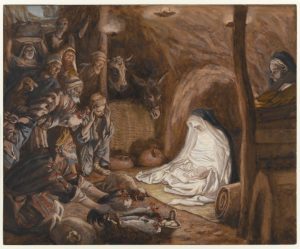
The Nativity
Out of interest, I recently added up the number of times that I’ve changed address in the last five years. Short-lived share-house arrangements, temporary returns to live with family when said share-house arrangements fell through, and, of course, a move into and out of a convent, brought the total to eight.
It struck me that the early years of Our Lord’s life were marked by a similar pattern of change: from Nazareth to Bethlehem, and from there to Egypt, and then back to Nazareth again a few years later. Mary must have craved a quiet place to settle with her baby, and Saint Joseph would have felt the strain of keeping his family safe in a new location every time they were uprooted. And yet, nothing happened at random: every stage of their journey was part of the Father’s plan.
“But you, Bethlehem Ephrathah, though you are small among the clans of Judah, out of you will come for Me one who will be ruler over Israel, whose origins are from of old, from ancient times” (Micah 5:2)
“He remained there until the death of Herod. This was to fulfill what had been spoken by the Lord through the prophet: out of Egypt I called my son” (Matthew 2:15).
“He shall be called a Nazarene” (Matthew 2:23)
Their lives may have seemed fragile and unstable, but everything happened as it should. Having entered the convent seeking something permanent to which I could commit my life, and suddenly ended up back outside skimming through job advertisements in which a “long-term position” meant six months, it was difficult for me to see through the panic-inducing instability and trust in God’s plan for my life. Slowly, though, I’ve seen that every place I’ve lived in has given me new skills and insights, and introduced me to people I wouldn’t otherwise have met, experiences I wouldn’t now be fully myself without. I’m still not wildly excited about the idea of major changes yet to come, but those years in the lives of the Holy Family are a reassurance that, in the words of the hymn, “God will undertake to guide the future as He has the past.”
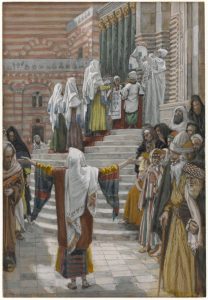
The Presentation
The Presentation is the fourth Joyful Mystery of the Rosary, but also the first of the Seven Sorrows of Mary: a sign of the complexity of the lives that real people live. The intertwining of joy and sorrow will be familiar to any who have lived in a religious community, family and friends may be sympathetic, but it’s still impossible to explain to them the way that religious life can raise the soul to breathtaking heights and in the same instant crush it to powder.
The prayer of Simeon over the infant Jesus was a moment like this for Our Lady. Her triumphant words in the Magnificat “He casts the mighty from their thrones and raises the lowly” were confirmed by the old priest’s blessing, but then it came, almost as an afterthought: “and a sword shall pierce your own heart also.” Although God had blessed Mary above all women, His blessing was not insulation against suffering, and Simeon’s words laid out before her eyes the intricate tapestry of joy and sorrow that would be woven throughout her life.
After I left the convent, the blessings and sufferings of life in the world felt bland in comparison with those I had experienced in the religious life, and I resigned myself to a life of numbness. I’ve now begun to see instead that the same tapestry is still there before me, being unfolded day by day. The pattern may have changed since I was in the convent, but the will of God is still weaving my future.
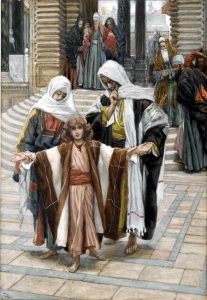
The Finding of the Lord Jesus in the Temple
Like the Presentation yesterday, this story from the life of Christ appears in both the Joyful Mysteries and the Seven Sorrows. Imagine Mary as a young woman wandering the streets of Jerusalem, calling out to Jesus over and over, and receiving no reply. The sun sets, and rises, and sets again, and still He is not there.
We have felt this urgent sense of loss, too. The worst part of grief is not sorrow for the past, but fear for the future: will I ever succeed? Will I be happy someday? Will I recover the relationship with Jesus that I had before I entered the convent? So we call Him, over and over. The sun sets, and rises, and sets again. Will we ever find Him?
We may, by faith if not by sight. He waited for Mary and Joseph in the Temple, as He waits for us in the Tabernacle, and He is about His Father’s business, interceding for us before the Throne in heaven (Romans 8:34). The Godhead is here, in hiding.
Seeing, touching, tasting are in Thee deceived:
How says trusty hearing? that shall be believed;
What God’s Son has told me, take for truth I do;
Truth Himself speaks truly or there’s nothing true.
Because He is hidden from our sight, we cannot fling our arms around Him, as they did, and cry, “We have been anxiously searching for You!” (If we could, we would probably receive the same puzzled inquiry about why we were anxious when He had been here the whole time.) The greatest longing is not now to find Jesus, for we know where He is, but to see Him where He waits, and one day, that faith will be rewarded when the veil between heaven and earth disappears.
Jesu, whom I look at shrouded here below,
I beseech thee send me what I thirst for so,
Some day to gaze on Thee face to face in light
And be blest for ever with Thy glory’s sight. Amen.
Oct 4, 2014 |
From The Life of Saint Francis of Assisi by Paul Sabbatier, published 1919.
Among the numerous chapels in the suburbs of Assisi there was one which Francis particularly loved, that of St. Damian. It was reached by a few minutes’ walk over a stony path, almost trackless, under olive trees, amid odors of lavender and rosemary. Standing on the top of a hillock, the entire plain is visible from it, through a curtain of cypresses and pines which seem to be trying to hide the humble hermitage and set up an ideal barrier between it and the world.
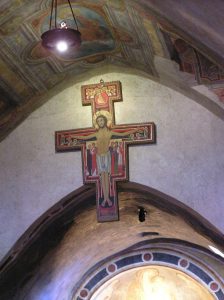
Served by a poor priest who had scarcely the wherewithal for necessary food, the sanctuary was falling into ruin. There was nothing in the interior but a simple altar of masonry, and by way of reredos one of those byzantine crucifixes still so numerous in Italy, where through the work of the artists of the time has come down to us something of the terrors which agitated the twelfth century. In general the Crucified One, frightfully lacerated, with bleeding wounds, appears to seek to inspire only grief and compunction; that of St. Damian, on the contrary, has an expression of inexpressible calm and gentleness; instead of closing the eyelids in eternal surrender to the weight of suffering, it looks down in self-forgetfulness, and its pure, clear gaze says, not “I suffer,” but, “Come unto me.”
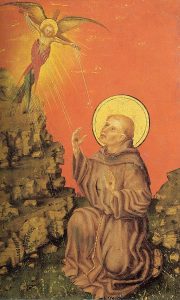
One day Francis was praying before the poor altar: “Great and glorious God, and thou, Lord Jesus, I pray ye, shed abroad your light in the darkness of my mind…. Be found of me, Lord, so that in all things I may act only in accordance with thy holy will.”
Thus he prayed in his heart, and behold, little by little it seemed to him that his gaze could not detach itself from that
of Jesus; he felt something marvellous taking place in and around him. The sacred victim took on life, and in the outward silence he was aware of a voice which softly stole into the very depths of his heart, speaking to him an ineffable language. Jesus accepted his oblation. Jesus desired his labor, his life, all his being, and the heart of the poor solitary was already bathed in light and strength.
This vision marks the final triumph of Francis. His union with Christ is consummated; from this time he can exclaim with the mystics of every age, “My beloved is mine, and I am his.”
But instead of giving himself up to transports of contemplation he at once asks himself how he may repay to Jesus love for love, in what action he shall employ this life which he has just offered to him. He had not long to seek. We have seen that the chapel where his spiritual espousals had just been celebrated was threatened with ruin. He believed that to repair it was the work assigned to him.
From that day the remembrance of the Crucified One, the thought of the love which had triumphed in immolating itself, became the very centre of his religious life and as it were the soul of his soul. For the first time, no doubt, Francis had been brought into direct, personal, intimate contact with Jesus Christ; from belief he had passed to faith, to that living faith which a distinguished thinker has so well defined: “To believe is to look; it is a serious, attentive, and prolonged look; a look more simple than that of observation, a look which looks, and nothing more; artless, infantine, it has all the soul in it, it is a look of the soul and not the mind, a look which does not seek to analyze its object, but which receives it as a whole into the soul through the eyes.”
Lord God, You made Saint Francis of Assisi Christ-like in his poverty and humility.
Help us so to walk in his ways that, with joy and love,
we may follow Christ Your Son, and be united to You.
We make our prayer through our Lord Jesus Christ.
Amen.
Sep 29, 2014 |
A post for the Feast of the Holy Angels, by Penny.
Fairly frequently, I’m called upon to answer random questions about Catholicism: everything from “Who’s the patron Saint of actors?” to “Can I be a Catholic and a Buddhist at the same time?” (A: Saint Genesius, and B: no.)
Of all the misconceptions that I usually encounter, however, the most common revolve around angels: the belief that humans who “cross over” turn into angels, for example, or that that angels are “beings of light” who can “channel” that light through you if you meditate enough and burn the right kind of candle.
The reality, though, is a lot more fascinating than these insipid New Age ideas. While I was in the convent, I read through a fair chunk of the Scriptures, and noticed a pattern whenever God sends an angel to speak with a prophet: the prophet looks up, sees something enormous that burns brighter than fire, and immediately keels over unconscious. Far from being benign lights with a fondness for lavender oil, the angels in God’s service are the highest created beings, reflecting the glory of God with a brilliance that drives humans to the ground.
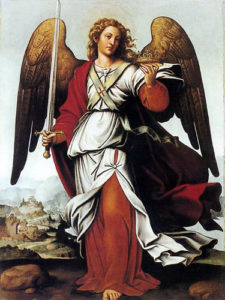
They are also warriors who will, at the end of time, fight the final battle with the devil and drive him and his followers into hell for eternity. Consider the Archangel Gabriel, who is most well-known, of course, for bringing the joyful message of the Annunciation to the Blessed Virgin. This isn’t his first appearance in the Scriptures, however: hundreds of years earlier, Gabriel had appeared to the Prophet Daniel and – after waking Daniel from his faint – described to him an angelic war that was in progress at the time, in which he was fighting side-by-side with Michael (Daniel 10:12-13.) To me, this image of Gabriel in battle makes the Annunciation even more profound: the powerful warrior brings God’s message to a young woman from Nazareth, and quietly awaits her answer.
Consider, too, the third Archangel whose name we know. At the climax of the book of Tobit, the friendly guide who has brought young Tobias through various trials to a happy marriage suddenly drops his disguise:
I am Raphael, one of the seven holy angels, which present the prayers of the saints, and which go in and out before the glory of the Holy One.
And, unsurprisingly,
Then they were both troubled, and fell upon their faces: for they feared.
But he said unto them, “Fear not, for it shall go well with you; praise God therefore.
For not of any favour of mine, but by the will of our God I came; wherefore praise him for ever.
All these days I did appear unto you; but I did neither eat nor drink, but ye did see a vision.
Now therefore give God thanks: for I go up to him that sent me; but write all things which are done in a book.
And when they arose, they saw him no more. (Tobit 12:15-21)
Of all the books of the Old Testament, Tobit is the one I most love to re-read: a story of ordinary people to whom God sends an angel as a teacher and protector, not for any grand world-changing reason, but for the simple purpose of bringing them joy. We too, can turn to the angels in prayer and ask for their guidance in discerning the will of God – and we, too, can ask these heavenly warriors for their protection. I’ll conclude with a prayer to Saint Raphael, “The Angel of Happy Meetings,” which took on a new and powerful meaning for me after I left the religious life. At a time when I was struggling to imagine that I would ever find a place to belong, this prayer reminded me that, somewhere in the world, there are people who don’t yet know me but are waiting for me nonetheless. This is the essence of any vocation: God has created something that will be incomplete until you are part of it. On this Feast of the Holy Angels, let us ask their help in finding it.
O Raphael, lead us towards those we are waiting for and those who are waiting for us.
May all our movements, all their movements, be guided by thy light and transfigured by thy joy.
Angel guide of Tobias, lay the request we now address to thee at the foot of Him on whose unveiled Face thou art privileged to gaze. (Mention your request.)
Lonely and weary, deeply grieved by the separations and sorrows of earth, we feel the need of calling to you and of pleading for the protection of thy wings, so that we may not be as strangers in the province of joy.
Remember the weak, thou who art strong, whose home lies beyond the region of thunder, in a land that is always peaceful, always serene and bright with the resplendent glory of God.
Amen.
Sep 22, 2014 |
Opening Prayer
Daily Meditation from The Story of a Soul:
Like the Prophets and Doctors, I would be a light unto souls, I would travel to every land to preach Thy name, O my Beloved, and raise on heathen soil the glorious standard of Thy Cross. One mission alone would not satisfy my longings. I would spread the Gospel to the ends of the earth, even to the most distant isles. I would be a Missionary, not for a few years only, but, were it possible, from the beginning of the world till the consummation of time. Above all, I thirst for the Martyr’s crown. It was the desire of my earliest days, and the desire has deepened with the years passed in the Carmel’s narrow cell. But this too is folly, since I do not sigh for one torment; I need them all to slake my thirst. Like Thee, O Adorable Spouse, I would be scourged, I would be crucified! I would be flayed like St. Bartholomew, plunged into boiling oil like St. John, or, like St. Ignatius of Antioch, ground by the teeth of wild beasts into a bread worthy of God. With St. Agnes and St. Cecilia I would offer my neck to the sword of the executioner, and like Joan of Arc I would murmur the name of Jesus at the stake.
Leonie’s Longing Prayer:
Saint Therese, your love could not be contained within the boundaries of one vocation: you longed to give everything to God. Teach us, too, to extend our love beyond any limitations we have set, and to seek new paths in the service of Christ all our days.
Concluding Prayer:
O God, who didst inflame with Thy spirit of love the soul of Saint Therese of the Child Jesus, grant that we may also love Thee, and make Thee much loved. Amen.
Sep 15, 2014 |
Imagine. You’ve found the purpose of your being, the meaning of your existence, the reason for living. Then it dies. Literally. This is the suffering of Our Lady. This is the Sorrow of Good Friday that remained when she awoke Saturday morning (if she slept at all), until that glorious Sunday when it was as if life was breathed back again into the world asleep in death.
But the sorrow of Our Lady was not one without gratitude for the “great things” God had done for her, for the gift of the 33 years with Our Lord! She did not cease proclaiming the “greatness of the Lord.”
Nor was this sorrow without the hope of his “promise of mercy… the promise he made to our fathers,” the mercy she recounts in the previous stanzas of her Magnificat.
Today, we are very united to Our Lady, to her sorrows. And yet, this makes us all the more grateful and hopeful of the great gifts and mercies the Lord has and will bestow on us!
It is on this Feast that the Stabat Mater and the Magnificat harmonize in the choirs of Heaven, interwoven by the descant of her Fiat, that first “yes” she proclaimed which gave new life to the world. Let us pray with the sorrows of Our Lady, while also remembering her joyful Magnificat, both extensions of her Fiat.
May we always keep our Fiat as the constant hymn on our lips. May it always be our response in our joys, the “magnificats” in our lives when we can only give gratitude to God, for the “great things” we have received. May it always be our response in the sorrows, the “stabat maters” in life where we are challenged to exercise the virtue of hope in His promises; when our purpose, meaning, and reason for life seem to have been torn from our very hearts, and we are rendered unable to find words to sing praise, except the words of Our Lady, “Let it be done unto me according to thy will,” a prelude to the words of Christ, “Thy will be done, on earth as it is in Heaven.” May our thoughts, words, and deeds be a “remix” of their words, a resounding symphony of our own Fiat. May we please the ears of our Father in Heaven, all the Saints and Angels, and especially Our Lady- may they shout “Bravo!” “Encore!” to our “solo,” our unique contribution to the Heavenly Hymn of praise.

 By Spiegel.
 The Visitation.
 The Nativity
 The Presentation
 The Finding of the Lord Jesus in the Temple
 From The Life of Saint Francis of Assisi by Paul Sabbatier, published 1919.
 on life, and in the outward silence he was aware of a voice which softly stole into the very depths of his heart, speaking to him an ineffable language. Jesus accepted his oblation. Jesus desired his labor, his life, all his being, and the heart of the poor solitary was already bathed in light and strength.
 They are also warriors who will, at the end of time, fight the final battle with the devil and drive him and his followers into hell for eternity. Consider the Archangel Gabriel, who is most well-known, of course, for bringing the joyful message of the Annunciation to the Blessed Virgin. This isn’t his first appearance in the Scriptures, however: hundreds of years earlier, Gabriel had appeared to the Prophet Daniel and – after waking Daniel from his faint – described to him an angelic war that was in progress at the time, in which he was fighting side-by-side with Michael (Daniel 10:12-13.) To me, this image of Gabriel in battle makes the Annunciation even more profound: the powerful warrior brings God’s message to a young woman from Nazareth, and quietly awaits her answer.
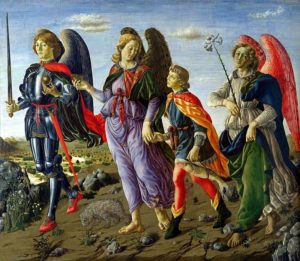 bringing them joy. We too, can turn to the angels in prayer and ask for their guidance in discerning the will of God – and we, too, can ask these heavenly warriors for their protection. I’ll conclude with a prayer to Saint Raphael, “The Angel of Happy Meetings,” which took on a new and powerful meaning for me after I left the religious life. At a time when I was struggling to imagine that I would ever find a place to belong, this prayer reminded me that, somewhere in the world, there are people who don’t yet know me but are waiting for me nonetheless. This is the essence of any vocation: God has created something that will be incomplete until you are part of it. On this Feast of the Holy Angels, let us ask their help in finding it.


 promises; when our purpose, meaning, and reason for life seem to have been torn from our very hearts, and we are rendered unable to find words to sing praise, except the words of Our Lady, “Let it be done unto me according to thy will,” a prelude to the words of Christ, “Thy will be done, on earth as it is in Heaven.” May our thoughts, words, and deeds be a “remix” of their words, a resounding symphony of our own Fiat. May we please the ears of our Father in Heaven, all the Saints and Angels, and especially Our Lady- may they shout “Bravo!” “Encore!” to our “solo,” our unique contribution to the Heavenly Hymn of praise.
Recent Comments