Aug 27, 2015 |
 By Josepha.
Even though it has been over a year since I left the convent, I still feel like I do not know where my life is going or what God really wants for me. Great things have definitely happened in my life this past year and I don’t doubt my decision of leaving Religious Life, but I still feel like I wish I had more clarity in everything. My heart is still restless about the day-to-day things and I have flashbacks to the convent where things “seemed” so much more clear and directed. It is hard to trust that God really does have something better for me out here in the world.
A few weeks ago, I went back and visited my previous community for their celebrations of Final and Temporary Vows. I am sure anyone who has been back to their communities after leaving can relate to this. The experience was really painful yet blessed all at the same time. I can see that I really needed to go and see myself as separate, but it was incredibly painful to be on the “outside” of everything for the first time and to be at a distance from those whom I entered the community with. Some Sisters were better than other at making me feel welcome, and for others I could see discomfort at my presence. I just wish it didn’t have to be that way. I wish we could just keep our friendships in some normal way, but I know that our relationships have to change for the good of them and me as well.
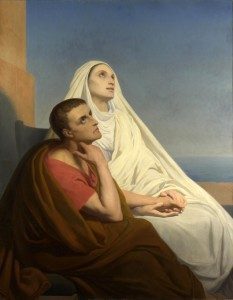
As I work through the painful separation from the life of a Religious Sister, I see Saint Monica as a source of hope. She persevered her whole life praying for something that seemed crazy to everyone around her and God blessed her perseverance. Saint Augustine eventually converted from a crazy life to life lived for God alone. So many days I just want to give up my prayer life and everything that goes along with my relationship with God, but I know that if I persevere, He will bless me and show me whatever He has waiting for me out here in the world. As Saint Augustine says, “You have made us for Yourself, O Lord, and our hearts are restless until they rest in You.” My heart may still be restless a year after leaving the convent, but I know the answer to that restlessness lies in God alone and persevering in my relationship with Him.
Aug 26, 2015 |
By Lucia Delgado
One of my favorite saints, St. Augustine of Hippo, said this: “Patience is the companion of wisdom.”
In my discernment process of becoming a Franciscan sister, I thought I was patient. However, as one friend would put it, I was “eloping.” My impatience was fueled by others who thought they knew I was meant to be a sister. I entered discernment with the thought of impressing others. I said to myself: Wouldn’t it be nice to be in a habit and change the West Coast? And influence others to go back to Church and promote a culture of life?
But I was fleeing from the marriage vocation.
Yes, I was running away. I thought would it be nice to be closer to Jesus in the convent. The atmosphere at the convent and retreat house was peaceful and beautiful. But my trembling soul was called to another vocation.
I kept in touch with the sisters after my abrupt departure last summer. They thought I was called to religious life. There were signs of a vocation but to different lifestyle.
Now, I am discerning the call to marriage; I feared that my relationship with Jesus would go sour if I took this route.
It was quite the opposite.
I am closer to the Lord and I get to share my love for Him with my Catholic boyfriend. I go to Bible studies at a nearby parish; I am able to sing in the choir and cantor the responsorial Psalms.
I will say that my discernment was a blessing. The experiences with the sisters made me a wiser Catholic: By singing in the choir, working in the retreat gift shop, and sharing knowledge with the sisters during community catechesis, I learned how to be courageous in sharing my Catholic faith in the world.
I am asking God for patience and wisdom during this next phase in my life. Remember that your experiences in the convent are not wasted but those experiences are full of pearls of wisdom.
Aug 7, 2015 |
By Father Dominic McManus OP.
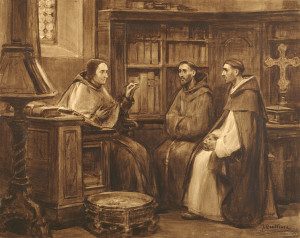
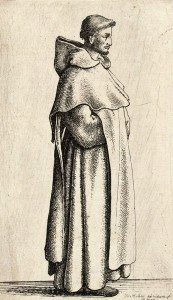
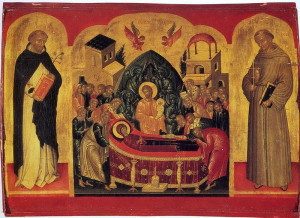
There is an ancient tradition that Saint Francis and Saint Dominic, the fathers of the mendicant reform of religious life in the 13th century, met while at Cardinal Ugolino’s while awaiting approval for their respective Rules. There’s a lot of the history to be legitimately doubted: that we swapped belts, for instance, or changed Constitutions. Whatever did or didn’t happen in the Cardinal’s garden that day, however, a longstanding tradition was born. On the Feast of St. Dominic a Franciscan is invited to preach at the Dominican priory; likewise, on the Feast of Saint Francis, a Dominican is invited to the Franciscans. I am not a Franciscan, but in honor of the tradition I want to begin with cinematic anecdote of Holy Father Francis.
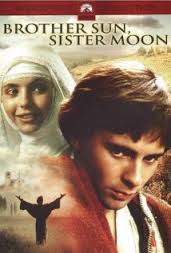
Brother Sun, Sister Moon has its critics, and rightly so. It’s a pretty pastel version of a very peculiar saint whose life more closely resembled an action adventure than a holy card. But even a campy movie can get some things right. Oddly enough, one of the things that Brother Sun, Sister Moon manages very well is vocation: why people come, why some leave, and why others stay.
My favorite scene opens up on the friars begging in the streets. Some people offer them food, others throw garbage their way, but most simply jeer and shout. Francis predictably breaks out in a spontaneous sermon which he closes with a song; a kind of litany to the joys of Lady Poverty and Sister Want. One of the brothers, however, hangs back. We find him peering in the window of a house at one of Assisi’s local lovelies, her blouse having come open as she kneads a loaf of bread. It’s unclear whether the brother is taken with this portrait of domesticity, or just the expanse of cleavage open to his view, but in any case he’s caught by one of the other brothers and brought to Francis, who gives a rather profound if not very technical exhortation on vocation. “We’re not all meant to be monks,” he tells the wayward friar. “If celibacy tempts you more than marriage, then leave, marry, and be happy for it!” Francis ruffles the brother’s hair and the one departing realizes a moment of prophesy: Francis had never tonsured him alongside the others. The scene closes with the friars taking up their joyful song again, this time to joys of Sister Chastity.
As silly as it sounds, there’s deep insight in this scene. Besides the obvious fact that not everyone is called to religious life, Francis’ exhortation is dead-on. If the observances of the life make it harder for you to be a good Christian, then you really ought to leave, and be happy for having figured it out. This is true whether the observances in question are fundamental to religious life as a whole, like poverty, chastity, or obedience, or if they’re more particular to the community in question, like whether they let you wax or bleach your mustache, or whether you occasionally can have a beer or an ice cream.
What I think is even more profound in the movie’s portrayal of vocation here, is more implicit than explicit. If one is bound to leave because the structures of the life militate against your own growth in virtue and holiness, then why would one ever enter to begin with? Here the film is precisely right: because it’s meant to make the Christian life easier. Religious life lived aright is nothing other than the Christian call to holiness, organized and institutionalized to serve the needs of particular people in a particular place and at a particular time.
I didn’t really understand this until long after I’d entered religious life. I started in a class of nine, of which I am now the sole survivor. Each time another brother would leave, we who remained would be faced with a two-headed monster. Why is he being called to leave? And more importantly (at least for me), why am I being called to stay? But as life has gone on and my classmates have discovered other vocations: to diocesan priesthood, to marriage and family life, to other religious communities, and to service as single men in the Church, they’ve all reported that the transition out of the life was not so different than the transition into it.
We were all drawn to Dominican life, under some description, because of what the Order these days calls the Four Pillars: prayer, common life, study, and ministry. But of course, long before we entered we were all men of prayer; if not the Divine Office, at least regular daily prayer, the rosary, Adoration, and obviously Mass. We all were part of various intentional communities, whether among our own families, or close-knit groups of friends, various confraternities, or the KCs, or even the Boy Scouts. We were all men of study, especially concerning the Faith, otherwise we wouldn’t have been drawn to the Dominicans to start. And we were all men of action, who at the very least volunteered, if not actually worked, in some ministry or apostolate. And as my brothers have moved on with their lives they have remained men of prayer, of study, of common life, and of ministry. And we in the Order would expect nothing less.
Saint Dominic, whose feast we celebrate, would have a special care for the women of Leonie’s Longing. First of all, he was a failed vocation, at least in the sense that he started as a priest in one place under one bishop and felt dissatisfied. The life of a canon regular ceased be an aid to his salvation and became a liability. And since there was yet no way of life in the Church designed for the work which did give him life, he had to invent it. And together, wittingly or not, Saint Dominic and Saint Francis changed the way the Church thinks about religious life altogether.
One feature of this new way of life that Saint Dominic proposed that I imagine can be of good use here at Leonie’s Longing, is the principle of dispensation. This doesn’t mean that Saint Dominic let the brethren get away with murder; far from it, he was kind of a hard-ass, but he deliberately crafted our Rule and Constitutions such that they would not bind under pain of sin. Why? First, because he wanted all of the brothers and sisters of the Order, both superiors and subjects, to keep the end in mind all of the time. He didn’t want me, as a priest, to have to scroup over Confessions going past time and me missing Vespers, though he would expect me to make it up later. Why? Because the reason for Vespers is for the sake of the penitent in the confessional! But there was a deeper, more profound meaning to Saint Dominic’s take on the law. He wanted the observances and discipline of the life to be undertaken freely, so that they could best dispose the spirit of the individual to the graces necessary, not only for their own salvation, but for the salvation of all souls.
Dominic spent ten years in southern France trying to get the Order started, with nothing but a handful of nuns and his own brother for company. How often during that decade of waiting do you think he thought himself a failure? If he was anything like me, it’d be six times before breakfast. And yet God turned that work into a tradition now 800 years old! You might feel like a failure today, and maybe your transition out of the life was due to something you did, or something they did, or more likely, a bunch of things both of you did. What matters now is how God is going to turn this seeming failure into a success, how He longs to make a saint out of the sinner you see in the mirror.
So when you’re tempted to dream about what once was, or to return internally to long-dashed hopes, or to groan in frustration because the baby’s cry won’t let you whisper Compline to yourself, think on Dominic and Francis. And think not so much on the life they lived as on the motivations, the desires, and the intentionality with which they lived it. Don’t dwell on why you left, but give thanks for why you came. And be happy, as Francis exhorts the brother with the unshorn head, that you’ve learned something new about the God who loves you, and about how He longs to bring you home.
Father Dominic McManus is currently Adjunct Instructor of Liturgical and Sacramental Theology at Aquinas Institute of Theology in Missouri. His major areas of interest are liturgical theology, especially cross-ritual studies, and preaching, and he recently published the book, The Mission of LOVE – A Sacramental Journey to Marital Success.
Jun 24, 2015 |
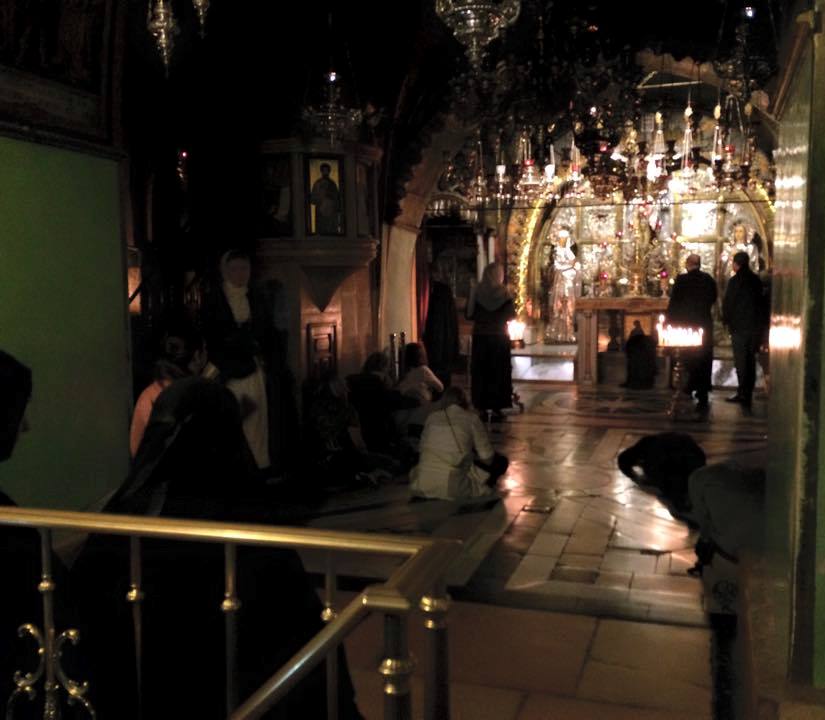
Church of the Holy Sepulcher
By Guadalupana
In May I was able to go on a pilgrimage to the Holy Land. My fourth year anniversary of leaving religious life fell while I was there – May 24th AND Pentecost Sunday of this year. I surprisingly wasn’t able to remember the exact date of my departure from the convent and had to actually look it up in an old journal before embarking to Israel. Perhaps that’s a good sign? However, my heart still remembered at times how it felt and aspects of the leaving process were very clear when I brought them to mind. Going shopping in my habit the day after learning I wasn’t called to vows & peeking out of the dressing room to show another sister my outfit, going for a couple of days of prayer, being rebellious & wearing pink toe nail polish under my tall white socks during my last couple of days, the goodbye brunch, having the opportunity to say goodbye to some sisters in person but not many, throwing a hair brush across the room after a sister attempted to make my short hair look a little better, and having the novitiate sisters crowd around me before getting into the van to head to the airport after I had changed into one of my new outfits. These are a few of my last moments in the convent. Although there is still at times pain and sorrow when I recall this, there is peace and God’s love was present with me then as it is with me now. This now brings me to the topic of the Holy Land.
Before leaving for the Holy Land, we were told by a priest that we would be going on a pilgrimage to endure a journey and meet God on it. We would be going on an outward journey to go on an inner journey. We would be going to the place where God’s Heart met man’s in the flesh and we want to leave inspired. The priest told us that he wanted us to meet the living God, to fall in love with Him, to make our peace with Him, and for us to go forth to set the world on fire. This is the Christian life. We needed to prepare for this and be ready to meet Him. How true these words became for me and are still becoming for me as I continue to journey through all that transpired while in the Holy Land.
The Sea of Galilee.
It was so powerful being in the places of Our Lord. Sometimes I can think too much, but while there, my heart became more alive again. I would lose all control of my emotions at times with the Lord performing “surgery” on my heart. He loves us so much…He loves me so much. I crucified Jesus by my sins and, like St. Peter, have denied Christ (I have in a way denied Him when I’ve doubted His mercy & love for me at times) but yet Jesus chose to go through such suffering & die out of love for me. Jesus…God…came to earth out of love for me to be my Savior, for me to know how much I am loved by God, for me (like Mother Mary) to rejoice in God my Savior, to be with me as I journey to Heaven. It was like a dance between my insecurity and God’s patient & tender love for me. Multiple times during the pilgrimage, my insecurity would arise in my heart with God then gently reminding me that I am loved and that He is there. It’s like the parable of the sower (see Luke 8) with the seed (God’s Word & truth of His love for me) needing to go deeper into the soil of my heart. I started Pentecost Sunday (literally: it was around midnight) near the courtyard of the Church of the Holy Sepulcher going to Confession and then going to Calvary (YES, the spot where Jesus died out of love for me) to be with Him. It was so spiritually peaceful, beautiful, real. I could have stayed there all night.
Calvary on Pentecost morning.
We had already visited Calvary once before this during the pilgrimage but on my last day I just had to go again, making it visit number three! I almost didn’t have peace about leaving the Holy Land and desired to return to Calvary again to be with Him and to say goodbye. While there, I told Him that I didn’t want to leave. Quietly in my heart I heard, “You’ll find Me in the Eucharist”. After this time at Calvary, I had peace about leaving. At each Mass, I get to return to Calvary. With each Eucharist, I receive my Savior Who died (and rose) out of love for me. Wherever I am, He is also with me, loving me. Someone joked after my return home that I had gone all the way to the Holy Land to be told that I’ll find God in the town where I live. Wherever I am is my Holy Land, for Christ walks with me and journeys with me on this pilgrimage to Heaven.
Jun 10, 2015 |
By Josepha.
Something that I really struggled with after leaving the convent was an overwhelming sense of shame and embarrassment that I had entered that life and then not stuck it through to the end. I felt divorced from God and distanced from all the people who had supported me in entering and prayed me through the three years I spent in Religious Life.
Even my departure itself left me feeling abandoned and unwanted by the community. I was asked not to say goodbye to the others in my group because of the timing of everything, and I left in secret. Of course, my community had no intention of making me feel that rejected. There was the good of all the other Sisters to take into account, and my superior prayed about the best way to do everything. It is challenging to know one thing in your head and feel something entirely different in your heart. While I knew the Sisters loved me and wanted what was best for me, I felt like everything was falling apart and my faith was slowly extinguishing.
My family added to my own sense of shame by either trying to pretend like I had never entered Religious Life or by saying I left because I wanted my cell phone back. Which, of course, could not be further from the truth. I didn’t even want a cell phone when I came back. When my Dad finally forced me to come to the cell phone store with him, he told the man that I didn’t currently own a cell phone because I had lived overseas for the past three years and couldn’t talk about what I had done over there. Awkward to say the least!
Luckily, shortly after I returned home, the Lord placed a few different people in my life who slowly lead me back to the Faith and helped me to process everything that happened in my departure from Religious Life. I realize now that I would not have been as happy as the Lord wants me to be if I had failed to listen to His call back into the world, and the time I spent in Religious Life will bear fruit in whatever the Lord has planned for me. There is no reason to be embarrassed of my three years as a sister – it is still a gift even though I did not remain there. The Lord did so much for me in those three years, and I don’t want to throw it all away because it feel weird to even think about sometimes. Each day has its ups and downs, but I know the Lord is leading me ever closer to Himself and the vocation He has laid out for me. He, of course, knows the reason for all of this and the good He intends to bring out of all of it.
Jun 3, 2015 |
By two Leonie’s Longing writers.
Among the reasons for leaving religious life, the one that gets the least attention is that of being asked to leave the community.
Perhaps you know you: were too young, unhealthy, didn’t fit in, broke a rule, were unhappy, had conflict with your superior, had a misunderstanding, etc.
Or maybe you were like me and you weren’t told why you needed to go. You were simply asked to leave.
Even for those who have either discerned themselves or with the community to leave, there are still those looming questions, the “what if’s” or the “if only’s.” These questions, especially for those of us that are still wondering why, can echo in a seemingly empty soul.
Nature abhors a vacuum, and the evil one is all too willing to fill in that empty space of unknowing or uncertainty. He relentlessly lied to me and I had incredible difficulty fighting it. My sense of isolation and shame didn’t help.
These lies can include:
God doesn’t love you.
You weren’t good enough.
There’s something wrong with you.
How could you ever think you could be a sister?
They shouldn’t have let you into the community in the first place.
That peace and joy you experienced before entering was fake.
God doesn’t have a plan for you.
Only a really bad person is asked to leave a religious community.
Do these sound familiar?
So what is the truth? How do I combat these lies?
First of all, we must remember one simple fact: GOD IS GOD. Okay, I know you all know this, but sometimes we forget that God is bigger than our sins, failures, weaknesses, etc. Years ago I was told about a homily and it made an impression on me. In it the priest said: “God is big. God is bigger than big.” This is a simple reality, but one we often forget.
Besides this, who are we to call certain events and people failures? God often uses these “failures” to reveal his glory. It is easy to doubt that God is in our messes. But I would argue that it is exactly those places in which he wants to dwell.
These few little truths may help you combat the aforementioned lies:
- God STILL has great things planned for you. (We can’t “fail” our vocation. We can’t “fail” God’s plan for us.)
- Even though we are not religious anymore, that does not mean we are less valuable to God. Lumen gentium argues the exact opposite; there is a “universal call to holiness,” i.e. that holiness is not reserved for priests and religious. Furthermore, it is the laity that is given much of the task of preaching the Gospel and bringing Christ to others. You are given a special mission in your present lay life! You can reach others in a way that you couldn’t as a religious.
- Your fundamental identity as a Daughter of God and your relationship with God is UNCHANGABLE! You still belong to Him and are no less in His Eyes. He is arguably even closer to you in your suffering and pain, your grief and loss, and your shame and isolation. He experienced all of these things and is with you so intimately in these moments.
As we have reflected in the past few months on the mystery of the Resurrection, let us rise up out of those places that are dark, the “tombs” in our soul. Let us believe, without necessarily seeing, the good that God does with our “tragedies.” The Resurrection is proof of this reality that takes place within the human heart, within your heart.

 as separate, but it was incredibly painful to be on the “outside” of everything for the first time and to be at a distance from those whom I entered the community with. Some Sisters were better than other at making me feel welcome, and for others I could see discomfort at my presence. I just wish it didn’t have to be that way. I wish we could just keep our friendships in some normal way, but I know that our relationships have to change for the good of them and me as well.
 Saint Augustine eventually converted from a crazy life to life lived for God alone. So many days I just want to give up my prayer life and everything that goes along with my relationship with God, but I know that if I persevere, He will bless me and show me whatever He has waiting for me out here in the world. As Saint Augustine says, “You have made us for Yourself, O Lord, and our hearts are restless until they rest in You.” My heart may still be restless a year after leaving the convent, but I know the answer to that restlessness lies in God alone and persevering in my relationship with Him.
 By Lucia Delgado
 By Father Dominic McManus OP.
 aneous sermon which he closes with a song; a kind of litany to the joys of Lady Poverty and Sister Want. One of the brothers, however, hangs back. We find him peering in the window of a house at one of Assisi’s local lovelies, her blouse having come open as she kneads a loaf of bread. It’s unclear whether the brother is taken with this portrait of domesticity, or just the expanse of cleavage open to his view, but in any case he’s caught by one of the other brothers and brought to Francis, who gives a rather profound if not very technical exhortation on vocation. “We’re not all meant to be monks,” he tells the wayward friar. “If celibacy tempts you more than marriage, then leave, marry, and be happy for it!” Francis ruffles the brother’s hair and the one departing realizes a moment of prophesy: Francis had never tonsured him alongside the others. The scene closes with the friars taking up their joyful song again, this time to joys of Sister Chastity.
 I didn’t really understand this until long after I’d entered religious life. I started in a class of nine, of which I am now the sole survivor. Each time another brother would leave, we who remained would be faced with a two-headed monster. Why is he being called to leave? And more importantly (at least for me), why am I being called to stay? But as life has gone on and my classmates have discovered other vocations: to diocesan priesthood, to marriage and family life, to other religious communities, and to service as single men in the Church, they’ve all reported that the transition out of the life was not so different than the transition into it.
 at Leonie’s Longing, is the principle of dispensation. This doesn’t mean that Saint Dominic let the brethren get away with murder; far from it, he was kind of a hard-ass, but he deliberately crafted our Rule and Constitutions such that they would not bind under pain of sin. Why? First, because he wanted all of the brothers and sisters of the Order, both superiors and subjects, to keep the end in mind all of the time. He didn’t want me, as a priest, to have to scroup over Confessions going past time and me missing Vespers, though he would expect me to make it up later. Why? Because the reason for Vespers is for the sake of the penitent in the confessional! But there was a deeper, more profound meaning to Saint Dominic’s take on the law. He wanted the observances and discipline of the life to be undertaken freely, so that they could best dispose the spirit of the individual to the graces necessary, not only for their own salvation, but for the salvation of all souls.
 So when you’re tempted to dream about what once was, or to return internally to long-dashed hopes, or to groan in frustration because the baby’s cry won’t let you whisper Compline to yourself, think on Dominic and Francis. And think not so much on the life they lived as on the motivations, the desires, and the intentionality with which they lived it. Don’t dwell on why you left, but give thanks for why you came. And be happy, as Francis exhorts the brother with the unshorn head, that you’ve learned something new about the God who loves you, and about how He longs to bring you home.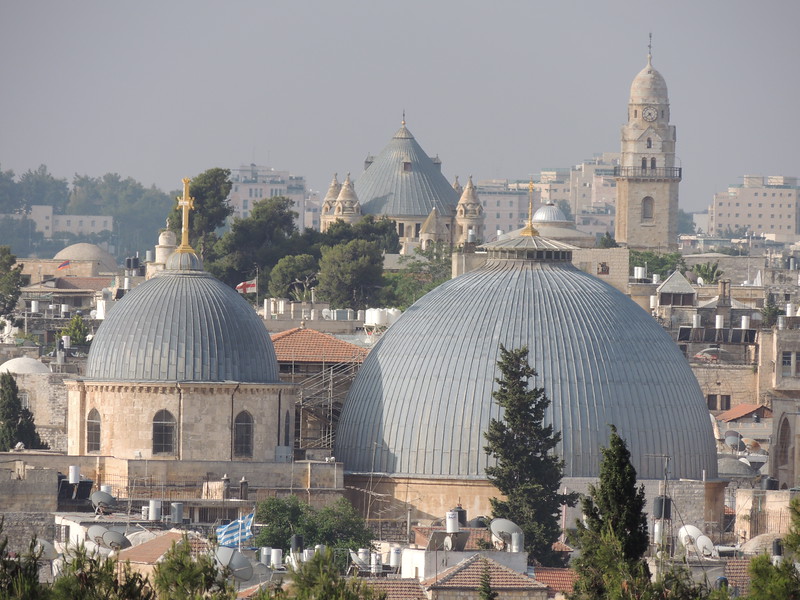

 By Josepha.
 that rejected. There was the good of all the other Sisters to take into account, and my superior prayed about the best way to do everything. It is challenging to know one thing in your head and feel something entirely different in your heart. While I knew the Sisters loved me and wanted what was best for me, I felt like everything was falling apart and my faith was slowly extinguishing.
 ot be further from the truth. I didn’t even want a cell phone when I came back. When my Dad finally forced me to come to the cell phone store with him, he told the man that I didn’t currently own a cell phone because I had lived overseas for the past three years and couldn’t talk about what I had done over there. Awkward to say the least!
 ants me to be if I had failed to listen to His call back into the world, and the time I spent in Religious Life will bear fruit in whatever the Lord has planned for me. There is no reason to be embarrassed of my three years as a sister – it is still a gift even though I did not remain there. The Lord did so much for me in those three years, and I don’t want to throw it all away because it feel weird to even think about sometimes. Each day has its ups and downs, but I know the Lord is leading me ever closer to Himself and the vocation He has laid out for me. He, of course, knows the reason for all of this and the good He intends to bring out of all of it.
Recent Comments