May 18, 2014 |
 Leaving the convent and returning to the world was quite the experience, to say the least. Did you feel the same way? I was in the convent, going about my day and then two days later I was in a car driving to my parents’ house. My routine was suddenly turned upside down.
I certainly did not know where I was going or what my future would hold. It was difficult to fight off the anxiety and fear. Now what? Where will I work? Can I find a job? What kind of job? Do I have clothes? Where can I live? Once the immediate needs passed, other questions set in. Do I have a vocation at all? Is there a plan? Do I have a path? Is my holiness in jeopardy now that I am back? Does God still love me?
Though I have been back for a few years, the latter questions still periodically crop up in my mind. As I am in the heat of the moment, feeling rather hopeless and confused about my future, nothing seems possible. I am a weak sinner and ending up in Heaven seems basically impossible. Oh, if only I were St. Teresa of Avila or St. Francis de Sales (for example), then I would be fine!
But recently I realized that they probably felt the same way at times. When they were alive and struggling through life just like me, they had to feel confused, lost, unsure, etc. because they did not know what would happen in the future. They did not know if they would end up in Heaven and they certainly did not know that they would be canonized by the Church!
But I know the end of their stories. Therefore, it is easy to view the difficulties they experienced as being “no big deal.”
Yeah, St. Therese died from TB, but so what? She ended up in Heaven, so it’s fine.
St. John of the Cross was thrown in prison but he was holy so I am sure that was easy for him.
Bl. Margaret of Castello was abandoned by her parents, but she totally got over it.
Really? Do I really believe this? That these saints were not human at all and did not struggle? It is ridiculous, and yet I think I slip into this very easily. And more than that, I somehow think that what I am experiencing is so much worse! It’s rather funny, actually.
So what can I learn from this? Today is passing and tomorrow will come and surprise us all. What I am experiencing right now will not necessarily determine my future. Many studies show that envisioning what you want and how you will attain it increases the chances of it becoming a reality. This is not the case only for material wealth and worldly success. I need to picture myself in Heaven with God and imagine myself acting in ways that will get me there! When St. Thomas Aquinas was asked, “What does it take to become a saint?” He answered, “Will it.” Is that not the same thing? We have to be like little children and trust that the Father wants us to be eternally with Him in Heaven infinitely more than we want it for ourselves!
Finally, we need to have confidence that what Jesus tells us in today’s Gospel is TRUE:
Jesus said to his disciples:
“Do not let your hearts be troubled.
You have faith in God; have faith also in me.
In my Father’s house there are many dwelling places.
If there were not,
would I have told you that I am going to prepare a place for you?
And if I go and prepare a place for you,
I will come back again and take you to myself,
so that where I am you also may be.
Where I am going you know the way.”
John 14:1-4
By Rosa Mystica
Apr 6, 2014 |
 Sacrificing sacrifice. At first it sounds like a contradiction. After all, if a person who, having resolved to give up sweets for Lent, justifies eating a bowl of ice cream by saying that she is offering up the sacrifice of not avoiding desserts, it sounds silly. It sounds like the person is either looking for some kind of loophole, or maybe that whatever they decided to sacrifice in the first place just isn’t a big deal to them.
But could there be situations where having to give up the sacrifice we had anticipated making in fact costs us more interiorly than the original sacrifice would have? I think that for someone who has left the convent, this can frequently be the case.
The Song at the Scaffold, a novella written by German author Gertrud von Le Fort, is a fictionalized story using many historical facts about the Carmelite Martyrs of Compiègne. When, during the course of the French Revolution, the Civil Constitution of the Clergy commanded that all monasteries be suppressed, these brave nuns refused to obey, and ultimately were executed. Certain quotes from this novella give insight into what is really at work when a woman discerns that she is called to leave religious life.
When the French government began its persecution of priests and religious, one of the nuns in this convent, Sister Marie of the Incarnation, was filled with an ardent desire to offer her life to God in martyrdom. In her zeal, she even persuaded the other nuns to have a similar desire. Full of fervor, they made a vow to offer their lives in order to save France. However, as the events of the story unfold, Sister Marie is the only one of the nuns of the monastery who was not put to death. How devastated she must have been! The author of the story tells us:
Now, my friend, comes the real sacrifice of this great soul. We see Sister Marie of the Incarnation approaching it and disappearing into it as through a dark gate, disappearing entirely. This sacrifice has no proud name. No one admired her for it, noted it down, or even observed it. Yet she too sacrificed unto death, effacing the significance of a whole lifetime: she sacrificed sacrifice. (Von Le Fort, Gertrud. The Song at the Scaffold. New York: Sheed & Ward, 1993. Print. Pg. 69, emphasis in the original)
It is certainly no small thing to make the type of consecration that these Sisters made, and it shows Sister Marie’s generosity and nobility of spirit that she desired the grace of martyrdom so fervently. Surely it would have been a great and beautiful thing and given God much glory if Sister Marie had died a martyr’s death. However, God was calling her to make a different sacrifice; one that was even harder for her.
I doubt anyone will disagree that entering religious life, notwithstanding its great beauty, entails a good deal of sacrifice. You give up marriage, having children, being able to see and communicate with your family and friends as much as you might like, the freedom to decide your daily schedule, a career, and many other things. Daily living of religious life also brings with it many crosses, some small and some larger. Going into it, you were aware of this, and yet you embraced this new life with joy because Jesus, the one you love above all, was asking it of you. You pledged yourself completely to Him.
Then the time came, however it happened, that it became clear that it was not God’s will for you to remain in the convent. For many, if not all, it was probably a very hard time: I know it was for me! But know that in asking you to leave the convent, God was not rejecting the offering of yourself that you made to Him. Rather, God was asking of you a different sacrifice: a sacrifice that meant giving up some of the deepest desires of your heart. There was nothing wrong with your desire to give yourself completely to God through religious life: far from it! God still desires your total gift of self, but now in a different way.
Entering religious life is a visible, notable sacrifice, one that frequently draws the admiration of others. Even people who aren’t particularly religious might recognize, to some degree at least, the beauty of religious life. Not so with leaving. To an outside observer, it can perhaps look as though a woman who has left religious life is giving up, or, alternatively, that she is finally “coming to her senses” and getting back her “freedom.” They may not realize that for some, leaving the convent is a huge sacrifice: perhaps even greater than the sacrifices involved in entering in the first place.
The decision to leave the convent can indeed be a sacrifice with “no proud name, one that [n]o one admire[s], note[s] down, or even observe[s]. A sacrifice that no one knows, sees, or understands” save God alone, the loving God who sees what is hidden in the depths of your heart. He is so intimately united with you that not only does He know what you are experiencing, He has experienced it all Himself.
Earlier in The Song at the Scaffold, there is a scene where Mother Teresa, the monastery’s Prioress, is informing the Sisters of the government’s decree forbidding religious to make their vows:
Then she read the decree. You, my daughters, she said to the two novices, because of this cruel law, will offer up your perpetual vows to His Majesty by sacrificing the joy of pronouncing them solemnly. For it is not important to realize our own aims, even though they may be the most worthy, but to fulfill the will of God. Do not therefore rebel against this decree, my dear novices, but neither should you try to repress your sorrow by sheer force of will. Embrace your disappointment and it is justifiable in complete love of God, and you will be obeying the spirit of our order. You will be Carmelites in the full sense of the word at the very time that the world does not permit you to be Carmelites. (pgs. 34-35)
This quote really gets to the heart of the matter. Think about it: Why did you enter the convent in the first place? Wasn’t it because you thought that this was God’s will for you? And why did you leave? Was it not because you realized that God was asking you to do something different? In both cases, you were seeking God’s will. Without question, the desire we had or have for religious life is a good and holy desire. However, what matters ultimately is that we are striving to do God’s will. Thus, so long as we are seeking God’s will, we should be at peace.
Nevertheless, I think Mother Prioress makes a good point in saying that this disappointment we may experience is “justifiable” and that we shouldn’t “try to repress [our] sorrow by sheer force of the will.” I think it’s quite natural and normal to go through a certain grieving when we have to give up such beautiful, long-cherished desires. Yet that sorrow is part of the cross that Jesus is now asking us to bear. Each one of us, by our Baptism, is called to be a “bride of Christ.” Some Christians are called to live out this identity in a particularly striking way by means of religious life, but each one of us, without exception, is called to a spousal union with Christ. The cross is an integral part of this union. So by asking you to leave the convent, Jesus is by no means rejecting you as His spouse. Rather, He is indicating that He wants you to live out this spiritual union in a different way.
And isn’t that what it really means to be a religious, that you are seeking to conform your will entirely to God’s, even when it is difficult? After all, that is why you took the vow of obedience, or were preparing to take it, because you wanted to always be sure that you were doing the will of your Beloved. Truly, to paraphrase Mother Prioress, you will be the bride of Christ in the full sense of the word at the very time that you do not externally appear to be the bride of Christ. This “sacrificed sacrifice,” made with love, is something very beautiful and precious to God. This cross you are carrying is His gift to help you become more and more like Jesus as He prayed to His Father, “Not My will, but Yours be done.”
By Teresita
Mar 15, 2014 |
The first signs of spring have finally arrived and people are getting excited. In the Northern regions it is warmer and the snow is melting. We can see the ground again! But yet, it’s a rather ugly time if you really think about it.
For those of you who don’t live in places like this, let me explain. The snow melts and everything gets wet. Not a “fresh spring rain” kind of wet. Nope. Everything is muddy and messy. The sidewalks and streets have pools of water. The grass is brown and flat. The dead leaves from Autumn are clogging the drains in the street. What is left of the snow is black and brown and gross looking as it melts and uncovers all of the trash, old newspapers, pieces of the road, etc. hidden underneath. Animals killed on the highway and pushed off by the snowplows are suddenly lying out in the open. And all of this is half rotten because it has been slowly decomposing. I also forgot to mention that we had a few terrible ice storms this winter too. So all of the trees that fell down are still lying about because no one was really able to clean it up when it happened. Basically messy broken-ness is everywhere!
If you look at it with a critical eye, this is a terrible and unsightly scene.
And yet, most people are really happy about it!
Strangers in the elevator tell you how excited they are about the weather changing. The people you walk past seem to smile more and look hopeful. Your co-workers start making vacation plans. Kids can start playing outside with their bikes. It’s amazing!
Why do people react this way? It is irrational! Yet it makes perfect sense if you have hope and you know where this time of transition is leading us: summer!
God helped me realize today that this is very similar to what is going on in my soul, particularly during times of spiritual growth and transition. The more we attempt to follow Jesus and try to, “be perfect, just as your heavenly Father is perfect” (Mt 5:48), the more we see the vile and unpleasant parts of ourselves. It can be so discouraging! For that reason we need to keep the end goal in mind: perfect union with God in Heaven.
Satan loves to tempt us to despair when something revolting may be uncovered by Lent, changes in our life, etc. So what can we do to fight back? Sharing our struggles with a trusted friend and/or a spiritual director is always a good choice. Often they can have a more realistic perspective than the one experiencing the struggle. Another is to combat the lie with the truth. “Lord, I know it seems as though I am regressing spiritually. But help me to know that you are with me as I am being purified.”
Finally, try to think of the hope we feel during the transition from winter to spring. Though it can seem disgusting, we are heading to something beautiful. God bless you!
By Pinkie
Jan 24, 2014 |
Often when I’m examining my faults, I will let the train of thought take me to the town called “Maybe That’s Why I was Called to Leave the Convent.” And before I know it, I’m recalling instances like that one worldly conversation I had with a sister; or the feeling of insecurity when trying to do the ‘right thing’; or the way I overreacted when the pot of soup boiled over; or my attachment to always winning at a game of cards…need I go on? Well, most of the time these thoughts lead me to further examination, which leads to either a vague feeling of enlightenment or the feeling of disappointment…in myself and in God.
Except for last night. I was lying in bed and started to think about how it seemed like I wasn’t able to embrace the present circumstances of my life. Again, that train took off: “That’s it!! I don’t think I embraced ‘The Life’ as ‘My Life’…”
And all of a sudden, it’s like the Holy Spirit jumped in front of this train and simply said: WHAT IF I did everything I was supposed to do (according to the state of life I was in), and it was God’s plan all along?! WHAT IF I didn’t do anything wrong but it was all right in the sight of God?
It certainly gave me peace as the “train” came to a screeching halt and I remembered that “He chose us in Him before the foundation of the world (Eph 1:4).” Which means that He had each and every one of us in mind before He even created the world – so He must know what He’s doing and loves us according to His plan!
WHAT IF I could stop trying to make excuses for “Why I was Called to Leave the Convent”?
—I think it would be a lot easier to see my life as more of a purpose and less of an accident.—
Lord, grant me the grace to see myself and my life as You see it.
By Liz Miller
Liz is a college student who embraces all of life’s awkward moments. She loves Ven. Fulton Sheen and puns.

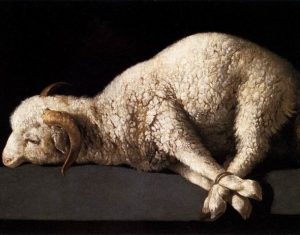 Sacrificing sacrifice. At first it sounds like a contradiction. After all, if a person who, having resolved to give up sweets for Lent, justifies eating a bowl of ice cream by saying that she is offering up the sacrifice of n
 The first signs of spring have finally arrived and people are getting excited. In the Northern regions it is warmer and the snow is melting. We can see the ground again! But yet, it’s a rather ugly time if you really think about it.
 Often when I’m examining my faults, I will let the train of thought take me to the town called “Maybe That’s Why I was Called to Leave the Convent.” And before I know it, I’m recalling instances like that one worldly conversation I had with a sister; or the feeling of insecurity when trying to do the ‘right thing’; or the way I overreacted when the pot of soup boiled over; or my attachment to always winning at a game of cards…need I go on? Well, most of the time these thoughts lead me to further examination, which leads to either a vague feeling of enlightenment or the feeling of disappointment…in myself and in God.
Recent Comments