
A Garden Unfinished
 By Carolyn.
Originally published in Homiletic and Pastoral Review, May 28th 2016. Reproduced here with permission from the author.
O Jesus, through the Immaculate Heart of Mary,
I offer you my prayers, works, joys, and sufferings of this day
in union with the Holy Sacrifice of the Mass throughout the world.
I offer them for all the intentions of your Sacred Heart: the salvation of souls, reparation for sin, and the reunion of all Christians.
I offer them for the intentions of our bishops and of all Apostles of Prayer, and in particular for those recommended by
our Holy Father this month. Amen
As each dawn graces a new day, so should the first prayer of the day be the Morning Offering. Through it we give to Jesus the prayers, works, joys, and sufferings that will come our way until the next dawn. We strive to live day by day, yet our mind wanders. A smile may come as we dwell on these four areas. It can be easy to offer our prayers, works, and joys but the last area can be difficult.
No matter if an individual is a priest, religious or layperson, the prospect of physical suffering is an unpleasant fact, and never a welcome thought. Responses to sickness can range from creative growth to self pity. It can sanctify or darken a soul, and can bring out the best or the worst in a person. In other words, illness can be redemptive or destructive. It can be an opportunity for, or threat to, human and spiritual development. Indeed, suffering is a mystery.
What do the words—“strong,” “healthy,” “weak” and “sick”—suggest? If we place these labels on a descending scale, labeling becomes a risky business because it leads to inaccuracies, and negative mind sets, and supports attitudinal barriers. A person who has a physical handicap can be less limited by the handicap than by the attitudes of people regarding the handicap. Aren’t we all links in a chain, interdependent on each other? Doesn’t Paul, the apostle, tell us to bear one another’s burdens? How do we support and sustain each other? Each of us has gifts and limitations. A mark of spiritual maturity is to recognize and use talents, and to work through, around, or with, flaws. We need each other, and can help each other, look past limitations to focus on gifts. Illness can be a tutor of humility, as well as a channel for creativity, mirth, freedom, and happiness that was never known before. An easy sense of humor, and good common sense can be more valuable than perfect physical health
It has been customary for Church professionals to see people who are physically disabled as a ministry. This is similar to health care professionals, who identify their patients by a disease, or to vocation directors who focus on a walker used by a well-qualified candidate. In the long view, no one is immune to physical suffering, and whatever causes the suffering is only part of a person’s existence. Franklin D. Roosevelt, the thirty-second president of the United States, was a central figure in world events, who brought this country out of the depression, and led it through World War II. He used a wheelchair. Itzhak Perlman is a virtuoso violinist, a teacher of master classes, and a conductor. He uses crutches.
 Disability can be a blessing in disguise by deepening contact with spiritual realities on which the soul depends. A disease, accident, or injury that has residual limitations can change a person’s priorities. Searching the soul, listening at prayer, and a renewal of faith infuses beautiful graces into one’s life. Therese of Lisieux said, “Life is not a destination, it is a journey.” There is no lasting city. All things are passing on the road to heaven. In the light of eternity, doing things that seem so big and important dim in the holiness that radiates from doing simple, daily occupations.
Daily physical suffering, united with the sufferings of Christ, can achieve enormous good. There is a fulfillment that only Christ can give. Spiritually inclined women who live with fragile health, or physical disabilities, can, in fact, enrich religious life through their internal strength, discipline and spiritual ardor.
Almighty God, thrice holy,
I would be wholly thine,
A branch by grace engrafted
Onto the living vine.
Throb through my veins, O Love,
Enable me to bear
The baptism of suffering
I am constrained to share.
Lord Jesus, suffering Servant,
Suffuse me with compassion;
The cup of suff’ring overflows
The Garden of thy Passion;
Consume me with thy peace, thy love
And joy of knowing thee,
As I pray thy Passion payer
As in Gethsemane.
I tread the winepress, daunted:
Must it be daily trod?
The Cross repels yet draws me close
To union with God.
I quest the Lord in Eucharist
And from the chalice drink
The wine of sacrificial love,
While from the Cross I shrink.
Yet, to the Crucified I cry,
“Nail me to the Cross.
Permit thy light to shine through me
To be theotokos;
Transform me by thy saving power,
My darkness purify;
Impart the glory of the Cross
My life to deify.”
O, Spirit of the Living God,
With love my soul attire,
To manifest the choicest fruit
Thy presence can acquire
To incarnate the Spirit,
The will of self efface,
Absorbing love to render love
By God’s perfecting grace.
When the cup of suffering is full,
Spilling o’er the brim,
May th’ world discern God’s glory
In a life poured out for him.
Thy Passion toil will then seem light,
Such is glory’s weight:
That burden, too, is heavy,
But the privilege so great.
Rosemary Radley
Mount Carmel
January – March 2013
Benedictine
Does our Lord call only the strong and healthy to live contemplative religious lives consecrated to him? Father Maurice Gaucheron did not believe this to be true. During the late 1920’s he was serving at the renowned Basilica of the Sacred Heart in Paris, France. While there, he came to know several women who wanted to become contemplative nuns, but their less than robust health, or physical handicaps, made them undesirable candidates for religious life. No monastery would accept them. Father Gaucheron believed that illness and physical fragility were a viable means of following Jesus deeper into the paschal mystery, and could be an asset rather than an impediment to living the contemplative life, provided the vocation was authentic. He shared this proposal with Suzanne Wrotnowska. She could bring out the best in people, and had a great trust in the providence of God. Moved by grace, Suzanne envisioned a religious community that would welcome women in both strong and fragile physical health, as well as women with physical handicaps. Father Maurice and Suzanne began to seek out people who would support this unique way of monastic life, and women who were interested in living it. On April 11, 1930, Suzanne and four other women dedicated their lives to the future congregation through an Act of Consecration during Mass in the crypt of the Sacred Heart Basilica. At that time, Suzanne Wrotnowska became Mother Marie des Douleurs.
In 1933, the sisters were recognized as a religious community by the local bishop, Frédéric Lamy. They opened their first priory, St Joseph’s, which is near Paris, and is the congregation’s motherhouse. Over time, and with grace, canonical steps confirmed them as a monastic congregation of pontifical right. Their lifestyle is based on the Rule of St. Benedict, and they are known as the Benedictine Sisters of Jesus Crucified. Their charism within the Benedictine family is to embody a joyful reverence for, and deep participation in, the paschal mystery of Christ. “Amen, Alleluia!” is their motto. Their “amens” to Good Friday’s dark and difficult times carry the sisters to the “alleluias” of Easter Sunday’s light and new life. The “amen” to Jesus’ passion blossoms in the “alleluia” of his resurrection.
Today, the sisters have two monasteries in France, one in Japan, and one in the United States. Whatever the level of a sister’s physical health, with the aid of grace, all sisters strive to create an environment where each sister is valued, supported, and respected. The sisters are like a family that values a grateful love for their vocation, and for each other. Love is their ideal, and is made manifest by selfless acts of kindness toward each sister, and humor regarding the strange quirks of each sister. (Does God smile at the strange bird in each one of us?) Notre Mere, as Mother Marie des Douleurs was affectionately called, said in a conference:
As are all human beings, we are called upon to be dispensers of divine bounty. And the more we give, the more we ourselves shall have, and in superabundance. Let us give; let us give! Let us remember that we are obliged to give! Let us understand that every day we have a duty to smile, and be amiable, to give good example and advice; perhaps, to help those around us in some major way; or perhaps, only to please them in some small way! To bring back a little clarity into a soul, a little serenity into a face—isn’t that a fine and beautiful thing?” (Joy out of Sorrow, Mother Marie des Douleurs, p 11)
One of her sisters wrote: “The joy and peace to be in God’s house, and consecrated to him, is something that can never be explained.” This was Notre Mere’s gift to her spiritual daughters. She entered eternal life on December 10. 1983. On her memorial card are her words:
Because of the faithful mercy of the Lord, and only because of it, we can leave the night and the tomb behind, having left there all our evil that has now been conquered by the love of our God.—Mother Marie des Douleurs
The Benedictine Sisters of Jesus Crucified make a sincere effort to live in the light of redemptive suffering. So should all of us live redemptive suffering. It is a grace, and requires choices that draw out good from the confusion, difficulties, and trials of each day. On-going suffering is an obscure mystery that pulls an individual deeper into the mystery of Christ. In the light of redemptive suffering, we see that we are not alone. Jesus sustains an unwavering faith that gives our lives meaning and hope that keeps us moving forward. Suffering brings a person to the foot of the cross where she gets to know Jesus, which is distinctly different from knowing about Jesus. When an individual lives the cross, she grows in self-discipline and self-giving. Because of Jesus, suffering can be used well. When Jesus was dying on the cross, suffering became the gateway to resurrection.
Franciscan
Francis of Assisi helps all members of the Church militant. He explains that perfect joy does not come from talents and abilities, since these are not ultimately ours, but are gifts from God. He said the only true gifts we can give God, which are not from God, are our sufferings.
On the natural level, we do not want suffering but, if we strive toward living the Beatitudes, we can accept suffering with joy. Instead of trying to avoid or deny pain and trials, we try to accept them in a spirit that would allow us to offer this rarely appreciated gift to God. Francis found that suffering was the only thing that he had which he could give back to the Lord. Therefore, he lived the Beatitudes on a supernatural level. If we strive to imitate Francis, we are able to say: “I will not glory, save in the Cross of our Lord Jesus Christ.” Then we find true joy in fidelity to God, consistency in prayer, and patient endurance of the gifts we give to God. Joy is an interior state independent from that which affects us externally. Beneath the hardships is the fundamental reality of joy. The background to all suffering is complete faith in the ultimate triumph of the cross of Christ. Edith Stein said: “For now, the world consists of opposites. . . But in the end, none of those contrasts will remain. There will only be the fullness of love. How could it be otherwise?”
Mother Angelica, who was a Poor Clare nun, (and who died early his year) was well-known for her accomplishments, which include the founding of EWTN, a global Catholic network. Because of complications from a stroke, and other medical problems, she withdrew from EWTN at the end of 2001. In 2004, a program, EWTN Live, was aired, that featured Father Mitch Pacwa, S.J. and Father Benedict Groeschel, C.F.R. During the program, Father Pacwa said that during the last two years, EWTN had grown more than at any other time in their history. The growth was attributed to Mother Angelica’s offering of her suffering to God during those years.
Dominican
Human beings thrive by giving and receiving gifts from each other. We depend upon each other. God says to St. Catherine of Siena: “I could well have supplied each of you with all your needs, both spiritual and material. But I wanted to make you dependent on one another so that each of you would be my minister, dispensing the graces and gifts you have received from me.
-Tr Suzanne Noffke, O.P, Catherine of Siena, (New York, Mahwah, 1980, p. 38)
_______________
(The following story is taken from: “A Spirituality of Suffering and Healing,” Timothy Radcliffe, O.P., Religious Life Review, September – October 2012.)
Many suffering people need help. This may be a painful humiliation. And yet it may be an invitation to us all to be freed from the monstrous illusion that anyone of us is self sufficient. It is part of the beauty of being human, that I need others, in order that I may become myself. People with disabilities, who need help to get up in the morning or wash or shop, remind me that I, too, need others if I am to be truly human. Let me give you the example of my brother Vincent, who died a year ago. Vincent was blind from birth. He never saw another human face. He entered the Order when he was young, and soon became one of the most beloved members of the province. This is partly because he was a deeply lovable person, who was strong and humorous, and has utterly no self-pity.
When I was provincial, every community asked me if I would assign Vincent to their community. Not only was it because he was loveable; Vincent gathered community around him. You cannot have someone in the community who is totally blind unless you really are a community. You have to ensure that nothing is in his way when he feels his way down the corridors, and that the milk in the fridge is always in exactly the same place, so that he can find it. All our decisions about our common life have to bear Vincent in mind. And this is not a burden but a joy, since around him we discover each other. He summons us beyond the silly Western illusion that anyone is self-sufficient. In his needs, we discover our own need for each other. He frees us to be brothers, mutually dependent. Because he was blind, he depended upon his hearing. He heard sound bounce off the walls. He navigated around the rooms with his ears. And this meant that he was wonderfully sensitive to what the brethren say. He was appointed to the Formation Team, because he could spot what was happening in the lives of the young, their strengths and weaknesses, more than most of us. His disability was a gift. He picked up the nuances that others miss. He heard our secret fears and hopes in our voices. We are all blind and deaf in some way, and sometimes the blind teach us to hear, and the deaf teach us to see, and the lame give us the courage to take another step.” (Timothy Radcliffe, O.P.)
____________
A journey through life with fragile health can be a uniquely maturing experience. A person can only strive toward wholeness. Nobody is there yet. When illness comes along, an individual accepts it, and accepts ways that reduce its effects, or eliminates it. A person tries to be as well as he or she can be. A sickness or a handicap should not negatively effect, but can refine, one’s personality. A world view is broadened as well. To offer suffering to God the Father is an act of love for the entire world. Patient and uncomplaining suffering is a strong faith witness. Pain can be a motivator of change toward the good, and can lead to a deeper emersion in God. Unencumbered by being busy with many things, people who suffer can become channels of the love of Jesus crucified. When an individual feels broken, she can unite herself to Jesus on the cross, and send her love to the broken people, and broken places in the human family.
God sends his heaviest crosses
To those he calls his own,
And the bitterest drops of the chalice
Are reserved for his friends alone.
But the blood-red drops are precious,
And the crosses are all gain,
For joy is bought with sacrifice,
And the price of love is pain.
(Author unknown)
Carmelite
As a garden is beautiful through the variety of flowers within it, so is a Carmelite monastery beautiful through the charism of the nuns who live there. Each monastery of Carmelite nuns has its own particular charism. One may have a strong devotion to Mary, another an emphases on silence, or living in the present moment, or the practice of simplicity. The Sisters of Jesus Crucified live a tried and true charism within the Rule of St Benedict. Even though Therese of Lisieux said, “Suffering is the very best gift he has to give us. He gives it only to his chosen friends…” the charism of the Sisters of Jesus Crucified is not available within the Carmelite Rule of St Albert. It should be. It would be a great blessing if the Carmelite family had a nun’s Carmel with a charism similar to the Sisters of Jesus Crucified in the Benedictine family. Physically healthy, and not so healthy women, would be welcome here if they had gifts that support a Carmelite contemplative life style.
Such a monastic foundation would be unique and quite valid. Teresa Margaret Redi said: “By entering Carmel, you undertook to reproduce in yourself the life of the Crucified.” Isn’t a peaceful, loving acceptance of suffering inscribed in the heart of a Carmelite vocation? A wise Carmelite once said: “If you want to be a Carmelite, you can expect the cross.” Teresa of Avila was a master of the interior life, but she did not have good health. When a sister in poor health was up for profession, Teresa said to profess her even if she were bedridden. That sister became an outstanding prioress.
At the center of the garden in a Carmelite monastery of nuns, there stands a great crucifix. Edith Stein said: “May Jesus always lead me by the way of the cross.” A portion of the Angelus says: “. . .that we. . .may, by his passion and cross, be brought to the glory of the resurrection. . .” Gazing at a crucifix helps a vibrant soul thrive in a fragile body. The sisters in this proposed monastery would strive to live a joyful and deep participation in the paschal mystery of Christ which presents daily challenges and new discoveries. Being a Carmelite is less about how many holy activities one participates in, and more about how well one adapts to difficult circumstances that come one’s way. Living in the light of redemptive suffering fosters an ever deeper relationship with the Triune God through the passion of Jesus. No matter what their state of health, each sister would be important, and would contribute to the community. Less emphasis is on voluntary penitential acts, and more on offering to God, with a tranquil heart, that which is not chosen. A sister desires to kneel, but cannot do so through no fault of her own. She would have never chosen this limitation; however, in the spirit of the Beatitudes, she offers it as a gift to God. A sister is not disturbed by the way another sister walks or looks because true beauty is deeper than physical beauty. Accepting what comes without making a fuss about things, cheerfully willing to accept or give help, not giving in to negative thinking, and acting as if evil is winning, tests a sister’s mettle. When self-pity, or negative thoughts, knock on a sister’s door, she remembers: “Let nothing disturb me, let nothing frighten me, all things are passing, patience, patience, patience.” Although it is sometimes very hard to see, victory is already won by Christ.
Because the paschal mystery is ever new, each sister tries to maintain a positive attitude, and tries not to complain. Edith Stein said: “The road of suffering is the surest road to union with Our Lord. The redeeming power of suffering, joyfully borne, is greatly needed in our world today.” Hardships, joyfully borne, lead to the cross, and the cross leads to prayer for all who suffer in the human family. Because evil is real, tangible and frightening beyond words, prayer is what is most important, and most needed in today’s society. Carmelites should be specialists in prayer. Prayer at the foot of the cross helps a Carmelite to become more thoughtful, more sensitive, and more kind to those around her. It also can uncover courage that was previously unknown. Teresa of Avila notes: “One must not think that a person who is suffering is not praying. He is offering up his sufferings to God, and many a time, he is praying much more truly than one who goes away by himself and meditates his head off, and, if he has squeezed out a few tears, thinks that is prayer.”
When Father Gaucheron shared his idea with Suzanne Wrotnowska, she replied: “It’s very beautiful, Father, it is probably not impossible, but the realization will be difficult.” Their idea blossomed into a simple but profound, singularly beautiful and sound, expression of Benedictine contemplative monastic life. Women in good health and women with certain physical limitations, who seem to have the call to live a contemplative Carmelite life, should have the opportunity to live in a monastic setting.
With trust in God, and benevolence from grace, all things are possible. There is so much beauty in Carmel’s garden yet to discover.
Readers who desire to help with a Carmelite expression of this life are welcome to contact the author at: jmjcsh@juno.com.

 the growing sense, which I refused to accept, that I may have to leave the community. My spiritual life had been undermined as well, and I alternated between wondering if it was spiritual dryness or something I had done terribly wrong. I felt burdened by the obligations of communal prayer in a monastic community. I seemed to fall asleep in both of my meditations every day no matter how hard I tried to keep watch with Our Lord. I received no consolation at daily Mass. Whenever I went into the chapel to pray the Divine Office, rosary, or make a Holy Hour, it couldn’t be over fast enough. I was painfully agitated and restless. The silence seemed to crush me. When I could speak, I never seemed to be able to say what I needed to my superiors, which left me feeling hopeless and desperately alone.
  From that place, I came home across the country, hoping that somehow everything would be better again. Those painful first days, I could barely go outside because I felt unable to face the world as I was. I felt immodest walking around habit-less, horror that I had left the community, shame for my shaved head and an unshakable sense of failure. I could barely tolerate going to Mass or praying, because I felt divorced by the One I had promised to marry, whom I still love. Everything reminded me of the Sisters I had left behind who were now dead to me. I saw their faces everywhere and heard their voices in my head, sharing their joys, sorrows and spiritual growth with me. To this day, I still do. I still do.
 by Theresa.
 By LumenChristi.
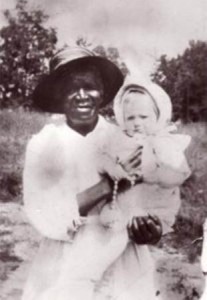
 Fast-forward to June 2017 – nearly 100 years later – her remains were recently transferred to the Cathedral in Denver. She is the very first person to be buried there. As the bishop, Jorge Rodriguez, who presided over the ceremony pointed out “[Julia Greeley] will be the first person buried in Denver’s cathedral. Not a bishop, not a priest – a laywoman, a former slave. Isn’t that something?”
Recent Comments