Sep 15, 2021 |
 By Mary Rose Kreger, republished from her shared blog Monastery in My Heart.
Eight years ago, I was a young novice, Sr. Mary Inez. I spent 19 months in the convent before realizing I was called to a married vocation. Today I am a happy wife and mom, but re-entering the world was a great struggle for me. Here is a poem about my experience:
Once outside the convent
You still long to be inside it
The white curtained walls
The ancient creaking floors
The silence and the song.
He drew me in and I followed,
Hungry for the final Word in treasures—
His secret gaze pierced me, pleaded silently:
Come.
I left everything to find Him,
My home, my job, my family—
Stepping out of the boat into the deep waters.
In return, He gave me the Cross,
That bitter cure-all for a thousand ills,
But also a taste of Heaven.
19 months in His garden, and then He says,
“Go home and tell your family all that I have done for you.”
And so I do. I go home and tell of
The white curtained walls
The ancient creaking floors
The silence and the song.
Six weeks later, I meet James,
The man whom I will marry
Whose birthday is Christmas like
The First Beloved of my heart.
We work and we play, we talk and we pray.
We are married, find a home,
Have a son, then a daughter—
Make friends, lose friends.
Die a hundred tiny deaths, and
Rise a hundred times again.
We share our lives together.
The Lord makes us new—He kisses me
With James’ touch, and embraces me with
Lukie’s arms, and gazes at me
With my daughter’s eyes.
He still wants me, even if His rose was
Never meant to stay in His convent garden.
No, rather to struggle and labor
In this world, pretending to fit in
When my heart has been spoiled for anything
Save Him.
On the outside, endless motions,
Movements of faith, hope, love—
And grit and survival, too, for this
Long journey is hard.
On the inside, a tiny-heart-home,
Always longing for the white curtained walls,
The ancient floors, where I first saw Him.
There, I tasted heaven once—
A darkness that was Light—
And I can no more return to my
Heathen ways than a child to her
Mother’s womb. I tasted heaven once, and my
Heart is ruined for anything else.
Apr 17, 2021 |
 By Cate.
Do you find yourself ready to start dating and yet limited by the lack of social activities these days? (Thank you, Lord, for paradoxically opening my heart to marriage in the midst of a global pandemic!) Or maybe you’ve found the local Catholic dating scene leaving something to be desired. (Too many awkward conversations on tap.) Maybe you’ve thought of trying an online dating site but have hesitations for multiple reasons including horror stories, safety concerns, or the belief that if God wants you to date, He’ll bring someone into your life.
I always desired to meet someone organically. And I did. Multiple times. I probably started dating before I was ready, considering I had been in consecrated life for a decade. But several years and a few breakups later, the Lord did something in my heart. And He called me to create a profile on a Catholic dating site. I believe that I reached a point where clicking “not discerning a religious vocation” gave me a sense of finality and intentionality in my discernment of marriage.
I am grateful for the person I met online! I also know people who tried it for years and finally met their spouse in real life. It’s different for everyone, but I’d like to encourage people to prayerfully consider it. And because it can be so brutal, I’d like to offer some thoughts based on my own experience.
- Craft a stellar profile. Make it honest and detailed. Be specific—it helps you to stand out and not just be “one more profile” that someone reads. What makes you unique? Choose good photos that represent you well. If you don’t have many, ask a friend to help you take some. Be you. Don’t be afraid to talk about yourself. That’s easier for some of us than others.
- Find a tribe to support you. Or at least a friend. I was blessed enough to be living among holy friends when I entered the online dating scene. Because it can feel demoralizing at times, it helps to have a sister to remind you of your worth. It’s also great to have someone to bounce messages off of and to seek advice about a particular person or conversation.
- Be intentional and disciplined. Set aside certain times to scroll, like profiles, and send messages – both so that you don’t become obsessed with it and so that you don’t do nothing at all.
- Don’t be afraid to make the first move. We all want to be pursued, am I right? And much of our formation has told us that this is the “right” way. I always assumed that if God wanted me to get married, He would bring that person to me. But that mentality kept me from taking ownership of my desire for marriage.
I’m here to tell you that sending a first message to let a guy know that you’re interested IS OKAY. It is NOT contrary to letting yourself be pursued. Men want to pursue, but they also want to know that they won’t be rejected. And many men appreciate women who are confident.
If he doesn’t eventually begin to pursue you, then you can move on. But sometimes we need to be the ones to drop that first hint. If he’s right for you, he’ll take it from there.
- Be open minded. Know your non negotiables, but don’t unnecessarily lock yourself into a certain type when it comes to things like interests, career, or location. You could be surprised by someone who didn’t seem to be your “ideal match” at first.
At first I was looking for someone within driving distance. Or someone who lived anywhere but worked in ministry. The man I fell in love with fell into neither of those categories. I sure am glad I expanded my search and kept an open heart.
- Send messages. Don’t be afraid. The more you send, the more of a chance you have at finding someone you really click with. And it’s good practice. Read their profile and acknowledge something from that. Ask leading questions, not ones that can be answered with “yes” or “no.” Be genuine. Allow some back and forth, but don’t continue relentlessly if he doesn’t seem interested.
- Say “no” if it’s not going anywhere. Don’t be afraid to kindly express that you’re not interested in taking the conversation any further.
This is hard. It was especially hard for me. I can make good conversation with just about anyone, and I have a sensitive heart. But I had to be honest I wasn’t interested in going further. If I knew this person in real life, I’m sure that we could continue being friends. But the reality of online dating is that you will have to reject good people, and you will never see them again. A relief for some, a cross for others.
But don’t ghost. It’s not kind. I appreciated polite rejections from others, so I wanted to do the same. Sometimes a conversation will fizzle out without either person having to say anything, and that’s ok. But if you’ve corresponded a lot or have talked on the phone, sending a polite rejection couched in appreciation and compliments, is the right thing to do. Even though it can be super hard.
- Maintain hope. Don’t let the bad apples discourage you from finding a potential match. You’ve heard all about it—the number of guys who don’t believe in all the church’s teachings, the ones who don’t go to Mass, the guy whose mom set up his profile so that he could find a “nice Catholic girl,” the ones who lie about their age or don’t update their photos in years. Click “not interested” and move on. Don’t hate the tool because not everyone uses it perfectly.
- Remain rooted in your identity in Christ. It can be pretty discouraging when none of the cute guys are responding to your messages, when a promising conversation fizzles out, when a first phone call doesn’t lead to a second. We can be harsh on ourselves and wonder if there’s something wrong with us.
This is where our relationship with the Lord has to be our source of truth. Who we are in Him is much more important than how we are perceived by anyone else. That must be our foundation and where we return day after day.
- Keep it light! You can be both casual and intentional. Just because the ultimate goal is marriage doesn’t mean you have to have it all figured out from the beginning of each encounter. That’s unrealistic. Not every conversation will turn into a date. Not every date will lead to marriage. Relax. Enjoy getting to know people. Laugh at the awkwardness. Rejoice in the variety of humanity. Be grateful for pleasant conversations and new things learned.
—
Dating is a great act of faith and trust. If we believe that God works all things for our good, we are called to trust that each dating success or failure is part of His greater plan. In the midst of a heartbreak it’s tempting to wonder endlessly why things didn’t go our way. Sometimes it is only chapters down the road that we get a glimpse of understanding—and are even filled with gratitude that the Lord had His perfect way in the matter.
So if you’re feeling the itch to try online dating, approach it prayerfully, with a system of support, keeping an open mind and a trusting heart. It’s one more way of putting ourselves at the Lord’s disposal, allowing Him to lead us as He wills.
If you’re interested to try online dating and would like help creating a profile, or if you’d like to give your current profile a makeover, contact me to sign up for a free 45-minute profile session. I’m happy to share tips based on my own dating experiences and my background in marketing. Please send a message addressed to Cate via the Leonie’s Longing contact form , and it will be forwarded in confidence.
Mar 28, 2021 |
By LumenChristi
I was on a very difficult discernment visit with a community, when a priest in confession assigned me to pray Psalm 23 as my penance.
“The Lord is my shepherd, I shall not want. . .”
As a 22-year old cradle Catholic, the words were so familiar that they had lost their meaning. But in this moment, they really took on new significance. In the midst of this stressful period, I felt Jesus reassuring me that he was there with me even though I didn’t feel it. He had led me here; he had started this journey with me and he would see me through.
He guides me along right paths for His name’s sake,
Even though I walk through the shadow of the valley of death,
I shall fear no evil, for you are at my side. . .
As I continued to read, in the chapel, before the giant crucifix that the community had behind the altar, the final verses of the psalm struck me like a lightning bolt:
You anoint my head with oil;
My cup overflows. . .
And I will dwell in the house of the Lord all the days of my life.
This hit me strongly, with both peace and anticipation. I sensed that the Lord was really getting my attention about something. I deeply felt a call from him, that despite the difficulties, he truly was calling me to enter this community and “dwell in His House” – this house. My cup did “overflow” with joy in response to this, and as I looked at the crucifix, it seemed to me that despite the struggles and sufferings I had encountered there, he had great graces to give me also, in that particular place with that community.
Fast-forward to the following spring, when I applied to this community, and despite the revelation I thought I had received, was not accepted.
If the experience in the chapel was a lightning-bolt showing me the way ahead, the rejection letter was a thunderbolt, appearing out of nowhere and painfully throwing me to the ground. I felt jolted by this on multiple levels. Not only were there the feelings of hurt and rejection, but there was something else, even deeper. I really had – so I thought – learned to recognize and listen to the Lord’s voice and followed an instruction direct from Him. And then, it would seem, he did not keep His promise. I fulfilled my end, and he failed to uphold his.
This disturbed me even more than the circumstances and misunderstandings that led to not being accepted by the community. For if something that I clearly heard God say was not Him, how could I ever trust Him again? More importantly, how could I ever trust myself again, in believing that he spoke to me?
I learned to pray anyway, even if it was more often complaining than anything else. I learned to go to Mass anyway even though my heart felt dead rather than alive in the Lord. I learned to go through the motions of my life, seeking his will for me in practical ways (job searching, finding God in friends and family). I took comfort that St. Francis too, thought that God spoke to him (“rebuild my church”) and it meant something completely different than he thought – in fact greater than what he thought. But something was missing, completely gone, to the point where I didn’t think it would come back and barely remembered what it was in the first place.
Fast-forward again to six years later. . . I had reached a place in my spiritual life that was more peaceful. I had learned to see the Lord in my daily life, even while I was unsure about the future. I had accepted that some things about his workings with us remain a mystery in this life; but it didn’t mean they weren’t real. Yet I still felt annoyed whenever I “ran into” Psalm 23. Like an old injury or pain that is mostly gone, but “flares up” under the right conditions, Psalm 23 was a sticking point in my relationship with God. I avoided it by skimming through when it came up in any reading I was doing, thinking about something else when it came up during Mass, and generally writing it off as a part of the Bible where God had something to say to everyone except me.
Then one cold winter day, I was sitting at my kitchen table with a warm cup of tea, doing my prayer-time for the day, and generally experiencing a pleasant time with the Lord. I opened the scripture readings for that day, and lo and behold, waiting for me was That Psalm. Its’ words jumped out at me from the page and danced before my eyes. They seemed to taunt me, reminding me how I didn’t trust God enough, reminding me how much I sucked at listening to him, and how prone I was to “getting it wrong” when it came to his message for my life. Oh no, not That Psalm! I thought. Not today. I will read the gospel instead.
Normally the gospels provide me much food for meditation. But that day it just left me restless. “That Psalm” kept distracting me. So I thought, perhaps, the Lord wanted me to go there after all. I turned the page, took a deep breath, and asked Him what he wanted to say. Then, by some small yet magnificent miracle of grace, when I read the words over again, they were no longer taunting at all. They came washing over me, like gentle waves that wore away at my resistance and washed over the hurt in my heart.
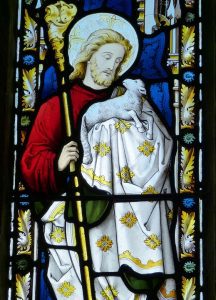
The Lord is my shepherd, I shall not want. . .
He guides me along right paths for His name’s sake,
Even though I walk through the shadow of the valley of death,
I shall fear no evil, for you are at my side. . .
“This is still true,” he seemed to be saying to me. “I am still your shepherd. I always have been. Through the “deaths” of rejection and confusion, still I have been beside you. Even though you have stumbled in the dark, still you have not strayed from ‘right paths’ because I have been with you.”
You anoint my head with oil,
My cup overflows. . .
You spread a table before me in front of all my foes. . .
I realized I had been anointed. Literally. At my baptism. That was where he had chosen and called me. And that call in itself, was unique and beautiful. He had not chosen me for religious life; at least at that time, in that community. But he had chosen me to be baptized. And he called me and chose me still, out of all the others on earth who could be privileged to know His name and yet, by some mystery, hadn’t been. It was a great honor and a great responsibility. “My cup overflowed” again, for different reasons, but even more so than the first time.
I felt in that moment too, that he had “spread a table in front of all my foes” because the darkness and the devil were vanquished, in a very significant way. The “fear of being wrong” in prayer began to lose its’ power.
And then finally. . .
Only goodness and kindness follow me, all the days of my life, and I will dwell in the house of the Lord forever.
Previously I had misinterpreted this to mean “only blessings follow me” (in my relationships with other people) all the days of my life. But now I realized, these words were not the Lord’s promise to me. They were my promise to Him, in return for His goodness as my shepherd. I would choose to be kind, to bless others, that even the smallest encounter with me would grant them an encounter with Him. And “his house” – beyond being the Church I was privileged to belong to — was also His presence. In that, I could choose to dwell always, regardless of success or failure.
These revelations were profound for me. That Psalm that taunted me was transformed into the first place I now go for consolation. When other storms have come, that is where I have found Him.
I pray that this experience of mine grants His peace to each of you reading it. I hope that it gives you a foretaste of the healing he has for you and the nearness he wishes to restore to you, even in the scriptures or devotions that you now find most painful. He makes all things new, even the thing you find most “ruined” at the moment.
Aug 15, 2020 |
By Sister Rose Pacatte, FSP.
When I read Simcha Fisher’s article in America Magazine When a Catholic leaves seminary or religious life, I began to weep. I cried for all the young women who had entered my community and left, their choice or the community’s, over my 53 years as a Daughter of St. Paul.
I remembered when I was a postulant (1967) and a novice coming to the refectory (dining room) for breakfast and noticing that someone was missing. Gone without a good-bye, at that time never to be heard of again. It was so confusing that someone who was so much part of my group, or the upcoming groups, or even professed in temporary vows, could be gone. Just like that. If we said anything, the formator would shush us or glare at the person asking. One co-postulant told me later that it was thought if we talked about our missing companion that it might make the rest of us go, too. I was still in our high school aspirancy myself, but that lack of logic just further confused me (we discontinued our high school in 1991.)
Yet as I read through the article, tears flowing at the corner of my eyes, I recalled three times that I was asked to either drive someone to the airport, take another young sister home, or accompany someone in their discernment and then drop them off at her new residence after she decided to leave the community. I was part of the forgotten ones in this process of separation from a community that was no “gentle or conscious uncoupling” so to speak. I was one of the last members of the community a sister leaving might ever see. To me, this was the most heartbreaking thing I was ever asked to do in my years of religious life. It was traumatic for me. No one ever asked how it made me feel to be part of a person’s departure from this very intense and passionate way of life that we call religious life.
I recalled another sister who was often asked to take aspirants, postulants and novices to the airport, spirited out at dawn’s early light before anyone would miss them. It was during grand silence, too, so we were not to speak until after grace at breakfast if we did see suitcases by the elevator. I will call her Sister Mary. Sister Mary was chosen, I think, because of her gentle nature that would have a calming effect on the young woman leaving. I went with Sister Mary once to drive a sister in temporary vows to the airport as she was returning home. I waited in the car (the days when we could do so), but I was able to say good-bye and promise prayers before Sister Mary accompanied her inside the terminal. The hard thing was that I was told by the superior not to talk about the young woman’s departure to anyone.
The next time I was told, not asked, to drive a young sister home from one of our branch houses. Her family lived within driving distance. Sister Anna, an older sister, came along, too. The superior, who was very old school and stern, told Sister Anna and I that we were not even to get out of the car. Just let the sister off in front of her house, let her unload her suitcases, and drive off. I was told not to even talk to her. I was only in temporary vows, too, and had known this young woman since she entered though she was not in my group (or band, as some communities call our formation groups.) As soon as we pulled up in front of her house at about 7am, her family came out. Then Sr Anna surprised me. She hit my arm and said, “Say good-bye.” So, I did. I turned and gave the young woman a hug over the seat. Then Sr. Anna got out of the car, against orders, and accompanied the young woman to the front door, to her family. She stayed and spoke with the family for a bit, then came back to the car. We were both crying. Sr. Anna, one of my favorite nuns ever, told me through her tears, “You don’t need to say anything. Charity comes first.” And I never did until now.
I will not say too much about the third sister because we remain very good friends today. But I know she suffered greatly as she discerned her way from religious life into a serene life “in the world” as we call it. I was the local superior when she was sent to the community for the purpose of discernment, at her request. As she met with a spiritual director, I was the community member she related to the most. It was a difficult separation for many reasons, and we both cried many times, not least of which was the day we went to buy her a new meager wardrobe at the mall and the final day I drove her to her new residential job after she was dispensed from her vows. This was like dying to her and to me, two different ways of dying. I had known her from before she entered and now, these many years later, I was there when she was leaving, following what she believed was God’s will for her. I did not disagree with her discernment, but her leaving was as if she was pulling off her skin to reveal a new identity that was still taking shape. It was so painful. She is one of the bravest people I know, and I love her for her courage, perseverance, and love for ministry that has never wavered.
I shared this blog post with Sister Mary and she commented:
I do regret in hindsight not having more of Sr. Anna’s wisdom of heart. Most of the time I drove very young ones to the airport or bus station. I was sent to be a kind presence and to assure that they made it to their gate safely. Some left singing and some left sorrowing, so as their last contact I had to keep things light and loving. As you say, we are in a better place now. The young ones are already women and the formation program is so much more mature, so we don’t have half the drama anymore. I always pray for those who are wavering even if I don’t know who they might be, and I send them on their way with love and blessings.
In one way I was a willing participant in the departures of these young women from religious life but in another way, I was unwilling because I knew that if I were suffering from a profound sadness, the young woman was probably suffering so much more. I have always tried to do everything asked of me, but some things were too hard and had to change, and thank God, they have.
What did I learn from these experiences? That charity comes first, always.
We do things differently now. If a young woman at any stage of religious life discerns to leave (or is invited to do so by the community), she may share this information with whomever she wishes – and we can stay in touch. She can say good-bye to the community in the dining room or make a more discreet departure – her choice. But the sister or young woman is encouraged to be more transparent about her discernment because the entire community is transitioning with her as she leaves.
Sister Rose Pacatte in August 1967, at the San Diego convent of the Daughters of Saint Paul, the night before flying to Boston to enter the convent.
As we slowly moved from a pre-Vatican Council II way of doing things in our congregation in the U.S. to being, well, normal, we had a provincial who did something wonderful. This was in the later 1980s. I was on our provincial council then. She thought it would be a good idea to send a Christmas card and note to each sister (novice or postulant) for whom we had contact information, and let them know we remembered them, ask how they were doing, and that we continued to pray for them. This resulted in more open communication, visits to the novitiate, reconnecting with old friends, and oftentimes, healing.
I wish there had been Leonie’s Longing all those years ago so young women could receive counseling and referrals and moral support, and I am glad this organization exists now. God willing, I will celebrate my golden jubilee of profession in 2022 (and my 55th of entrance). If you are reading this, know that I remember everyone, and I wish you love, happiness and the peace of Christ. I hope you will forgive any suffering I may have caused or contributed to at a very difficult time of your life. I ask for your prayers.
The thing is, those who become part of our inner world, as we do in religious life, are never gone. We remain sisters in the heart of God – always.
Jul 26, 2020 |
By Stephanie Q.
July 16th, 2016.
That’s the date my friend, E, gave me for her entrance to the novitiate. The wind let out of my sails a little. I was so excited for her discernment to continue with the sisters, but that date, well that was already my wedding day.
And so we adjusted the plans. No longer would she be at our nuptial Mass, but we would certainly include her in our Prayers of the Faithful. No longer would I be able to attend her entrance ceremony, but friendship is so much stronger than that. On July 16th, we would both be taking steps to fulfill our vocations, steps towards the life God had in store for us.
Preparations continued for both of us. E packed up and donated all of her clothes and belongings during a brief visit home between pre-postulancy and postulancy. I bought a wedding dress and picked out flowers and planned centerpieces.
Our lives were almost perfectly paralleled in prayerful preparation. There was little doubt in our friends or family that we were living our best lives, pursuing the vocation God created us for. And I had little doubt that E was supposed to be a sister. Watching her talk about her life in the convent, her eyes lit up in the same way I saw my fiance’s eyes light up when he talked about me.
When I finally said goodbye to E before postulancy started, it was hard, so hard. We had no idea when we would see each other again because novitiate + wedding day made the next logical time impossible. But we promised to write cards and letters and went on our way.
About three months into her postulancy, I received a surprise notification that E had sent me a Facebook message!
The elation soon turned to concern as I read the message. She had discerned out of the convent and didn’t know what her next steps would be.
In the moment, I said all the right things. “I’m proud of you for making the hard decision” (because I knew this broke her heart), “Jesus loves you no matter what” (because I know Satan loves self-doubt), and offered a trip for ice cream whenever she was ready to be social.
On the other side of the screen though, I was flabbergasted. Everything seemed perfectly ordered for her to become a sister. And if she could discern out, what did that mean for my discernment of marriage? All of sudden, certainty didn’t seem so certain and that really put me in a bit of a spiritual and mental pickle for a while. I would support E, but I was also very confused by the situation.
The whole thing was made more difficult because I saw how upset the decision made her. And she wasn’t ready to talk about it yet. So I was in this weird place where I had to be supportive without knowing the details. Responsive and prayerful without understanding the magnitude. There were many moments where I just asked the Holy Spirit to guide my words because I was at a loss for what to say or do. Walking with a friend who had their whole future changed in a moment is a true test of friendship and fortitude. I didn’t want to make things worse, and I couldn’t make anything better. I could just sit there in the uncertainty and the ick with her.
As she opened up over the next two months about the decision process, I understood better. Leaving a religious order is like breaking off an engagement. And sometimes a broken engagement takes you by surprise because on the outside, everything about the couple seemed perfect. But, it takes living in that reality every single day to really understand the nooks and crannies of the relationship. And as postulancy progressed, it was her observation that the relationship had to end.
Having broken off a serious relationship of my own once before, I think in some ways I understood better than some how it feels to be adrift without a plan. A period in life where the things you had taken as fact, a future marriage or religious life, was all of a sudden ripped from its role in the future chapters of your life.
And so, time progressed. Our friendship back to normal, I realized that my wedding day was still going to happen, and I began to worry about celebrating the permanency of my own vocation on the day that was also supposed to have been E’s celebration as well.
So I did the only thing I could. I painstakingly crafted a new set of prayers for our wedding day. One to pray for our religious friends, since many priests and religious men and women came from our group of friends. One to pray for all the married couples in the room. And, finally, one to pray for those who were still discerning their way in life that God would give them the courage to say “yes” when He called.
Being there for a friend who has left the convent can be tricky, but it is similar to being there for a friend in any other difficult life situation. The trickiest part of it all is that what worked for my friendship, might not work for yours. And that’s true, but all friendships need those moments where it is enough to say, “I am here”. Encourage her. Validate her feelings. Believe in her. Be there for her. Give her space. And most importantly, pray for her.

 By Cate.
 Dating is a great act of faith and trust. If we believe that God works all things for our good, we are called to trust that each dating success or failure is part of His greater plan. In the midst of a heartbreak it’s tempting to wonder endlessly why things didn’t go
  By LumenChristi
 I learned to pray anyway, even if it was more often complaining than anything else. I learned to go to Mass anyway even though my heart felt dead rather than alive in the Lord. I learned to go through the motions of my life, seeking his will for me in practical ways (job searching, finding God in friends and family). I took comfort that St. Francis too, thought that God spoke to him (“rebuild my church”) and it meant something completely different than he thought – in fact greater than what he thought. But something was missing, completely gone, to the point where I didn’t think it would come back and barely remembered what it was in the first place.
 The Lord is my shepherd, I shall not want. . .
 Previously I had misinterpreted this to mean “only blessings follow me” (in my relationships with other people) all the days of my life. But now I realized, these words were not the Lord’s promise to me. They were my promise to Him, in return for His goodness as my shepherd. I would choose to be kind, to bless others, that even the smallest encounter with me would grant them an encounter with Him. And “his house” – beyond being the Church I was privileged to belong to — was also His presence. In that, I could choose to dwell always, regardless of success or failure.

 By Stephanie Q.
Recent Comments