Jul 23, 2015 |
 Unlike glossy modern libraries that boast about their Wi-Fi, iPads and e-books, the Catholic library in my city is tucked away on a mezzanine floor of a battered old building, has one old-fashioned monitor on which you can search the catalogue (when they remember to turn it on), and contains rows and rows of wonderful dusty books, many of which have faded “Date Due”stamps from a time before my parents were born.
My favourite books in this library are from a genre that boomed briefly in the 1950s, heyday of religious vocations in the Church, and disappeared without a trace after Vatican II: literature designed to give young women an “inside scoop” on life in the convent. Books like Everynun by Father Daniel A. Lord, a play about a nun who inspires a doubtful postulant to remain in the convent by relating the details of her own long and rich life, and What Must I Do? by Sister Mary Paul Reilly OSB, a novel written entirely in the second person: “you”are a confident young 1950s girl named Marilyn who goes through every step of formation up to the day of final vows. The cultural references in these books are sixty years or more out of date, the slang almost painfully quaint, but the charm of them is still there. The books themselves may be products of a particular era, but the genuine love for God and for the religious life, and the desire to share that love with others, is timeless.
Amata Means Beloved is the same kind of book, written for our time. The author is Sister Mary Catharine Pe rry OP, a cloistered nun who published this, her first book, in 2003. At 101 pages, it’s an easy read – I finished it in a one-hour train ride home from work – and it has the same simplicity, earnestness and sweetness as its 1950s predecessors.
The story follows Emily Barone, an American in her early twenties who enters an enclosed Dominican monastery (presumably based on the author’s community in Summit, NJ), and must overcome an enormous internal struggle in order to stay. Anyone who has lived in a religious community will recognise the way that the contemplative life brings her suffering to the surface: old grief and anger that she has forced down in order to give the appearance of tranquillity force their way back up again during her novitiate, and must be dealt with if she is to remain. What exactly happened to her brother that she can’t come to terms with? And why do cracks start appearing in Emily’s facade every time she catches sight of the community’s new bell?
This novella is set in the early years of the 21st century, and clearly written in the immediate wake of 9/11 when so many lives were ended or damaged forever by terrorism. In that, Amata Means Beloved deserves a second reading: Emily’s grief process can easily be read as a metaphor for the struggle of America as a country to cope with the wounds inflicted on its soul by an unfathomable loss of innocent life. And yet, it’s a humorous and hopeful book. She is not left to battle her demons alone, but accepted and prayed for within the community – the most touching moments throughout, particularly the scene where Emily’s novice mistress explains the meaning of her new name (and thereby the book’s title), are the times when her sisters in Christ quietly reach out to her.
Like the books I’ve dug up from long ago, Amata Means Beloved is stylistically a product of its time, with contemporary references and language that will eventually become dated, but its deeper themes – specifically, the ways that a religious vocation both demands and shapes the growth of personality in community life – will endure, and young women many years down the track who find a battered old copy in the library will see in it a reflection of their own uphill path to God in discerning a vocation to religious life.
Apr 26, 2015 |
By Petra Stella
Are you one of the many former religious who will sit in Mass this Sunday hearing Father mention that it is the World Day of Prayer for Vocations, and immediately feel that painful twinge in your heart? It probably feels like yet another painful reminder of the “Year Of Not Me” all over again!
It’s easy to fall into that trap… thinking this is not about you.
After all – this is the Year of Consecrated Life, and it’s the World Day of Prayer for Vocations.
But if you think this isn’t about you, you aren’t paying attention! You – and I – and all the women in our situation: we need the graces and guidance that will come of the World Day of Prayer for Vocations as much as anyone else… perhaps more than anyone else!
About 2 weeks before I returned back to the world, I was sick in bed with influenza, and remained in my cell for a few days. During that time, I re-read Christifideles Laici. At this stage I already knew I’d be approaching my superior about returning home when I was well and she was back from her retreat… and so I read it with very much a searching mindset. And with a great deal of hope and excitement, not yet tinged by the grief of loss that was to come after actually leaving.
As I read this beautiful gem from among the legacy of St John Paul the Great, I was struck by the important reminder that ALL of us are consecrated. Our Baptism is a consecration, and religious life is one very beautiful way of deepening that consecration. It is not the only way.
So how do I live out MY consecration? I may one day be called to marriage, or I may be called back to religious life down the track… but if I’m consecrated by virtue of my Baptism, then I need to be living out this consecration NOW… not just waiting to deepen it some way in the future. Christifideles Laici reminds us that there are many different kinds of workers in the Vineyard of the Lord, and there is much work to be done. How can I bear fruit if I stand around idle all day? I want to bear fruit for Him!!
I gave my “yes” once upon a time to the Lord when He asked. This “yes” hasn’t changed, and every so often on special occasions, I renew this “yes” to Him. Wrapped up in this response was a realisation that even though I thought I was assenting to religious life, I didn’t really know what the future would hold, but I said “yes” to it all – everything He asked of me, no matter how little, how big, how crazy. I meant it then. I mean it now. Like Therese, I choose all. My “now” is part of this all. I’m out in the world again because He asked me to be. He has a purpose in this, and He wants me to be fruitful. Yes, Lord. I choose and embrace this “now” in which I find myself. Bless the work I undertake out here in Your Vineyard. May You bring this work that You have begun in me to completion!
I would really recommend following the link above to the Vatican website and reading Christifideles Laici prayerfully, if you are seeking guidance as to how to live your “now” fruitfully. I’d also prayerfully read – and take comfort in – Chapter 15 of John’s Gospel. This advice was given to me by a wise friend last year, and it brought me much comfort and guidance in my own situation.
And so I exhort each of you – as you lend your voice to the many that are praying for vocations today… realise that YOUR vocation, whatever that is, is every bit as much the target of any resulting grace. :) Today is a World Day of Prayer for YOU.
Jan 4, 2015 |
By Dee Bernhardt.
My beloved speaks and says to me: “Arise, my love, my beautiful one, and come away”…
Song of Songs 2:10
As a single lay woman working full-time in church ministry, I have often had my vocation questioned… “So, when are you going to commit?” or “You just haven’t found the right man to marry yet.” or “When are you going to get a real life?” Often, parish members assume that I have suffered some terrible trauma that caused me to remain single. Yet, I am single because my greatest joy is in serving many others, and I love best when I love broadly. And over the past thirty-plus years, I have experienced that my deep passion for loving and serving others meets a very deep need, especially in the young adults I encounter on college campuses through campus ministry and the ministry of spiritual direction.
In a sense, I belong to a sisterhood because I actually have seven sisters (and three brothers) in my family of origin. When thirteen of my friends all decided to join religious orders upon graduation from college, I wanted to fit in and do it too. I tried. I realized that I already had a community of sisters by birth, and that was enough sisterhood for me. By God’s grace, I became one of the first lay ministers in the United States as a campus minister, and I have been in that role ever since, growing in ministry over time.
John Cardinal Henry Newman once wrote a short poem encapsulating the call to holiness for the laity:
I sought to hear the voice of God;
I climbed the highest steeple;
But God declared: “Go down again.
I dwell among the people.”
In our lives, we all seek the high steeple at times. Sometimes, we even make life commitments which encompass that idea of a “higher calling.” But when we consider the incarnation of Christ and the reality of our world, we realize that there are different callings, none of which is higher than any other. In fact, if you’ve ever read “Hope for the Flowers,” you know that the top is often the most disappointing position of all!
In our church, vocations to religious life and priesthood are often seen as the top. Bearing in mind that the humble parentage and birth of our Lord clearly exemplify simplicity and humility, we come to recognize that our inner dispositions determine how we hear the voice of God, which then influences our attitudes toward external life choices. Every lifestyle and vocation requires sacrifice; every one inspires joy. Each lay person (single or married), religious woman/man and/or priest believes strongly and doubts often; lives deeply and survives shallowly; loves fully and fails miserably. This is our human condition – which binds us all in the mystical body of Christ.
Dee Bernhardt is the Assistant Director of Campus Ministry at St. Thomas Aquinas Catholic Center, West Lafayette, Indiana.
Dee holds a Master of Science in Religious Education degree from Marywood College and a Master of Arts in Christian Spirituality degree from Creighton University. She holds professional certifications in Campus Ministry from the USCCB/CCMA and in Spiritual Direction/Directed Retreats from Creighton University.
She has served as national and regional advisor for a total of over 18 years on NCSC leadership teams, and believes in the empowerment of communities to bring the Church to life in higher education.
Oct 7, 2014 |
By Penny.
Few women in the twenty-first century would be able to enter the convent in the way that Leonie did a hundred and twenty-eight years ago today: on impulse, while on holiday with her family. On the sixth of October 1886 she was sightseeing around Alencon, and the next morning she woke up in the cloister. Later, Therese was to write that, “Leonie’s surprising entry into the convent distressed me; I was very fond of her, and I never had the chance to kiss her goodbye before she left. I will never forget the kindness and bewilderment on my poor father’s face when he came to tell us that Leonie was already wearing the habit of the Poor Clares.” (Leonie Martin: A Difficult Life by Marie Beaudin-Croix, page 39.)
The world has changed so much since then that this scenario now seems almost inconceivable. Even a woman who has managed to avoid a vocation-crippling college debt will usually spend months on “live-in” retreats with a community before being accepted as an aspirant, and will typically also be subjected to every psychological examination from a stack of inkblots to the Myers-Briggs Type Indicator. What could Leonie have done to convince a Poor Clare abbess to admit her to the cloister within a single day?
Despite the difference in time and culture that separates us, I think it’s possible to guess. The abbess approved her for the same reason that the senior Sisters of your community ultimately voted to grant you admittance: they saw a sincere, concrete desire for God, and they wanted to see where it would lead. Do you remember how hard it was to sit with your future superior, even one who was gentle and encouraging, and try to pin down for her in ordinary words something that God had been forming in you for so long? Quite probably, it wouldn’t have been your hesitant speech that convinced her to let you in, but something larger than you that she sensed behind the words.
Like many of the women who visit this website, Leonie had spent years thinking about becoming a nun, having longed for a religious vocation since childhood – that impulsive entrance was an aberration in the slow, difficult process of discernment throughout her young adulthood – and she would have sat before the grille with a quiet, compelling fire in her voice as she tried to explain her desire to give herself to God. And so she was granted admittance. Therese adds:
“Poor Leonie, in her new outfit, was very sweet. She told us to look into her eyes, because we would never see them again: Poor Clares keep their eyes lowered. But God was satisfied with two months of sacrifice, and Leonie came back to us, to show us her blue eyes again, although they were often wet with tears.” (Ibid.)
The austere Poor Clare life took its toll on Leonie’s health, leaving her with no choice but to return home to her family, and her years of prayer and preparation boiled down to just eight weeks in the cloister. Sick and heartsore, Leonie once again walked up the path to the front door of Les Buissonnets: two major life changes, entry into and departure from the religious life, followed each other with a speed that must have left her reeling. She had wanted to follow God’s will, and instead found herself back at square one, grieving the loss of something that had barely begun. Perhaps, in the early stages of grief, she regretted having made such an attempt in the first place.
And yet, she tried again. In June the following year, she set out for the Visitation Monastery – with her family’s blessing this time. It wasn’t a miraculous bounce-back: Leonie’s biographer notes that her arrival at Les Buissonnets was followed by a period of depression which impeded her return to health. Her story after leaving the religious life, like many of our readers’ stories and perhaps like yours as well, was one of holding on, of getting up in the morning and simply putting one foot in front of the other until God calls again.
Calls to do… what? Email another religious community? Write to the archdiocese for information about becoming a consecrated virgin? Introduce yourself to that good-looking fellow you’ve seen at Holy Hour? What if you find yourself ten years down the track, reasonably secure financially and with a job you enjoy… and suddenly feel that God wants you to give it all up to make another attempt at the religious life? If Leonie didn’t ask these questions after her first experience of returning to the world, they must surely have preyed on her mind the third time the monastery door swung closed behind her. Nonetheless, she kept putting one foot in front of another, and discovered at last that she had actually, against all appearances, been walking in the right direction all the time.
Here’s a final thought to go with. Whatever unique, passionate, unworldly quality it was that your superior saw to make her want to admit you to the community, it is still part of you. It may not feel like that anymore if your heart is cut up by pain or anger – or maybe you’re just so damned weary in body and soul that any vocation might as well be Mount Everest for all the chance you can see of climbing it. Nonetheless, the Divine Hand that once took hold and propelled you into the religious life, and then guided you out again, has not once let go of you. It never will.
Saint Therese of the Child Jesus, pray for us.
Leonie Martin, pray for us.
Aug 3, 2014 |
I don’t know how many of you watched the show Joan of Arcadia, but my family loves it. The show was only on TV for two seasons, starting in the Fall of 2003. The basic idea is that God appears (in human form) to Joan, a “normal teenager” who is understandably hesitant to believe that it is actually God speaking with her.
As Joan begins to trust God more, He asks her to do things, and she does, though often reluctantly. Many times things seem to go wrong, blow up, cause more harm than good, etc., and Joan questions why she was asked to do the task. Sometimes God points out the good effects (ripples) of her actions that she didn’t notice. But there is regularly a sense of mystery and you, the viewer, are aware that you still don’t really know the full story.
I think it can be like that with our time in the convent: We do not even recognize the influence we may have had on others or that they have had on us. And too often, when we don’t see these things, we try to fill in the gaps of situations – the “whys” that we can’t see yet – without knowing the full story. We think we know, but the truth is we can’t even imagine.
That reminds me of another show I just discovered, Once Upon a Time. The main character is Emma, who believes that her parents abandoned her on the side of the road 28 years ago. You eventually learn that her parents actually sent her from a fairy tale land to protect her, in the hope that she would one day be able to save them from an evil curse.
What would it be like for her to learn her real story and realize that everything she thought was true actually was not true at all? 28 years of anger, hurt, and bitterness about being abandoned -then suddenly you find out Truth – and that changes everything.
Could it possibly be the same for us? We may feel hurt, betrayed, abandoned by God, perhaps by our former communities, the Church, etc. We may think we know what happened. But do we really know? Do we really know God’s plan? What will it be like when we really, truly know?
I know: It will be like HEAVEN.
Until then, all we can do is speculate. So, what if:
Your time in the convent helped free you from a pattern of sin?
Your entering the convent inspired someone to re-examine their relationship with the Lord?
You let go of some possessions that someone else really needed?
God just wanted to see if you would say yes, like Abraham, and give Him everything, so that He could build something even better with you?
You inspired another sister to endure in her vocation while you were there?
Of course, it could be that none of those things was “the reason” you entered. We could very likely have the story all wrong. In the convent I was told to not judge the motivations behind other sisters’ behavior. It was incredibly hard. But there is such wisdom in that. We need to do the same with God: Trust that He has a plan. Trust that He knows the entire story. Trust that He really knows what is going on. And consider that perhaps we are at times blind to see it.
Whatever you do, don’t let the evil one lie to you and say it was a waste, and don’t be discouraged!
I have much more to tell you, but you cannot bear it now.
But when he comes, the Spirit of truth, he will guide you to all truth.
John 16:12-13
By Joan d’Arc
Joan was in the convent for a time before finding herself suddenly back in the world. She enjoys reading and hanging out with friends. She also makes really good popcorn. Seriously good.

 rry OP, a cloistered nun who published this, her first book, in 2003. At 101 pages, it’s an easy read – I finished it in a one-hour train ride home from work – and it has the same simplicity, earnestness and sweetness as its 1950s predecessors.
 mata Means Beloved deserves a second reading: Emily’s grief process can easily be read as a metaphor for the struggle of America as a country to cope with the wounds inflicted on its soul by an unfathomable loss of innocent life. And yet, it’s a humorous and hopeful book. She is not left to battle her demons alone, but accepted and prayed for within the community – the most touching moments throughout, particularly the scene where Emily’s novice mistress explains the meaning of her new name (and thereby the book’s title), are the times when her sisters in Christ quietly reach out to her.
 By Petra Stella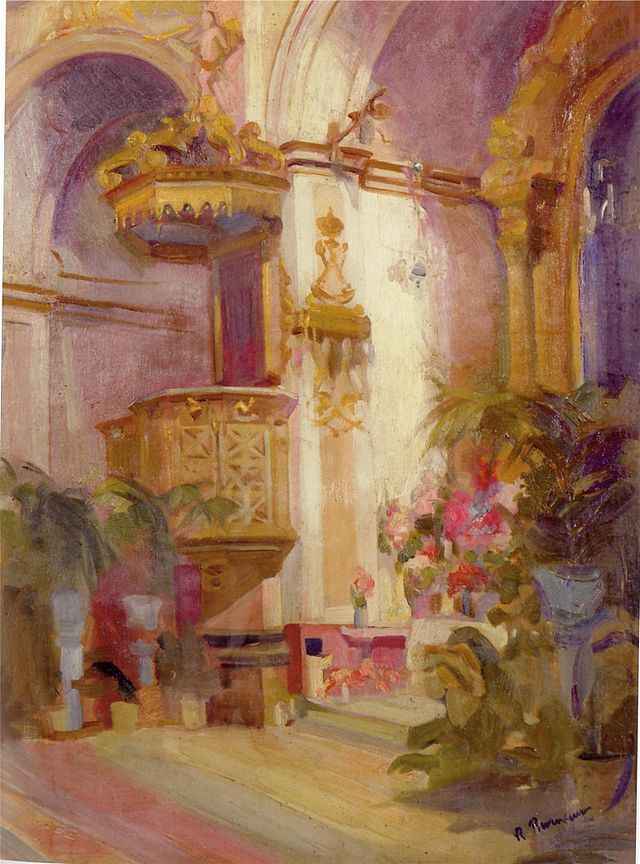
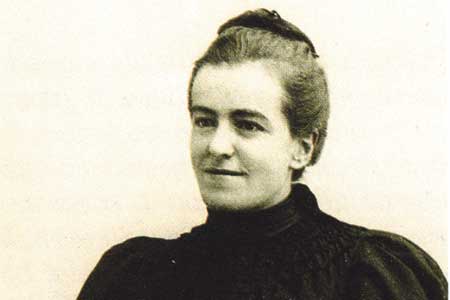
 longed for a religious vocation since childhood – that impulsive entrance was an aberration in the slow, difficult process of discernment throughout her young adulthood – and she would have sat before the grille with a quiet, compelling fire in her voice as she tried to explain her desire to give herself to God. And so she was granted admittance. Therese adds:
 I don’t know how many of you watched the show Joan of Arcadia, but my family loves it. The show was only on TV for two seasons, starting in the Fall of 2003. The basic idea is that God appears (in human form) to Joan, a “normal teenager” who is understandably hesitant to believe that it is actually God speaking with her.
Recent Comments