Nov 11, 2015 |
 Here’s the final post in Lucia’s beautiful Theology of the Body series!
After knowing of God’s immense love, a woman can go forward with finding out what God calls her to. This response is not immediately one of vocation to married or religious life, but rather a call to respond to God’s love.
When one knows that they are loved by another, they desire to give themselves completely to that person in love. It is in such an act that we truly find out who we are. As St. John Paul II points out, “Man cannot fully find himself except by making a sincere gift of himself”. By receiving God’s love and then giving ourselves in love and trust to Him, we truly become who we were created to be.
I started out my second blog post with the theme of hope. Hope: What do I mean by this? How does this relate to the Theology of the Body and how it expresses the Gospel message?
“The virtue of hope responds to the aspiration to happiness which God has placed in the heart of every man: it keeps man from discouragement; it sustains him during times of abandonment; it opens up his heart in expectation of eternal beatitude. Buoyed up by hope, he is preserved from selfishness and led to the happiness that flows from charity.” (Catechism, 1818)
Amidst your experience, whether it is one of joy and freedom or pain, suffering, and low self-esteem, how is God leading you to hope? How is He calling you to happiness and the desires of your heart? You have great desires for to love and be loved, and He has put those desires in your heart for a reason. Allow Him to guide you ever closer to Himself through these desires!
God wants to marry us. St. John Paul II expressed this beautifully, “With an act of redemptive love, Christ loved the Church and gave himself up for her. By the same act he is united with the Church in a spousal manner, as the husband and wife are reciprocally united in marriage instituted by the Creator.” (TOB, Audience 93). Even if you are not giving your life in the radical vocation of religious life, this still is very true. God created each of us for a deep and intimate union with Him, and our vocation is only the means by which we enter into a deeper relationship with Him.
Now, ask yourself, “Do I truly believe this and live this out? Do I believe  that even if I am not a religious that God is still calling me to a deep personal relationship, and not only that, but that He has a particular and irrepeatable mission for me? Do I believe that I am called to an intimate relationship with Christ, based not on what I do, but rather the fact that He loves me unconditionally?” Sit with the Lord and go through asking these questions with Him. Allow Him to stir the deep desires of your heart that are so beautifully put there by Him, and He will lead you to find out who you truly are.
“For I know the plans I have for you, says the Lord, plans for welfare and not for evil, to give you a future and a hope. Then you will call upon me and come and pray to me, and I will hear you. You will seek me and find me; when you seek me with all your heart, I will be found by you, says the Lord.” (Jeremiah 29:11)
The other two posts in this series are available here:
https://www.leonieslonging.org/theology-of-the-body-faith/
and here:
https://www.leonieslonging.org/theology-of-the-body-hope/
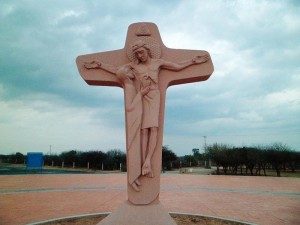
The image of the Schoenstatt Unity Crucifix in this post is used under a Creative Commons Licence, and the owner is Enrique Lepez-Tamayo Biosca.
Oct 17, 2015 |
The canonization of Louis and Zelie Martin, parents of Saint Therese, is set for October 18th, 2015!
To celebrate, here is a post about the difficult and beautiful process of growing toward sainthood as a family, written by mother of four Elissa Jasko.
Several months ago I was asked to write a couple blogs about growing in holiness through family life. I don’t think of myself as an expert in such areas, but when I sat down to write the first one, Motherhood: A path to holiness, I found the Lord was working in my life and the process of writing allowed me to organize and meditate on what He was teaching me. What a blessing! I looked forward to working on the second, which was to be a reflection on how we help our kids discern their vocation and obtain sainthood.
I want to let you know that what I am sharing today is different from what I thought I would share when I began writing this blog. Instead of an explanation of how my husband and I are working to grow virtue in our children, I will share where God has taken me in the days since I first opened this document and began typing.
When I started, I wrote out all kinds of great thoughts about being made in the image of God and how God calls all of us, no matter our age, to live the life of love. I believe parents can help their children live as images of God by recognizing and celebrating the amazing, innocent way children can spread love and joy. One of my personal favorites is how many people are so moved by the miracle of life that they are uncontrollably compelled to touch or even kiss the pregnant belly of a complete stranger. It is not easy to welcome this gesture, but I chose to see this invasion of personal space as a way I am allowing my unborn child to touch hearts.
I continued my blog with more examples of how I have encouraged and observed my children to receive God’s love and let it flow to those around them, but something wasn’t right. I couldn’t figure out how to finish. I had complete writer’s block.
And then naptime ended.
Back to the reality of life with four kids ages five and under, and I hadn’t completed the blog. As my children started running around and playing, all the thoughts and convictions about letting the love of God flow into your life and through you to others flew right out the window. The rest of the afternoon went poorly. I was frustrated and irritable. My mood deteriorated so much that by evening I not only doubted my qualifications to write a blog about raising holy children, I doubted my qualifications to parent children at all.
By the grace of God, the day ended with an honest, quiet bedtime conversation with my 4-year-old daughter about
how hard it is for me to be a good mommy. I told her I want to be patient and let God’s love flow through me to her and her brothers. I apologized for failing, and asked her to pray for me. Then she shared that obeying and being kind is hard for her, and I promised to pray for her. That time of sharing was invaluable. I hope we have many more real moments like that together.
“A saint is a sinner who keeps on trying.” I found this saying the first time I attempted to write this blog, but I dismissed it as irrelevant. I wanted readers to be left with my positive message “encourage children to live the life of love God is calling them to now so it comes naturally when they are making permanent vocation decisions.” The idea of “keep on trying, you’ll get ’em one day” seemed like an unnecessary downer.
It turns out that God had His own message in mind. He has shown me that this saying is one of hope. God knows life is hard and our flesh is weak. He knows we will fail. Learning to pick ourselves up and continue on is a critical lesson to learn. The fact that He forgives and strengthens us for our journey says so much about His Love. Thank you Jesus for your mercy and forgiveness. Thank you for continuing to show me perfection is not a prerequisite for parenting. By sharing the ups and downs of my weak efforts to grow in holiness I am modelling to my children how to grow in love with You.
This lesson applies to more than just parents. I think we could all learn more about God’s love by honestly sharing with each other our own struggles to be loving. Yes, we should strive to be patient and always act in love, but the truth is, we all fail at it. None of us is a saint yet, but the Lord who began His good work in us is faithful. In humility, we admit our failings. In love, we receive forgiveness and healing. In grace, we are given strength to try again.
I pray that as my children grow, they will not be discouraged by failure. I pray they will realize that living a life of love is worth dusting off your pants and trying again. I pray that together as a family we will take time to celebrate love’s victories. In doing this, I have faith that we will find where God is calling us to love and grow in union with Him.
Saints Louis and Zelie Martin, pray for us!
Sep 7, 2015 |
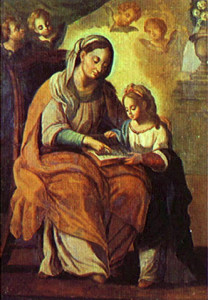
By Guadalupana.
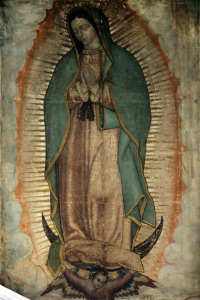
September 8th, the Feast of the Nativity of Mary, was an important day for me in religious life. Not only was it the day that I had entered religious life, but it also became my personal feast day. Sisters discerned their feast days and I chose this one.
Reflecting on my time in religious life, I am struck by how Mary was interceding for me. I underwent a LOT of trials in the couple of years and especially the couple of months before entering religious life as well as during my time as a postulant and novice. WOW! I could focus on the cross or I could focus on how Jesus revealed His love for me more intimately during times of difficulty and how Mary became more of a mother to me.
When not “feelin’ much love” from one sister in particular whom I looked to for guidance and at times fearing that God would not love me in my many imperfections & weaknesses, Mother Mary at times gently stepped in to console me of God’s love for me, to remind me of the importance of prayer, and to stir into flame a desire more for motherhood, spiritual as well as perhaps physical. It was on two different Marian feast days that I had such a painful desire to have children. At the time I thought I was being asked to sacrifice this but now that I am no longer in religious life, perhaps my heart was really being prepared for something else: time will tell on that one! What I will speak to now is spiritual motherhood. This call grew in my heart while in religious life. I didn’t realize then that this is something all women are called to, not just religious sisters.
There is a quote about spiritual motherhood that I came across much later after leaving religious life. It’s from a book titled Discovering the Feminine Genius: Every Woman’s Journey by Katrina Zeno. The quote goes like this: “Spiritual motherhood…means nurturing the emotional, moral, cultural, and spiritual life in others. All women are called to give birth-physically and/or spiritually. All women are called to be Christ-bearers, to receive divine life in the womb of their souls and bear Christ to the world. All women are called to see in Mary’s spiritual motherhood a reflection of their own lives. If all women embraced the call to spiritual motherhood they would ignite a nuclear reaction that would spread the culture of life through the whole world. The feminine genius would set the world on fire!”
I felt the need to “just be” more after religious life and not get too involved with things. Slowly though through various life circumstances & even misunderstandings, I’ve found myself in different roles and involved in ministries where this call to spiritual motherhood could be further developed & lived out more. Keeping in mind that God could always re-open the door, I’ve shut the door to religious life and feel that I am in a sense “waiting”, perhaps waiting for my future spouse (while God is also still my Spouse!) while living life and allowing my heart to continue to heal & grow more. “God only knows” if one day I will give birth physically to children, but I have given birth to Mary more in my heart and she has helped me to give birth more to Christ in my own life & in the lives of others. This is all still very much a work in progress though!
There have been times when I’ve wondered if being in religious life for almost three years had any purpose. This may especially be true when I look back through the lens of all the personal sufferings I’ve experienced! However, I need to trust that a greater good came from suffering and that my time there bore fruit. Besides learning how to boil water and growing more in prayer, there was something that happened on my last day when taking a walk with the sisters in my “class” a couple of hours before leaving that struck me. Never had we seen anything like this before, but as we were walking (and it was a short walk in a residential area near the convent), we saw a set of little twins. We then walked a little further and saw another set of young twins. Near the end of our short walk, we came across three kids with their parents and one of my sisters stated that we should ask if two of them were twins. As it turns out, they were triplets! priest I shared this story with later seemed to think that this was God’s way of showing me that my time in religious life was not wasted. It gave life to others.
May we each give birth to Mary more in our hearts and ask for her intercession to help us carry Christ more & more inside of us and to bear Him to the world.
Aug 26, 2015 |
By Lucia Delgado
One of my favorite saints, St. Augustine of Hippo, said this: “Patience is the companion of wisdom.”
In my discernment process of becoming a Franciscan sister, I thought I was patient. However, as one friend would put it, I was “eloping.” My impatience was fueled by others who thought they knew I was meant to be a sister. I entered discernment with the thought of impressing others. I said to myself: Wouldn’t it be nice to be in a habit and change the West Coast? And influence others to go back to Church and promote a culture of life?
But I was fleeing from the marriage vocation.
Yes, I was running away. I thought would it be nice to be closer to Jesus in the convent. The atmosphere at the convent and retreat house was peaceful and beautiful. But my trembling soul was called to another vocation.
I kept in touch with the sisters after my abrupt departure last summer. They thought I was called to religious life. There were signs of a vocation but to different lifestyle.
Now, I am discerning the call to marriage; I feared that my relationship with Jesus would go sour if I took this route.
It was quite the opposite.
I am closer to the Lord and I get to share my love for Him with my Catholic boyfriend. I go to Bible studies at a nearby parish; I am able to sing in the choir and cantor the responsorial Psalms.
I will say that my discernment was a blessing. The experiences with the sisters made me a wiser Catholic: By singing in the choir, working in the retreat gift shop, and sharing knowledge with the sisters during community catechesis, I learned how to be courageous in sharing my Catholic faith in the world.
I am asking God for patience and wisdom during this next phase in my life. Remember that your experiences in the convent are not wasted but those experiences are full of pearls of wisdom.
Aug 11, 2015 |
By Cinnamon.
Unusquisque:
1) Latin adjective (masculine singular), from unus (one) + quisque (each). Eg: Each one looks to You to give food in due season.
2) Tongue-twister from the Dominican prayer book, bane of my life in the early weeks of postulancy (see also: gloriosissimae; necessitatibus; famulorum famularumque).
I don’t know whether, in your former community, you tangled with this monster during the formal grace in Latin as I did (it’s pronounced oo-noos-QUISS-quay, by the way, and getting it right for the first time is a real buzz) but if you were in Dominican formation I bet that you’ve encountered these other eight-hundred-year-old traps for the unwary:
- Courtesy of the angels who started handing out bread at the junior end of the refectory table, you get to go first in everything! Want to wait invisibly at the back and watch the senior Sisters to find out what they do? Actually, you’re leading the procession. Good luck!
- You (finally) make a perfect profound bow. Everybody else makes a head inclination. Hopefully they’re all keeping custody of the eyes and missed it.
- For anyone who’s not naturally a soprano:
no further explanation is required. I used to do my choir practice down the local cemetery, figuring that my paint-peeling rendition of this beloved chant would take years off Purgatory for any Holy Souls who happened to be listening.
- Processions in general. Did anyone else crash into furniture on the way around the chapel? Execute an impeccable turn, and then realise that a partner had been left stranded because you were supposed to bow to her first? Meander off too far to the side and get patiently towed back in by one elbow? (Or maybe it’s just me. Who am I to judge?)
Also, unless your written work rivalled the perfection of the Summa, you will have found yourself on the receiving end of that other profoundly Dominican gesture: the uncapping of a red pen. Veritas. The deepest instinct of these Hounds of the Lord is to find out what’s wrong, and, for the glory of God, fix it. While still in the convent, I read the results of a survey about religious beliefs sent out to different communities of nuns in the 1960s: lots of sisters dutifully filled out and posted back their responses, but, surprising nobody except the authors, the Dominicans corrected the questions before they answered them. (It certainly didn’t surprise me. I’d just failed an essay for the first time since my early years in high school.)
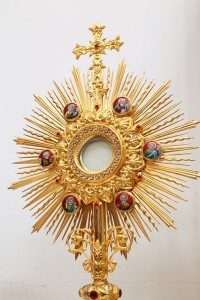
And you know something? I miss it all fiercely. As Dom Hubert Van Zeller points out, a yearning for the externals of the religious life doesn’t mean that my vocation was to stay in that community – of course I miss the processions of white habits, the candle-lit vigils before Jesus in the monstrance, the solemn Salve. It’s also obvious that when my health began to shatter under the demands of monastic life, all of those beautiful things weren’t enough to keep me there. So why, then, did I spend the better part of two years afterward fighting an irrational desire to turn up on the community’s doorstep one morning and ask them to let me have another try?
When I left, the most important thing that became forfeit was not my hope of wearing the veil that would set me apart for Our Lord, and the scapular for Our Lady, and nor was it the chance to spend my days with a lively, intelligent group of devoutly Catholic women of whom I had become fond. It wasn’t even the privilege of living in the cloister and chanting the Divine Office with them at the heart of the Church. What I surrendered was twofold: to be a bride of Christ, and a daughter of Saint Dominic. In my heart, I’m both. Officially, I’m neither. Worse is the thought that, if I died today, in heaven I’d be neither.
Of course, if it turns out after further discernment that I don’t have a religious vocation at all, I could become a tertiary, but I suspect for me that would feel a bit like winning the silver medal. Here’s why. The desire to be a sister first hit me in my teens when I was barely practicing the Catholic faith, and before the year was out I’d fallen head over heels in love with Jesus. Listening recently to the TEDx Talk on discernment that Jenni gave, I realized for the first time that, somewhere in those early days, I skipped a crucial step in the process: I wasn’t afraid of the path ahead. On the contrary, I was awed at having been noticed by God, and wildly excited about getting started in the religious life. Forget your people and your father’s house, for the King has desired your beauty!
Thanks to prosaic things like tertiary studies and the resultant debt, the better part of a decade passed before I got my wish. Enough time to get over the honeymoon, commit myself to some serious study, collect a few battle scars and get a realistic idea of what I’d be facing when I entered. It always surprised me, though, when people said, “Wow, that’s a big step to take! Aren’t you scared?” No, I’m not, was the honest reply – it’s just the next obvious step. Giddy romanticism dispensed with, I was still eagerly looking forward to entering: I’d discovered the Dominicans at World Youth Day, and found what I was looking for in a religious Order. Then, a few months after I entered, I finally met Saint Dominic.
I’d been struggling through an assignment about the founding of the Order (having, as previously mentioned, failed the first one) and, one morning, simply pushed all my other essays aside and buried myself for several hours in the life of this gentle, luminously holy man. The shy scholar who sold his books to feed the starving; the preacher with bleeding feet, on his own among thousands of heretics; the beacon of chastity whose sheepish deathbed confession was that he had sometimes enjoyed preaching to young women more than old; and the devoted spiritual father who promised after his departure to help the brethren by his prayers. By the time I put my books away and hurried off (as quietly as one can hurry down a cloister while dodging the squeakiest floorboards, that is) to help prepare lunch that day, I’d become a Dominican. An ordinary desire to follow Christ had crystallized into the desire to follow Christ just as Saint Dominic had, in contemplation and preaching of the Truth.
So, I’m starting discernment again from scratch, trying to find the place where my home on earth might be. And this time, I am scared. I know what can go wrong, and how badly – but also how beautiful it can be. That’s in the future, though. For now, I remember and continue to pray the exquisite Dominican prayers I learned in the convent – not in some useless pretence of monastic life, but because their meaning has become intertwined with my personality like silk threads woven into a piece of cloth, and I wouldn’t know how to pull them out if I wanted to. I’m still a Dominican inside. Please God, one day I’ll sing His praises in heaven as one, too.
Praedicator gratiae, nos junge beatis.

 that even if I am not a religious that God is still calling me to a deep personal relationship, and not only that, but that He has a particular and irrepeatable mission for me? Do I believe that I am called to an intimate relationship with Christ, based not on what I do, but rather the fact that He loves me unconditionally?” Sit with the Lord and go through asking these questions with Him. Allow Him to stir the deep desires of your heart that are so beautifully put there by Him, and He will lead you to find out who you truly are.

 I want to let you know that what I am sharing today is different from what I thought I would share when I began writing this blog. Instead of an explanation of how my husband and I are working to grow virtue in our children, I will share where God has taken me in the days since I first opened this document and began typing.
 This lesson applies to more than just parents. I think we could all learn more about God’s love by honestly sharing with each other our own struggles to be loving. Yes, we should strive to be patient and always act in love, but the truth is, we all fail at it. None of us is a saint yet, but the Lord who began His good work in us is faithful. In humility, we admit our failings. In love, we receive forgiveness and healing. In grace, we are given strength to try again.
 By Guadalupana.
 Every Woman’s Journey by Katrina Zeno. The quote goes like this: “Spiritual motherhood…means nurturing the emotional, moral, cultural, and spiritual life in others. All women are called to give birth-physically and/or spiritually. All women are called to be Christ-bearers, to receive divine life in the womb of their souls and bear Christ to the world. All women are called to see in Mary’s spiritual motherhood a reflection of their own lives. If all women embraced the call to spiritual motherhood they would ignite a nuclear reaction that would spread the culture of life through the whole world. The feminine genius would set the world on fire!”
 was something that happened on my last day when taking a walk with the sisters in my “class” a couple of hours before leaving that struck me. Never had we seen anything like this before, but as we were walking (and it was a short walk in a residential area near the convent), we saw a set of little twins. We then walked a little further and saw another set of young twins. Near the end of our short walk, we came across three kids with their parents and one of my sisters stated that we should ask if two of them were twins. As it turns out, they were triplets! priest I shared this story with later seemed to think that this was God’s way of showing me that my time in religious life was not wasted. It gave life to others.
 By Lucia Delgado
 By Cinnamon.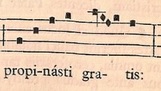
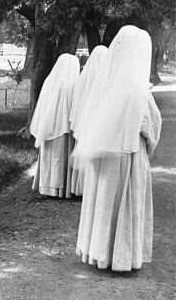 the religious life doesn’t mean that my vocation was to stay in that community – of course I miss the processions of white habits, the candle-lit vigils before Jesus in the monstrance, the solemn Salve. It’s also obvious that when my health began to shatter under the demands of monastic life, all of those beautiful things weren’t enough to keep me there. So why, then, did I spend the better part of two years afterward fighting an irrational desire to turn up on the community’s doorstep one morning and ask them to let me have another try?
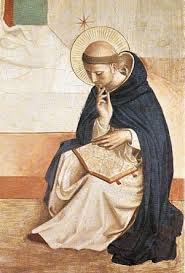 the first one) and, one morning, simply pushed all my other essays aside and buried myself for several hours in the life of this gentle, luminously holy man. The shy scholar who sold his books to feed the starving; the preacher with bleeding feet, on his own among thousands of heretics; the beacon of chastity whose sheepish deathbed confession was that he had sometimes enjoyed preaching to young women more than old; and the devoted spiritual father who promised after his departure to help the brethren by his prayers. By the time I put my books away and hurried off (as quietly as one can hurry down a cloister while dodging the squeakiest floorboards, that is) to help prepare lunch that day, I’d become a Dominican. An ordinary desire to follow Christ had crystallized into the desire to follow Christ just as Saint Dominic had, in contemplation and preaching of the Truth.

Recent Comments