Sep 30, 2015 |
 Ever seen Kung Fu Panda?
I watched the movie with my postulant class and felt at the time like it pretty much described our early religious experience. Rigorous training and self-discovery were on the menu, served up with bok choy and steaming, hot rice. It got me thinking about what it is to prepare oneself for a life of service to Him. The Ignatian idea of soldiers for Christ comes to mind here. The similarities between military and religious life are manifold, after all:
– Early mornings.
– Obedience to Superiors.
– Intense discipline.
– Frequent exhaustion.
– Detailed schedule.
– Ordered sleeping quarters.
– Standard issue clothing.
– B-grade coffee **grin**
Even the standing, sitting, following in the breviary and bowing in unison of praying the Office together is somewhat analogous to the experience of ceremonial drill with synchronised marching and weapon handling.
By way of further illustration, allow me to share my own personal occasion of deja vu.
People had been murmuring all afternoon, you see. It was rumoured that there would be a midnight training exercise. We had been moved out of the Officer’s quarters for that evening, which was unusual. We were shifted to the enlisted flats. Unusual just doesn’t happen in the military. Routine happens. Predictability happens. People are squared away.
 Instinct told me to go to bed partially dressed, and it is just as well that I did. At approximately 3.30am the following morning, the peal of an aluminium whistle simultaneously sounded with the thud of a shoe being whacked against the door of my quarters. We were ordered to report downstairs on the grass outside the flats, in full DPCUs (disruptive pattern camouflage uniforms) but with our running shoes instead of our boots, formed up in rank and file. Initially I congratulated myself. I was almost completely dressed – I only had to pull on and button up my camouflage shirt and pull my shoes on… wait… what shoes? I had my boots, but not my running shoes. My running shoes were in the trunk of my car, parked downstairs outside the flats.
I grabbed my car key and ran like a mad thing in bare feet out onto the dew-kissed grass to grab my shoes. I ran to my place in the line, secured my car key in a cargo pocket and managed to get one shoe on before time was up. It was mostly dark, and I put the other shoe on the ground partially on top of my unshod foot as we stood to attention and listened to the Warrant Officer brief us on the exercise that was about to take place. I played it cool and counted on poor visibility and the hope that an inspection would not take place to survive the next 5 minutes… and was grateful when we were given a minute between the briefing and the commencement of our first task, which was enough time to get the shoe on. My failure to be properly prepared had miraculously flown under the radar that morning. What followed was a “character building” road run of many miles, where we were required to drop to the side of the road every few miles to do pushups, where our hands held the curb, but our bodies had to go down a further 6 inches lower than the level of our hands in order to allow our noses to brush the asphalt. Such was the cruel creativity of our task masters. We were then required to travel a certain distance in walking lunges before teaming up with a fellow Officer Cadet and retrieving, in pairs, heavy ammunition boxes with the objective of getting them from one side of a deep water obstacle to another. All in all, these torments continued for approximately 90 minutes, at which point we were given leave to shower and get ourselves to the Officer’s Mess for a well-earned breakfast and some liquid gold.
Fast forward some 4 years.
I had been wearing a uniform of a very different kind for approximately 2 weeks. I was now a baby postulant.
At approximately 1.15am, the morning bell rang. I woke and groggily looked at my clock. Seeing the time, I was quite sure it was just a dream and I turned back over in my bed and went back to sleep. Meanwhile, more savvy and obedient sisters than I were dressing in the neighbouring cells, despite the hour. Rushing between cells and bathrooms transpired over the few minutes that followed before the message made it around the dorms that we were to go back to bed. Suffice it to say that rising at 5am after the drama a few hours earlier was… “sanctifying.”
After breakfast the following morning all novitiate sisters were asked to meet in the Community Room where the Novice Mistress addressed us to debrief the incident of the night before. It so happened that a sister who often struggled to wake to an alarm or a bell was responsible for ringing the bells that week to regulate the horarium. Her anxiety had been building over the course of the week, so determined was she to do her duties well for love of her sisters. She woke in the middle of the night, panicked and thought she had missed the time that she was supposed to ring the bell to wake the house, pulled on her slippers and her robe and ran out to ring the bell, not realising that we were still entitled to a further 4 hours and 45 minutes of sleep. Seasoned by my prior military experience, and skeptical about the explanation we had just been offered, I raised my hand and when the Novice Mistress called upon me, asked her directly in front of the rest of the novitiate: “Sister – are we being hazed?”
You can imagine the laughter that ensued.
Anecdotes aside, where is the point of distinction between “character building” and “sanctifying” ?? What makes two types of life with so many shared experiences remain so radically different in character??
I think the answer resides in a fascinating tension between love and duty, between glorification of God and glorification of self.
In my experience there is a sort of perfectionistic quality about the typical military officer, more pronounced in some than in others, coexisting with a desire to serve. The typical officer takes great pride in a polished appearance, in elite physical conditioning and in finely honed discipline. The typical officer seeks to be better, faster, stronger, smarter, more courageous… because the life of self and of others may depend upon that one day. This need not lack virtue if ordered correctly under God, but often this is not the case. Ordering one’s betterment within the framework of God’s plan and created order is certainly not the focal point of the training, that is for sure! Duty is the fulcrum and assiduous training the lever as the officer aspires to be propelled toward a successful military career. Duty. Training. Discipline. Courage. Loyalty. These are all good things, but at the service of oneself they are sold short!
There is, however, a good that is objectively higher: love.
There are still temptations in religious formation to want to glorify self, temptations to a disordered perfectionism that quite simply kills the love between sisters and bears no fruit. Yet opportunities abound to grow in love, and the community construct is uniquely fitted to the task of helping to motivate sisters to authentically love and to serve rather than to simply to better one’s capability. The eternal life of self and others may depend on that predisposition to love and serve in response to His grace, one day!
As one grows in obedience and self-knowledge, (perhaps without the bok choy and rice,) one learns to live by the dictum I first heard from my Postulant Mistress:
“Do the best that you can with the time you have for the love of God.”
My former superior used to speak of religious life as a school of love… but isn’t ALL of life that, really? Novitiate was like LOVE101. Back out here, in the world, amidst family, friends and coworkers? I feel like it’s just an extension of that other school of love – definitely the intermediate class!
So what has this former Air Force Officer learned so far?
I’m just a little one.
I don’t have to be better, faster, stronger, smarter or more courageous, as good as all of those qualities are.
All I need to do is learn to love in response to Love.
by Bek.
Sep 17, 2015 |
By Emily.
“Come, let us return to the Lord, for it is He who has rent, but He will heal us; He has struck us, but He will bind our wounds.” (Hosea 6:1)
We know by faith that God has a plan for our lives and that nothing happens unless God wills or permits it. But for so long after I left the convent, I had a hard time having the faith and the humility to accept and believe that this goes also for my weaknesses and mistakes too. In many ways, my time in the convent was very beautiful and full of many graces, but I cannot deny that I also experienced a lot of emotional and spiritual pain while I was there, as well as after I left. For a long time I felt much guilt and shame. I was convinced that it was my personal incompetence that was the sole reason that everything happened the way it did. I felt like I had messed up God’s plan for my life. I knew He’d draw good out of it, somehow, but I struggled to forgive myself for messing up the way my life was “supposed to” go.
Did I make a mistake in entering the convent? Was I supposed to have followed a different path but I was just too blind to see it? Or was perhaps this indeed God’s plan for me, but through my own fault I ruined it? These questions tormented me.
A few months ago, in a flash of insight that I knew could only have come from the Holy Spirit, God gave me the grace to understand my past and especially my time in the convent in view of His love, mercy, and providence, and most especially, His desire to bring me deep inner healing.
I realized that everything from my past, particularly my experiences in the convent, was all part of God’s plan to bring me where I am today. He knew that my time in the convent would bring to the surface and open many of the wounds that I carried inside, many of which I wasn’t aware of previously. I realized that as painful as it was sometimes, it was necessary so that Jesus could begin the healing process in me. I think that this was a big part of why He called me to that particular community, as well as back out to the world: precisely because He wants to heal me!
One comparison I use to try to understand this is to think of God as being like a surgeon. A surgeon’s desire is to heal his patient, but in order to heal, the surgeon must make an incision so that he can access the underlying problem that the patient has. That is to say, the surgeon must wound the patient in order to heal him. As the prophet Hosea writes, “Come, let us return to the Lord, for it is He who has rent, but He will heal us; He has struck us, but He will bind our wounds.” (6:1)
God does not heal us in spite of the crosses we bear. He heals us precisely by means of those crosses. Even when it feels like the crosses we’re carrying are our fault alone. They say hindsight is 20-20, and looking back I can see much more clearly both my shortcomings as well as those of my former community. It’s a constant temptation to beat myself up for not seeing all that ahead of time – but looking at it from deeper perspective, I truly see God’s providence at work even there. God’s plan isn’t conditional on our perfection. As St. Paul says, “God works all things together for good for those who love Him.” All things – both the positive and the negative. Nothing, absolutely nothing, in our lives takes Him by surprise or leaves Him scrambling to figure out how to fix it. What at first seemed to me like “plan B” for my life was really God’s “plan A” after all. He knew beforehand all about everything that would happen and has led me through it all, both good and bad. He knew about all of it, and it was all part of His plan from the beginning to heal me and bring me closer to Himself, because it was necessary for the negative things to come to light so that He, the Divine Physician, could begin the process of healing me. He permitted the imperfections of it all because it was all part of His plan that is leading to something so beautiful. One thing in particular I’ve learned these past several months is that God is indeed guiding me and healing me, in His own time and in His own beautiful way, even, and perhaps especially, when He does it differently than I would’ve expected. But I see now how even our imperfections are incorporated by God into the tapestry of His loving plan for each one of us. May God fill your heart with His healing and peace!
Sep 3, 2015 |
aka the Should Syndrome.
By Grace.
Transition TimeLion
noun: The anxious/nagging/unsettled/perturbed feeling that arises when one experiences tension between current reality and where they think they ought to be
synonym: “Should Syndrome”, examples may include:
I should be ready for a job. I should be ready to date. I should be ready to go out with friends on a Friday night. I should be able to pray like I used to. I should be able to stop crying. I should be ok with shopping in stores or being out in large crowds.
Taming the Transition Time(line)lion and, consequently, Should Syndrome is no small feat. Often it rears its roaring head or utters its almost inaudible growls at the most inopportune times. This concept is in no way specific to the unique experience of transitioning from religious life to the lay state. Those who are going through the process of grieving a loved one’s death experience this, stay at home moms as the size of their family increases, those who struggle with infertility, professionals changing jobs or careers; all experience this phenomenon at some point in their life. The focus of this little reflection, however, will be directed toward the specifics of what you and I have been uniquely called to – continuing our relationship with God after discerning a different path to Heaven outside of religious life.
Three years later, with some time to process and a bit of distance, I offer these thoughts. In the early days after leaving the community I discerned with, almost every moment was a reminder that I wasn’t there. Not a day went by that I didn’t think of the sisters, that I didn’t have dreams that I was supposed to be in habit and wasn’t and that while there was great freedom without an horarium, being devoid of any schedule was ultimately offsetting. The only prayer I could utter for months was simply the name of Jesus. The mere sight of a Breviary broke my heart in two and the Transition TimeLion growled, “It’s been 6 months already, I should feel more stable than I do. I need to re-enter the workforce, but I feel incapable of entering the previous career I had. Surely, I should be ready by now.”
The interesting thing I found with the Transition TimeLion is that the expectations I felt pressured by or the things I felt I ought to be doing were not coming from anyone other than myself. I was the one disregarding the need of my heart that simply called for time and space to transition. The roaring and growling were insecurities that arose because I felt uncomfortable in this place of utter vulnerability that I had never encountered before. I wanted out! I wanted the fog to lift and the heartache and the unknowing to be over. However, this was an invitation to something deeper, to a new stage of my relationship with the Lord – to suffer being patient with myself. To trust, truly trust, that He has my greatest good at heart. I often am not able to see it in the moment, but those grueling, agonizing moments are the “stuff” of redemption. So are the moments of great joy and peace that follow.
Many times in the last three years, the TimeLion has appeared and reappeared in my life. So, what does one do in these moments and how does one tame this creature? I offer only the aids I have come to know through personal experience. You perhaps also have insightful wisdom which I welcome you to share for the Timelion can be tamed in a multitude of ways.
- Laugh. Yes, even if it is a forced laugh. I envision Beast from Beauty and the Beast when he is getting gussied up for his dinner with Belle and dons ridiculous curls with bows as one of the possible hair do’s. Puts the whole roaring lion of the interior life into perspective.
- Enter into beauty. Beauty allows us to encounter new aspects of our Creator that surprise us and almost immediately lift the soul, in delight, out of itself. Beauty will look different for each of us (and our Creator knows that). For some it will be a majestic sunset over the mountains, for others the smell of fresh baked chocolate chip cookies out of the oven, the giggle of a niece or nephew or a blossoming wild flower we unexpectedly encounter on our path. Whatever it is, He created it for you.
- Recreate. I apologize if even the sight of this term we encountered in religious life makes you cringe, but stick with me. Engage in activities you loved doing before you entered religious life and do them just for the sake of doing them (and because you can). Paint, play your musical instrument, go for a run, canoe, drink a cup of coffee while you’re getting ready in the morning. Utilize some of those new gifts/skills you learned in religious life for fun now. I learned to sew and now thoroughly enjoy making all of my niece’s gifts by hand.
- Trust. God has never been, is not now and will never be in crisis about your vocation. All of what He allows us to experience in this transition is part of Plan A. There isn’t a Plan B. It is not the case that we discerned incorrectly or failed. In fact, this discernment was actually successful despite the possible feeling that the Lord duped us (and perhaps, like me, you let yourself be duped). He loves us infinitely and has given us a particular grace specific to only those who transition from religious life to lay life. There will be a time and a place when He reveals the details of our vocation to us, but for now, He is simply calling each of us more closely to Himself.
So, when the Transition TimeLion begins to roar, know that you are already infinitely loved by the Triune God who loved you into existence and desires to be in relationship with you regardless of how quickly you get back on your feet, what you do or don’t do, achieve or don’t achieve. Let us rest a bit, be gentle with our hearts and take our time discovering who we are in the eyes of the Father.
Aug 26, 2015 |
By Lucia Delgado
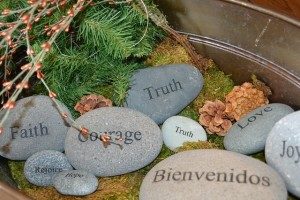
One of my favorite saints, St. Augustine of Hippo, said this: “Patience is the companion of wisdom.”
In my discernment process of becoming a Franciscan sister, I thought I was patient. However, as one friend would put it, I was “eloping.” My impatience was fueled by others who thought they knew I was meant to be a sister. I entered discernment with the thought of impressing others. I said to myself: Wouldn’t it be nice to be in a habit and change the West Coast? And influence others to go back to Church and promote a culture of life?
But I was fleeing from the marriage vocation.
Yes, I was running away. I thought would it be nice to be closer to Jesus in the convent. The atmosphere at the convent and retreat house was peaceful and beautiful. But my trembling soul was called to another vocation.
I kept in touch with the sisters after my abrupt departure last summer. They thought I was called to religious life. There were signs of a vocation but to different lifestyle.
Now, I am discerning the call to marriage; I feared that my relationship with Jesus would go sour if I took this route.
It was quite the opposite.
I am closer to the Lord and I get to share my love for Him with my Catholic boyfriend. I go to Bible studies at a nearby parish; I am able to sing in the choir and cantor the responsorial Psalms.
I will say that my discernment was a blessing. The experiences with the sisters made me a wiser Catholic: By singing in the choir, working in the retreat gift shop, and sharing knowledge with the sisters during community catechesis, I learned how to be courageous in sharing my Catholic faith in the world.
I am asking God for patience and wisdom during this next phase in my life. Remember that your experiences in the convent are not wasted but those experiences are full of pearls of wisdom.
Aug 11, 2015 |
By Cinnamon.
Unusquisque:
1) Latin adjective (masculine singular), from unus (one) + quisque (each). Eg: Each one looks to You to give food in due season.
2) Tongue-twister from the Dominican prayer book, bane of my life in the early weeks of postulancy (see also: gloriosissimae; necessitatibus; famulorum famularumque).
I don’t know whether, in your former community, you tangled with this monster during the formal grace in Latin as I did (it’s pronounced oo-noos-QUISS-quay, by the way, and getting it right for the first time is a real buzz) but if you were in Dominican formation I bet that you’ve encountered these other eight-hundred-year-old traps for the unwary:
- Courtesy of the angels who started handing out bread at the junior end of the refectory table, you get to go first in everything! Want to wait invisibly at the back and watch the senior Sisters to find out what they do? Actually, you’re leading the procession. Good luck!
- You (finally) make a perfect profound bow. Everybody else makes a head inclination. Hopefully they’re all keeping custody of the eyes and missed it.
- For anyone who’s not naturally a soprano:
no further explanation is required. I used to do my choir practice down the local cemetery, figuring that my paint-peeling rendition of this beloved chant would take years off Purgatory for any Holy Souls who happened to be listening.
- Processions in general. Did anyone else crash into furniture on the way around the chapel? Execute an impeccable turn, and then realise that a partner had been left stranded because you were supposed to bow to her first? Meander off too far to the side and get patiently towed back in by one elbow? (Or maybe it’s just me. Who am I to judge?)
Also, unless your written work rivalled the perfection of the Summa, you will have found yourself on the receiving end of that other profoundly Dominican gesture: the uncapping of a red pen. Veritas. The deepest instinct of these Hounds of the Lord is to find out what’s wrong, and, for the glory of God, fix it. While still in the convent, I read the results of a survey about religious beliefs sent out to different communities of nuns in the 1960s: lots of sisters dutifully filled out and posted back their responses, but, surprising nobody except the authors, the Dominicans corrected the questions before they answered them. (It certainly didn’t surprise me. I’d just failed an essay for the first time since my early years in high school.)
And you know something? I miss it all fiercely. As Dom Hubert Van Zeller points out, a yearning for the externals of the religious life doesn’t mean that my vocation was to stay in that community – of course I miss the processions of white habits, the candle-lit vigils before Jesus in the monstrance, the solemn Salve. It’s also obvious that when my health began to shatter under the demands of monastic life, all of those beautiful things weren’t enough to keep me there. So why, then, did I spend the better part of two years afterward fighting an irrational desire to turn up on the community’s doorstep one morning and ask them to let me have another try?
When I left, the most important thing that became forfeit was not my hope of wearing the veil that would set me apart for Our Lord, and the scapular for Our Lady, and nor was it the chance to spend my days with a lively, intelligent group of devoutly Catholic women of whom I had become fond. It wasn’t even the privilege of living in the cloister and chanting the Divine Office with them at the heart of the Church. What I surrendered was twofold: to be a bride of Christ, and a daughter of Saint Dominic. In my heart, I’m both. Officially, I’m neither. Worse is the thought that, if I died today, in heaven I’d be neither.
Of course, if it turns out after further discernment that I don’t have a religious vocation at all, I could become a tertiary, but I suspect for me that would feel a bit like winning the silver medal. Here’s why. The desire to be a sister first hit me in my teens when I was barely practicing the Catholic faith, and before the year was out I’d fallen head over heels in love with Jesus. Listening recently to the TEDx Talk on discernment that Jenni gave, I realized for the first time that, somewhere in those early days, I skipped a crucial step in the process: I wasn’t afraid of the path ahead. On the contrary, I was awed at having been noticed by God, and wildly excited about getting started in the religious life. Forget your people and your father’s house, for the King has desired your beauty!
Thanks to prosaic things like tertiary studies and the resultant debt, the better part of a decade passed before I got my wish. Enough time to get over the honeymoon, commit myself to some serious study, collect a few battle scars and get a realistic idea of what I’d be facing when I entered. It always surprised me, though, when people said, “Wow, that’s a big step to take! Aren’t you scared?” No, I’m not, was the honest reply – it’s just the next obvious step. Giddy romanticism dispensed with, I was still eagerly looking forward to entering: I’d discovered the Dominicans at World Youth Day, and found what I was looking for in a religious Order. Then, a few months after I entered, I finally met Saint Dominic.
I’d been struggling through an assignment about the founding of the Order (having, as previously mentioned, failed the first one) and, one morning, simply pushed all my other essays aside and buried myself for several hours in the life of this gentle, luminously holy man. The shy scholar who sold his books to feed the starving; the preacher with bleeding feet, on his own among thousands of heretics; the beacon of chastity whose sheepish deathbed confession was that he had sometimes enjoyed preaching to young women more than old; and the devoted spiritual father who promised after his departure to help the brethren by his prayers. By the time I put my books away and hurried off (as quietly as one can hurry down a cloister while dodging the squeakiest floorboards, that is) to help prepare lunch that day, I’d become a Dominican. An ordinary desire to follow Christ had crystallized into the desire to follow Christ just as Saint Dominic had, in contemplation and preaching of the Truth.
So, I’m starting discernment again from scratch, trying to find the place where my home on earth might be. And this time, I am scared. I know what can go wrong, and how badly – but also how beautiful it can be. That’s in the future, though. For now, I remember and continue to pray the exquisite Dominican prayers I learned in the convent – not in some useless pretence of monastic life, but because their meaning has become intertwined with my personality like silk threads woven into a piece of cloth, and I wouldn’t know how to pull them out if I wanted to. I’m still a Dominican inside. Please God, one day I’ll sing His praises in heaven as one, too.
Praedicator gratiae, nos junge beatis.
Aug 7, 2015 |
By Father Dominic McManus OP.
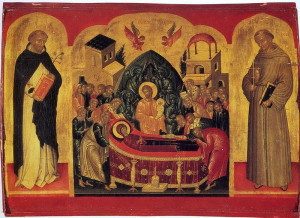
There is an ancient tradition that Saint Francis and Saint Dominic, the fathers of the mendicant reform of religious life in the 13th century, met while at Cardinal Ugolino’s while awaiting approval for their respective Rules. There’s a lot of the history to be legitimately doubted: that we swapped belts, for instance, or changed Constitutions. Whatever did or didn’t happen in the Cardinal’s garden that day, however, a longstanding tradition was born. On the Feast of St. Dominic a Franciscan is invited to preach at the Dominican priory; likewise, on the Feast of Saint Francis, a Dominican is invited to the Franciscans. I am not a Franciscan, but in honor of the tradition I want to begin with cinematic anecdote of Holy Father Francis.
Brother Sun, Sister Moon has its critics, and rightly so. It’s a pretty pastel version of a very peculiar saint whose life more closely resembled an action adventure than a holy card. But even a campy movie can get some things right. Oddly enough, one of the things that Brother Sun, Sister Moon manages very well is vocation: why people come, why some leave, and why others stay.
My favorite scene opens up on the friars begging in the streets. Some people offer them food, others throw garbage their way, but most simply jeer and shout. Francis predictably breaks out in a spontaneous sermon which he closes with a song; a kind of litany to the joys of Lady Poverty and Sister Want. One of the brothers, however, hangs back. We find him peering in the window of a house at one of Assisi’s local lovelies, her blouse having come open as she kneads a loaf of bread. It’s unclear whether the brother is taken with this portrait of domesticity, or just the expanse of cleavage open to his view, but in any case he’s caught by one of the other brothers and brought to Francis, who gives a rather profound if not very technical exhortation on vocation. “We’re not all meant to be monks,” he tells the wayward friar. “If celibacy tempts you more than marriage, then leave, marry, and be happy for it!” Francis ruffles the brother’s hair and the one departing realizes a moment of prophesy: Francis had never tonsured him alongside the others. The scene closes with the friars taking up their joyful song again, this time to joys of Sister Chastity.
As silly as it sounds, there’s deep insight in this scene. Besides the obvious fact that not everyone is called to religious life, Francis’ exhortation is dead-on. If the observances of the life make it harder for you to be a good Christian, then you really ought to leave, and be happy for having figured it out. This is true whether the observances in question are fundamental to religious life as a whole, like poverty, chastity, or obedience, or if they’re more particular to the community in question, like whether they let you wax or bleach your mustache, or whether you occasionally can have a beer or an ice cream.
What I think is even more profound in the movie’s portrayal of vocation here, is more implicit than explicit. If one is bound to leave because the structures of the life militate against your own growth in virtue and holiness, then why would one ever enter to begin with? Here the film is precisely right: because it’s meant to make the Christian life easier. Religious life lived aright is nothing other than the Christian call to holiness, organized and institutionalized to serve the needs of particular people in a particular place and at a particular time.
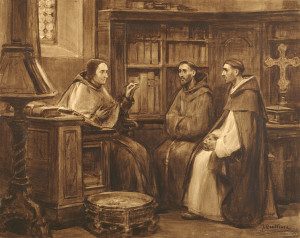
I didn’t really understand this until long after I’d entered religious life. I started in a class of nine, of which I am now the sole survivor. Each time another brother would leave, we who remained would be faced with a two-headed monster. Why is he being called to leave? And more importantly (at least for me), why am I being called to stay? But as life has gone on and my classmates have discovered other vocations: to diocesan priesthood, to marriage and family life, to other religious communities, and to service as single men in the Church, they’ve all reported that the transition out of the life was not so different than the transition into it.
We were all drawn to Dominican life, under some description, because of what the Order these days calls the Four Pillars: prayer, common life, study, and ministry. But of course, long before we entered we were all men of prayer; if not the Divine Office, at least regular daily prayer, the rosary, Adoration, and obviously Mass. We all were part of various intentional communities, whether among our own families, or close-knit groups of friends, various confraternities, or the KCs, or even the Boy Scouts. We were all men of study, especially concerning the Faith, otherwise we wouldn’t have been drawn to the Dominicans to start. And we were all men of action, who at the very least volunteered, if not actually worked, in some ministry or apostolate. And as my brothers have moved on with their lives they have remained men of prayer, of study, of common life, and of ministry. And we in the Order would expect nothing less.
Saint Dominic, whose feast we celebrate, would have a special care for the women of Leonie’s Longing. First of all, he was a failed vocation, at least in the sense that he started as a priest in one place under one bishop and felt dissatisfied. The life of a canon regular ceased be an aid to his salvation and became a liability. And since there was yet no way of life in the Church designed for the work which did give him life, he had to invent it. And together, wittingly or not, Saint Dominic and Saint Francis changed the way the Church thinks about religious life altogether.
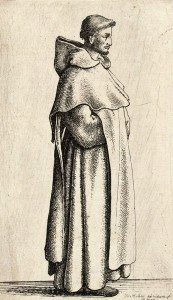
One feature of this new way of life that Saint Dominic proposed that I imagine can be of good use here at Leonie’s Longing, is the principle of dispensation. This doesn’t mean that Saint Dominic let the brethren get away with murder; far from it, he was kind of a hard-ass, but he deliberately crafted our Rule and Constitutions such that they would not bind under pain of sin. Why? First, because he wanted all of the brothers and sisters of the Order, both superiors and subjects, to keep the end in mind all of the time. He didn’t want me, as a priest, to have to scroup over Confessions going past time and me missing Vespers, though he would expect me to make it up later. Why? Because the reason for Vespers is for the sake of the penitent in the confessional! But there was a deeper, more profound meaning to Saint Dominic’s take on the law. He wanted the observances and discipline of the life to be undertaken freely, so that they could best dispose the spirit of the individual to the graces necessary, not only for their own salvation, but for the salvation of all souls.
Dominic spent ten years in southern France trying to get the Order started, with nothing but a handful of nuns and his own brother for company. How often during that decade of waiting do you think he thought himself a failure? If he was anything like me, it’d be six times before breakfast. And yet God turned that work into a tradition now 800 years old! You might feel like a failure today, and maybe your transition out of the life was due to something you did, or something they did, or more likely, a bunch of things both of you did. What matters now is how God is going to turn this seeming failure into a success, how He longs to make a saint out of the sinner you see in the mirror.
So when you’re tempted to dream about what once was, or to return internally to long-dashed hopes, or to groan in frustration because the baby’s cry won’t let you whisper Compline to yourself, think on Dominic and Francis. And think not so much on the life they lived as on the motivations, the desires, and the intentionality with which they lived it. Don’t dwell on why you left, but give thanks for why you came. And be happy, as Francis exhorts the brother with the unshorn head, that you’ve learned something new about the God who loves you, and about how He longs to bring you home.
Father Dominic McManus is currently Adjunct Instructor of Liturgical and Sacramental Theology at Aquinas Institute of Theology in Missouri. His major areas of interest are liturgical theology, especially cross-ritual studies, and preaching, and he recently published the book, The Mission of LOVE – A Sacramental Journey to Marital Success.

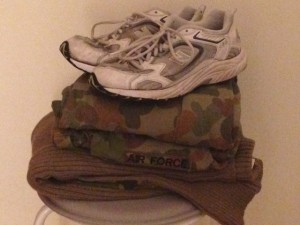 Instinct told me to go to bed partially dressed, and it is just as well that I did. At approximately 3.30am the following morning, the peal of an aluminium whistle simultaneously sounded with the thud of a shoe being whacked against the door of my quarters. We were ordered to report downstairs on the grass outside the flats, in full DPCUs (disruptive pattern camouflage uniforms) but with our running shoes instead of our boots, formed up in rank and file. Initially I congratulated myself. I was almost completely dressed – I only had to pull on and button up my camouflage shirt and pull my shoes on… wait… what shoes? I had my boots, but not my running shoes. My running shoes were in the trunk of my car, parked downstairs outside the flats.
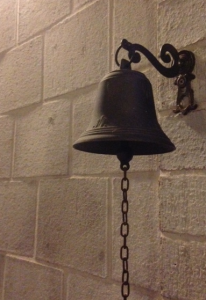 Mistress addressed us to debrief the incident of the night before. It so happened that a sister who often struggled to wake to an alarm or a bell was responsible for ringing the bells that week to regulate the horarium. Her anxiety had been building over the course of the week, so determined was she to do her duties well for love of her sisters. She woke in the middle of the night, panicked and thought she had missed the time that she was supposed to ring the bell to wake the house, pulled on her slippers and her robe and ran out to ring the bell, not realising that we were still entitled to a further 4 hours and 45 minutes of sleep. Seasoned by my prior military experience, and skeptical about the explanation we had just been offered, I raised my hand and when the Novice Mistress called upon me, asked her directly in front of the rest of the novitiate: “Sister – are we being hazed?”
 By Emily.
 myself up for not seeing all that ahead of time – but looking at it from deeper perspective, I truly see God’s providence at work even there. God’s plan isn’t conditional on our perfection. As St. Paul says, “God works all things together for good for those who love Him.” All things – both the positive and the negative. Nothing, absolutely nothing, in our lives takes Him by surprise or leaves Him scrambling to figure out how to fix it. What at first seemed to me like “plan B” for my life was really God’s “plan A” after all. He knew beforehand all about everything that would happen and has led me through it all, both good and bad. He knew about all of it, and it was all part of His plan from the beginning to heal me and bring me closer to Himself, because it was necessary for the negative things to come to light so that He, the Divine Physician, could begin the process of healing me. He permitted the imperfections of it all because it was all part of His plan that is leading to something so beautiful. One thing in particular I’ve learned these past several months is that God is indeed guiding me and healing me, in His own time and in His own beautiful way, even, and perhaps especially, when He does it differently than I would’ve expected. But I see now how even our imperfections are incorporated by God into the tapestry of His loving plan for each one of us. May God fill your heart with His healing and peace!
 By Lucia Delgado
 By Cinnamon.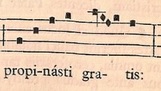
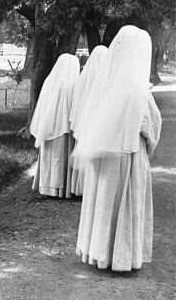 the religious life doesn’t mean that my vocation was to stay in that community – of course I miss the processions of white habits, the candle-lit vigils before Jesus in the monstrance, the solemn Salve. It’s also obvious that when my health began to shatter under the demands of monastic life, all of those beautiful things weren’t enough to keep me there. So why, then, did I spend the better part of two years afterward fighting an irrational desire to turn up on the community’s doorstep one morning and ask them to let me have another try?
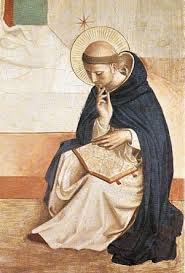 the first one) and, one morning, simply pushed all my other essays aside and buried myself for several hours in the life of this gentle, luminously holy man. The shy scholar who sold his books to feed the starving; the preacher with bleeding feet, on his own among thousands of heretics; the beacon of chastity whose sheepish deathbed confession was that he had sometimes enjoyed preaching to young women more than old; and the devoted spiritual father who promised after his departure to help the brethren by his prayers. By the time I put my books away and hurried off (as quietly as one can hurry down a cloister while dodging the squeakiest floorboards, that is) to help prepare lunch that day, I’d become a Dominican. An ordinary desire to follow Christ had crystallized into the desire to follow Christ just as Saint Dominic had, in contemplation and preaching of the Truth.
 By Father Dominic McManus OP.
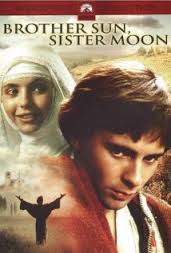 aneous sermon which he closes with a song; a kind of litany to the joys of Lady Poverty and Sister Want. One of the brothers, however, hangs back. We find him peering in the window of a house at one of Assisi’s local lovelies, her blouse having come open as she kneads a loaf of bread. It’s unclear whether the brother is taken with this portrait of domesticity, or just the expanse of cleavage open to his view, but in any case he’s caught by one of the other brothers and brought to Francis, who gives a rather profound if not very technical exhortation on vocation. “We’re not all meant to be monks,” he tells the wayward friar. “If celibacy tempts you more than marriage, then leave, marry, and be happy for it!” Francis ruffles the brother’s hair and the one departing realizes a moment of prophesy: Francis had never tonsured him alongside the others. The scene closes with the friars taking up their joyful song again, this time to joys of Sister Chastity.
 I didn’t really understand this until long after I’d entered religious life. I started in a class of nine, of which I am now the sole survivor. Each time another brother would leave, we who remained would be faced with a two-headed monster. Why is he being called to leave? And more importantly (at least for me), why am I being called to stay? But as life has gone on and my classmates have discovered other vocations: to diocesan priesthood, to marriage and family life, to other religious communities, and to service as single men in the Church, they’ve all reported that the transition out of the life was not so different than the transition into it.
 at Leonie’s Longing, is the principle of dispensation. This doesn’t mean that Saint Dominic let the brethren get away with murder; far from it, he was kind of a hard-ass, but he deliberately crafted our Rule and Constitutions such that they would not bind under pain of sin. Why? First, because he wanted all of the brothers and sisters of the Order, both superiors and subjects, to keep the end in mind all of the time. He didn’t want me, as a priest, to have to scroup over Confessions going past time and me missing Vespers, though he would expect me to make it up later. Why? Because the reason for Vespers is for the sake of the penitent in the confessional! But there was a deeper, more profound meaning to Saint Dominic’s take on the law. He wanted the observances and discipline of the life to be undertaken freely, so that they could best dispose the spirit of the individual to the graces necessary, not only for their own salvation, but for the salvation of all souls.
 So when you’re tempted to dream about what once was, or to return internally to long-dashed hopes, or to groan in frustration because the baby’s cry won’t let you whisper Compline to yourself, think on Dominic and Francis. And think not so much on the life they lived as on the motivations, the desires, and the intentionality with which they lived it. Don’t dwell on why you left, but give thanks for why you came. And be happy, as Francis exhorts the brother with the unshorn head, that you’ve learned something new about the God who loves you, and about how He longs to bring you home.
Recent Comments