Nov 29, 2014 |
 By Mater Dolorosa
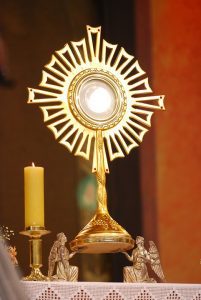
Hearing the announcement from Pope Francis that 2015 will be a year dedicated to consecrated life initially left me with mixed emotions. Obviously, this will be a great grace for the Church. It will be beautiful to pray for those in the consecrated life and it will create more awareness about consecrated life. And I am confident that my former sisters are very excited!
However, I can’t help but feel a little left out. You see, a few years ago I was in the convent going about my normal Monday when I was called into my superior’s office. To my great surprise I was asked to leave the community. And even though it’s been a few years, my heart is still confused by this. Initially, it seemed that hearing about this
special year reopened those wounds.
And yet, I don’t believe that is the entirety of what is going on in my heart…
Jesus always calls us to greater healing and wholeness. Yes, hearing this announcement did stir up feelings and emotions. But this “stirring” in my heart is also a beautiful opportunity to let God into those hurts and receive more healing. In these moments, when I feel left out and when my life feels meaningless, I have to reach out in faith. When I have the courage to let God be the only thing that I possess He fills my heart with the knowledge that I belong to Him.
He is enough for me.
Now I look back and see how much I have grown and healed. This announcement is not so much salt in a wound but rather a reminder of the healing balm the Lord has placed in those wounds.
How about you? How does this announcement make you feel? God bless!
Nov 27, 2014 |
 By Misericordia.
Happy Anniversary!
Anniversaries are supposed to be happy, right? The anniversary I celebrate today, however, that of departing from my former Religious Community, is filled with a range of emotions, none of which are happiness. There are no roses, gifts, cards, or breakfasts in bed. The worst part is that no one else knows, it’s just a regular day. Well, this year it happens to be on Black Friday and I still don’t know how to shop!
Yesterday was Thanksgiving, and I can hardly think of a prayer, let alone one of gratitude. It has been two years, and it seems like just yesterday and yet like forever, since I took off my habit and veil, replacing it with khaki pants, a green sweater, and a headband to make my “peter pan” hair cut at least a little less awkward.
Each month or year or Liturgical Feast is a reminder of the life I thought I would have lived for the rest of my life with the people I miss dearly.
But these benchmarks in time are increasingly less sad as I transition. Although I never thought I would be able to enjoy Midnight Mass or even see the word Tenebre without becoming upset, filled with regret and remorse, I now have so many other joy-filled memories among which my mind can dance! Before, all I could think of was what I was missing. Now I rejoice in what the Lord has given me in these past two years.
Sure, I still miss the convent, and not a day passes when I don’t think of it. But the way I think about it is drastically different. I am grateful for the life I have now, which seemed so fragmented two years ago but now I know with confidence and faith that I am much more whole and healed than I was before I left, when I “had it all together.”
I have finally learned that Jesus does not want me to stay sad forever and ruminate on what I had and “could” have had. He has arranged the pieces of my life into a beautiful mosaic that I never could have imagined. I spent so much time trying to hide my brokenness, but those broken pieces are what the Lord has chosen to make the centerpiece of His masterpiece, the places in which He glorifies Himself.
If you find yourself mourning your anniversary, a feast day, etc., know that those feelings are very normal, but that you have permission to move past them. You are not resigned to a “lesser” place in the Kingdom now that you are a lay person with less certainty about your future. In a very real way you are living the poverty of will which was such a visible hallmark of the Life of Christ.
So, smile. It’s hard but it gets easier, and you are not alone in that loneliness! Let Jesus give you an anniversary gift. Treat yourself too! Celebrate knowing that the Lord has a beautiful life planned for you. Wait with expectant joy as you anticipate the great season of Advent, confident that there will be graces in store that are far beyond your imagination. If you expect goodness, the Lord will outdo Himself. But if you keep your head down in fear, you might miss what Jesus is trying to show you, and the great work He is doing this moment in your soul!
Nov 20, 2014 |
By Misericordia.
Many of you, I am sure, can remember the day of your entrance into Religious Life. It was a momentous occasion with tears of joy mingled with those of sadness. On that day you had a rough vision of what the rest of your life would look like, and knew that your life choice was an offering up of married life and the prospect of children.
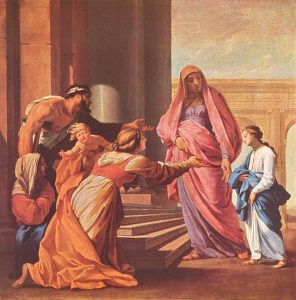
On this day we celebrate the “entrance” of Our Lady when, according to the tradition of the Church, she was presented in the Temple by her parents Anne and Joachim and dedicated to a life of consecrated virginity. Her life had an expected trajectory and there was no reason to doubt that these plans would not come to fruition since it seemed to be the Will of God. Why would God not fulfill this plan?
We all know what happens at the Annunciation when it seems as if God changes His mind. Why did He wait almost ten years? You would think He would have hinted to her or her parents at some point! Does Mary protest? Does she quit? Does she think she “failed” God? Of course not!
In a very particular way, we are conformed to Mary’s Immaculate Heart since we too have offered ourselves to the Lord, and we too have experienced the crumbling of our expectations.
But this sudden change is not a failure or a rejection!
The reason we can look to Mary as a model is not just that Mary did not complain or sit there feeling sorry for herself. More importantly, she also knew that this “mistake” was still part of God’s plan. She did not doubt that He would fulfill all of His Promises, and she even rejoiced at the news! Imagine, being an unwed mother in a society that didn’t accept her kind of situation very easily. Imagine having to tell Joseph and her family, and being gossiped about in town.
We can see her as an example of encouragement and proof that God still has great plans for us, that we didn’t “fail” Him or our vocations- since He is infinitely greater than those things (yes, even our vocation)! We can say with the utmost faith that He still receives us as a gift, even though we might feel like the gift of ourselves that we made on our entrance day was not accepted.
He receives you with open arms. You are His Beloved Daughter still and always! Rejoice today as we celebrate the Presentation of Our Lady and let it be a reminder that because of Mary;s “yes” we are able to call ourselves Daughters of God and even “co-heirs” with Christ in the Heavenly Kingdom, regardless of our earthly vocation.
Sep 26, 2014 |
Former Sister
What my parents think I am:
What my friends think I am:
What potential employers think I am:
What I think I am:
What I really am:
Aug 27, 2014 |
By Father John Linden, Director of Vocations and Seminarians for the Diocese of Lansing.
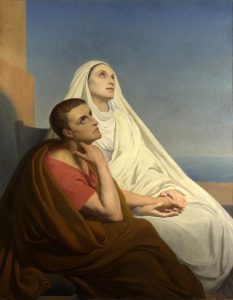
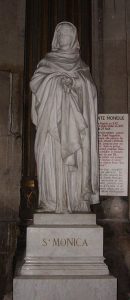
It is famously reported that St. Monica suffered a painful and extended period of torment over the worldly ways and sinful pursuits of her wayward son, Augustine. What isn’t so famously reported is that she simultaneously suffered a very difficult marriage to Augustine’s father, Patricius, who was not only unfaithful to her at times but was extremely ill-tempered all of the time. She prayed for both of these men and suffered all of her married life before her husband finally gave his heart over to God and to the faith near the very end of his life, and her son became a Catholic after 35 years of her exhausting, yet determined, prayers. It is reported that at one point, when lamenting to an unnamed bishop about her son’s refusal to convert, that he told her, “The child of those tears shall never perish.”
We can so easily fall into believing that if things don’t go as we hoped in this world, or if God does not answer prayers for truly good things, that he has somehow forgotten us or has abandoned us. However, Monica refused to believe that God would ever do such a thing. She has left us an example of perseverance in prayer and confidence that all prayer and all of our good efforts matter, even if the outcome is delayed or different than what we may have expected.
God was always with St. Monica and proved to her in the end that all she had done and had suffered had meaning and purpose. Our lives have the same meaning when we offer everything to God, including our joys and our sorrows. Every minute of your life is precious to God. So often we can look down the road and see a goal in the future, while missing a goal that is present to us now in the work that God is doing. Even if we can’t yet see or understand this present goal or the meaning of our waiting for our future goals, we can have faith that God is always doing something that is very good. He is with you now and everything that you are and everything that you do now has meaning and purpose even in light of your future desires.
Many of the struggles of the present can bring tears, but those tears will never be in vain which are offered out of love for Jesus who is the Joy of our souls. Monica loved her son and her husband who were the joy of her soul and in the end her wayward men found the Lord in answer to her many tears. In fact, it seems God never missed counting even one tear if we think about what kind of saint her son became and how indebted we are to God for the work he did through Augustine. But that work may have had more to do with St. Monica’s tears than it did with St. Augustine’s study.
God will never miscount any of your tears either. They are all precious to him. If we think about it, in the end Monica became a saint through the gift of her tears which means that what she has most assuredly received now is none other than the true Joy of her soul! She received more in the end than what she sought for in the beginning. All she wanted was the conversion of her husband and son. God also wants more for you than what you now desire and the truth is that tears of hope can sometimes deepen one’s desire for more. So let me say of your tears what a wise man once said to St. Monica, “The desire of those tears shall never parish!”
Aug 19, 2014 |
By Nancy McCall, MS, LPC
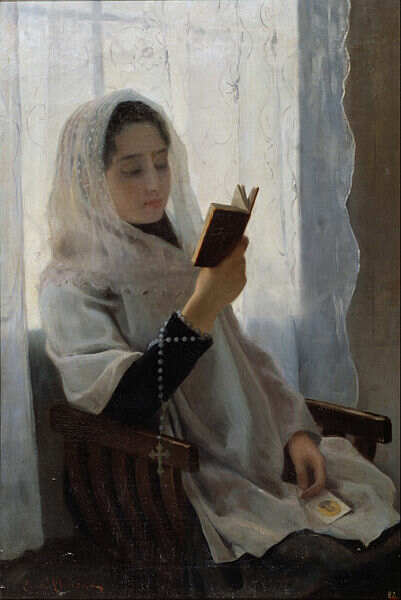
In religious life, one is freed from having to make the mundane decisions about what to eat, what to wear, when and what to do for work, and when to pray. In this way of religious community, which involves self-effacement and obedience to others, one can focus on purifying the heart, growing in grace and on prayer for, and service to, others. It may take the religious person many years to progress far in purifying the heart. Meanwhile, she is growing in grace and does, at least formally, pray for others. When one exits religious life, one can come to believe that because she was free from those mundane decisions like what to wear and what to eat and when to talk, that she is somehow now rendered incapable of decision-making. No, not true at all. All the time while in religious life, the religious sister or brother was still making the most important decisions for himself or herself throughout every day.
You see, the important decisions involve the heart and eternal things. “Will I love today or only be placid?” “Shall I give fully or half-heartedly?” “Shall I bear difficulties patiently or become internally resentful?” “Shall I follow the way of Jesus or just go through the motions?” It is the same outside of religious life, only you must attend to the mundane things too.
Think for a moment and ask yourself, “Did I learn anything in religious life that will help me simplify my life now and be more attentive to God’s Holy Spirit?”
In religious life, there is a purpose for releasing you from the mundane decision-making you were likely used to prior to entering the convent. One purpose is that it is essential when living in community. If everyone decided what they wanted to eat, how would you have meals together? The other major purpose for this release from mundane decision-making is to free each person to focus on those things mentioned above: purifying the heart, growing in grace and on giving energy to prayer and service to the world. Now that you are not living in the same kind of community, naturally many mundane things of life will present themselves to you again and you must deal with them.
What is the best way to manage this new encounter with the diurnal? First, realize that while everything seems to have changed in your experience, nothing has actually changed in the larger picture. Your purpose in life is the same: to purify the heart, grow in grace and to pray for and serve others. Second, there is an art to living and one of your jobs right now is to study that art. For example, the best trick for deciding what to wear in the morning is to decide the night before. An easy way to decide what to do tomorrow is to decide this evening. And just as adhering to routine preserved simplicity for you in the convent, creating and adhering to routine will simplify and bless your life now.
What about that sense of community and common cause that you feel you are suddenly missing? How in the world can such a thing be replaced? You feel lonely, possibly rejected, and you are essentially on your own. Sometimes, the reason little daily decisions seem so difficult is because much bigger decisions are not yet made: in particular, the decision of overall vocation. What’s worse is that I thought I had that huge decision made. What a relief! Now it appears to be unmade. “Oh no!” So I think to myself, “what I was so certain of has unraveled before my eyes, how can I move on not even knowing which way to move?”
The best way to move on is to begin. It’s always easier for God to direct someone who is moving. Begin by choosing to look at your own situation in a fresh and beautiful way. Something beautiful has happened to you. It may look and feel ugly and awful, but it isn’t actually. And Jesus, who adores you, will show you its beauty in time – ask Him.
Second, remember, your decision-making abilities have not been surgically removed. Your emotions may have been badly wounded and your thought processes turned upside down because your circumstances were caught in a toad-strangling, unpredictable storm. You are going to recover, because God has not abandoned you, even if others have.
Third, routinizing all the important things and daily necessities can go far to normalize your life right now. Make a routine based on wisdom, your desires and practical needs. This may require prayer and could be aided by someone you trust who is especially good with routine.
Last, be attentive to self-care. Without good self-care, you will fail at everything. Here are some basics of good self-care:
Self-Care Advice
Remember, you are still in a discernment process. This is an important time in your life. Seek God. Ask for wisdom (James 1:5) and open yourself to all the beauty that is about to be revealed to you.

 By Mater Dolorosa
 becoming upset, filled with regret and remorse, I now have so many other joy-filled memories among which my mind can dance! Before, all I could think of was what I was missing. Now I rejoice in what the Lord has given me in these past two years.
 So, smile. It’s hard but it gets easier, and you are not alone in that loneliness! Let Jesus give you an anniversary gift. Treat yourself too! Celebrate knowing that the Lord has a beautiful life planned for you. Wait with expectant joy as you anticipate the great season of Advent, confident that there will be graces in store that are far beyond your imagination. If you expect goodness, the Lord will outdo Himself. But if you keep your head down in fear, you might miss what Jesus is trying to show you, and the great work He is doing this moment in your soul!
 By Misericordia.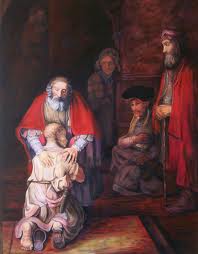


 By Father John Linden, Director of Vocations and Seminarians for the Diocese of Lansing.
 love for Jesus who is the Joy of our souls. Monica loved her son and her husband who were the joy of her soul and in the end her wayward men found the Lord in answer to her many tears. In fact, it seems God never missed counting even one tear if we think about what kind of saint her son became and how indebted we are to God for the work he did through Augustine. But that work may have had more to do with St. Monica’s tears than it did with St. Augustine’s study.
 By Nancy McCall, MS, LPC
 You feel lonely, possibly rejected, and you are essentially on your own. Sometimes, the reason little daily decisions seem so difficult is because much bigger decisions are not yet made: in particular, the decision of overall vocation. What’s worse is that I thought I had that huge decision made. What a relief! Now it appears to be unmade. “Oh no!” So I think to myself, “what I was so certain of has unraveled before my eyes, how can I move on not even knowing which way to move?”
Recent Comments