Nov 29, 2020 |
 An Advent reflection by Emma.
As I watched Disney’s Frozen II I felt, at some level, understood. Some friends who saw the movie also noticed themes that resonate very much with what it is like to discern religious life, or to have a friend who is discerning religious life. The below is less of a review and more of a spiritual exploration of a few of those themes through soundtrack lyrics paired with scripture. To those who may feel a little frozen in their discernment journey after having left the monastery, I hope these reflections help you to see that you are not alone – that others are frozen too – and that there is hope, for indeed “We know that in everything God works for good with those who love him” (Romans 8:28)
I’ve had my adventure, I don’t need something new
I’m afraid of what I’m risking if I follow you
Into the unknown
“Lord, if it is you, command me to come to you on the water.” Matthew 14:28
Elsa rules peacefully rules over Arendelle in the company of her dear sister Anna and friends. She already had an adventure of self-knowledge, self-acceptance, and sisterly love, yet there is still more to be learned and growth to be had. She still doesn’t understand why she has cryokinetic powers and is simultaneously longing for a life where having such a gift makes sense, but that might mean leaving behind her tranquil, easy-going life… again.
 Similarly, many of us who have been in religious life may feel like we have already had our adventure. We already made the sacrifice. We left home behind and followed Jesus out onto the water. We followed the calling with everything we had, and everything the Spirit was willing to give us. We grew in self-knowledge and matured in other ways through living religious life.
And now we’re back.
It’s too easy to think that I have already had the adventure of religious life and I don’t need anything new. It is hard to listen and discern when I’m not sure if I trust those movements in my heart anymore. It is be hard to consider risking everything… again. Yet I do have the qualities of a contemplative soul and desire to find a place where those gifts fit in. I am different. Not many people would be willing to leave family, friends, career, and everything else to wake up before 5 am every day and never again be able to choose what’s for breakfast. Of course, the secret is that underneath the sacrifice is a deep love and longing for God – a spousal love.
And so the call remains… to something. I remain confident that Jesus is calling me to consecrated life, yet the context remains unclear. So I try to trust. And ask Jesus to bid me come to Him on the water if indeed He is the one who is calling.
And with the dawn, what comes then?
When it’s clear that everything will never be the same again.
Then I’ll make the choice to hear that voice
And do the next right thing.
“But on the first day of the week, at early dawn, they went to the tomb, taking the spices which they had prepared.” Luke 24:1
Another theme that appears in Frozen II is grief. This is definitely an emotion that I felt after leaving the monastery, especially toward the sister I was. Each sister is so unique in the way she loves God and the way she loves the other sisters, and the way she is loved by God and is loved by the other sisters. The fact that I left means that there will never be a sister in that monastery who is like that. Indeed, when a sister leaves the monastery or convent, things will never be the same again, and I remember wondering what is on the other side of grieving that loss.
I encourage you, wherever you find yourself, to do the next right thing. Perhaps the next right thing is spending a few minutes in prayer. Perhaps it is reaching out to a friend or priest for guidance. Perhaps it is going to Mass or Adoration. Perhaps it is simply finding enough motivation to go for a walk. The next right thing may not seem particularly remarkable, but each step taken out of love for Jesus is heroic. I encourage you, like Mary Magdalene and the other Mary, to go to the tomb. Because if you do, you will find the Resurrection – it just might not be right away though. Things will never be the same again, and that’s okay.
Show yourself
I’m dying to meet you
Show yourself
It’s your turn
Are you the one I’ve been looking for
All of my life?
Show yourself
I’m ready to learn
“Jesus said to her, ‘Woman, why are you weeping? Whom are you looking for?'” John 20:15
I’ll refrain from commenting on the context of this song so as to avoid spoilers, yet I wanted to include it because of how it mirrors contemplative prayer so well (note: the full song does contain spoilers). More than anything else after having left religious life, I needed to re-encounter the God I fell in love with. I needed to know that I was still loved by Jesus, when my emotions after leaving the monastery had me feeling rejected and abandoned. I found much healing here through praying in a way described by a bishop. His prayer in difficult moments was, “Lord show me how you are good here. Lord I want to see you in this situation” and he assures that when we pray in this way “God always comes through. And I mean always.” Through this prayer I was asking Jesus to show Himself, which is at the heart of the cry of a contemplative soul. I wanted to learn how he loved me through the difficult moments. I wanted to see how He was living His mysteries within my own life. I wanted to see God. As I began to pray in this way, moments of great suffering turned into moments of great intimacy with Jesus, and I’ve grown much in understading who I am to Him and who He is to me.
Where the north wind meets the sea
There’s a mother full of memory
Come, my darling, homeward bound.
When all is lost, then all is found.
“And Mary kept all these thing, pondering them in her heart.” Luke 2:19
This opening song of the film actually makes quite a beautiful Marian hymn. Mary, our mother, is full of memory. She watches over us and ponders moments of our lives in her heart. As St. Mary of Jesus Crucified says, “Mary counts your steps.” We have a mother who cares for us. Loves us. Nurtures us. Heals us. This Advent, I invite us to ask Mary to lend us her heart. I invite us to ask her to permit us to see as she sees. To feel as she feels. To know as she knows. To hear as she hears. To love as she loves. To ponder as she ponders. We have a Mother who is counting our steps to our eternal home, where truly all that we long for will be found.
Nov 2, 2020 |
By Sally Hoban.
On September 3rd (2019), the canopy of one the trees in my yard snapped and crashed down in our yard; it missed the house by a few feet. In many ways, the breaking of the top of this tree and the fact that it did not damage our house reminds me of my own path through this dark period of my life. The tree is no longer whole and the top that kissed the sky is now in a woodchip pile somewhere, but thankfully, the tree is still standing, and the damage done to the area where it landed was minimal. In so many ways, this parallels with me, however, I pray that the damage I have done in the depths of my despair and rage has not damaged beyond repair my relationships with those who love me.
As I start to feel the storm of despair and anger recede, I’m beginning to not feel blinded by the light around me. No longer do I recoil when I find myself looking out and wondering what next. No longer do I weep over the yearning to fulfill the call I heard to live out my life as with the congregation I love so much. Yet, I am now able to also acknowledge how painful and agonizing it was to constantly be in the throes of trying to prove my vocation to the decisionmakers within the congregation. So, how do I learn to live with this conundrum…
For so many months, I banged my head against a wall trying to make sense of all of this. I went round-and-round trying to make sense of hearing a call from God to pursue my vocation with this congregation and being rejected; blaming myself for being me, wishing I could have been someone the Provincial Team and the Vocation Director would accept; to replaying my mistakes and wondering how they could have been so great as to be summarily dismissed. I was so in love with God, my vocation and the journey of discernment that I believed nothing could stand in the way of fulfilling this yearning, but something did stand in the way…I was told by the Provincial, “The decision has been made to not continue the discernment with me.”
After the dust settled and I awoke to this reality, I found myself broken and shattered beyond repair. For the first year, I could barely get through a day without weeping and wishing to die. (Yes, I said it, I wanted to die!) I had spent over 40 years searching for meaning in my life. When the spark of living my life as a Catholic sister took hold, my whole being lit up. I found myself living from my heart from the early days of my discernment through the early days of February 2018, when I still believed that Jesus would sweep in rescue me and restore me back to my vocation with the congregation that rejected me. When I became aware that this was not going to happen, my life became a living nightmare and I rejected God and myself, the self that still believed and hoped for meaning in my life.
A few months ago, I was encouraged to embrace the phrase “fake it until you make it”. Since I was told this by one of the sisters from the congregation, it stung all the more. Yet, as the second year of this reality comes to a close, I am aware that in many ways, I have successfully utilized this task. I am back on my feet, albeit different feet than before, but nonetheless, I am gainfully employed, no longer weeping or lost in turmoil when I reflect on the current status of my life, and beginning to take in my life and contemplate a new path.
Like something that was broken and glued back together is never the same, I too am learning that I am broken and slowly being glued back together. I believe that Jesus not only has stood by me during this darkest time in my life, but saved me from the darkness that threatened my very existence. I’m still figuring out how to deal with this, because I am still angry with God over my rejection; however, I no longer have the energy to lash out at God when it arises, instead I find myself desiring to simply be honest by acknowledging this anger, sadness and hurt without losing myself in the depths of this despair.
Somehow though, I don’t want to go back to life before I was broken. I want to learn how to live from my brokenness. Can Jesus use my brokenness in God’s great mission? How can I live with my brokenness without letting it destroy me? How will Jesus to carry me in a new way? How might I use this longing to return to my religious vocation with the awareness that it is unlikely that I will return to my religious vocation with that congregation? Perhaps this leads to the question, do I really want to return to that?
I’ve often reflected upon my friend’s encouragement to write a book about my experience; however, I fear that my recounting of my experience would turn into a negative rant tied with fantastical dreams. Yet, I would like to utilize my keyboard to gain insight into how I might learn to live from this brokenness.
I’m not sure where this journey is leading me. So, I am utilizing my need to express myself, my hope to be heard (read) and the prayer that perhaps this might open a new path on this life’s journey…. Living from a place of brokenness…
Addendum
Nearly a year after writing this with COVID-19, these words describe where I was. Where I am today is somewhere further down the road of discovering who I am and how I might learn from my experiences. While I don’t pine for what was and what isn’t, I wonder where might God be calling me. The other day my spiritual director reminded me that God isn’t finished with me yet, so I know I am living my next adventure right now.
During prayer, I have been hearing, “Tell me, what is it you plan to do with your one wild and precious life?”, the line from Mary Oliver’s poem “The Summer Day”. Some days, I am troubled by the question, as I wonder, what to do? Other days, I am on a mission to determine what I am called to do. Today, I realized I am simply living into this moment, and this is my “one wild and precious life”[1].
[1] Oliver, Mary, “The Summer Day” from Dog Songs: Poems , (Penguin Books, 2015).
Aug 15, 2020 |
By Sister Rose Pacatte, FSP.
When I read Simcha Fisher’s article in America Magazine When a Catholic leaves seminary or religious life, I began to weep. I cried for all the young women who had entered my community and left, their choice or the community’s, over my 53 years as a Daughter of St. Paul.
I remembered when I was a postulant (1967) and a novice coming to the refectory (dining room) for breakfast and noticing that someone was missing. Gone without a good-bye, at that time never to be heard of again. It was so confusing that someone who was so much part of my group, or the upcoming groups, or even professed in temporary vows, could be gone. Just like that. If we said anything, the formator would shush us or glare at the person asking. One co-postulant told me later that it was thought if we talked about our missing companion that it might make the rest of us go, too. I was still in our high school aspirancy myself, but that lack of logic just further confused me (we discontinued our high school in 1991.)
Yet as I read through the article, tears flowing at the corner of my eyes, I recalled three times that I was asked to either drive someone to the airport, take another young sister home, or accompany someone in their discernment and then drop them off at her new residence after she decided to leave the community. I was part of the forgotten ones in this process of separation from a community that was no “gentle or conscious uncoupling” so to speak. I was one of the last members of the community a sister leaving might ever see. To me, this was the most heartbreaking thing I was ever asked to do in my years of religious life. It was traumatic for me. No one ever asked how it made me feel to be part of a person’s departure from this very intense and passionate way of life that we call religious life.
I recalled another sister who was often asked to take aspirants, postulants and novices to the airport, spirited out at dawn’s early light before anyone would miss them. It was during grand silence, too, so we were not to speak until after grace at breakfast if we did see suitcases by the elevator. I will call her Sister Mary. Sister Mary was chosen, I think, because of her gentle nature that would have a calming effect on the young woman leaving. I went with Sister Mary once to drive a sister in temporary vows to the airport as she was returning home. I waited in the car (the days when we could do so), but I was able to say good-bye and promise prayers before Sister Mary accompanied her inside the terminal. The hard thing was that I was told by the superior not to talk about the young woman’s departure to anyone.
The next time I was told, not asked, to drive a young sister home from one of our branch houses. Her family lived within driving distance. Sister Anna, an older sister, came along, too. The superior, who was very old school and stern, told Sister Anna and I that we were not even to get out of the car. Just let the sister off in front of her house, let her unload her suitcases, and drive off. I was told not to even talk to her. I was only in temporary vows, too, and had known this young woman since she entered though she was not in my group (or band, as some communities call our formation groups.) As soon as we pulled up in front of her house at about 7am, her family came out. Then Sr Anna surprised me. She hit my arm and said, “Say good-bye.” So, I did. I turned and gave the young woman a hug over the seat. Then Sr. Anna got out of the car, against orders, and accompanied the young woman to the front door, to her family. She stayed and spoke with the family for a bit, then came back to the car. We were both crying. Sr. Anna, one of my favorite nuns ever, told me through her tears, “You don’t need to say anything. Charity comes first.” And I never did until now.
I will not say too much about the third sister because we remain very good friends today. But I know she suffered greatly as she discerned her way from religious life into a serene life “in the world” as we call it. I was the local superior when she was sent to the community for the purpose of discernment, at her request. As she met with a spiritual director, I was the community member she related to the most. It was a difficult separation for many reasons, and we both cried many times, not least of which was the day we went to buy her a new meager wardrobe at the mall and the final day I drove her to her new residential job after she was dispensed from her vows. This was like dying to her and to me, two different ways of dying. I had known her from before she entered and now, these many years later, I was there when she was leaving, following what she believed was God’s will for her. I did not disagree with her discernment, but her leaving was as if she was pulling off her skin to reveal a new identity that was still taking shape. It was so painful. She is one of the bravest people I know, and I love her for her courage, perseverance, and love for ministry that has never wavered.
I shared this blog post with Sister Mary and she commented:
I do regret in hindsight not having more of Sr. Anna’s wisdom of heart. Most of the time I drove very young ones to the airport or bus station. I was sent to be a kind presence and to assure that they made it to their gate safely. Some left singing and some left sorrowing, so as their last contact I had to keep things light and loving. As you say, we are in a better place now. The young ones are already women and the formation program is so much more mature, so we don’t have half the drama anymore. I always pray for those who are wavering even if I don’t know who they might be, and I send them on their way with love and blessings.
In one way I was a willing participant in the departures of these young women from religious life but in another way, I was unwilling because I knew that if I were suffering from a profound sadness, the young woman was probably suffering so much more. I have always tried to do everything asked of me, but some things were too hard and had to change, and thank God, they have.
What did I learn from these experiences? That charity comes first, always.
We do things differently now. If a young woman at any stage of religious life discerns to leave (or is invited to do so by the community), she may share this information with whomever she wishes – and we can stay in touch. She can say good-bye to the community in the dining room or make a more discreet departure – her choice. But the sister or young woman is encouraged to be more transparent about her discernment because the entire community is transitioning with her as she leaves.
Sister Rose Pacatte in August 1967, at the San Diego convent of the Daughters of Saint Paul, the night before flying to Boston to enter the convent.
As we slowly moved from a pre-Vatican Council II way of doing things in our congregation in the U.S. to being, well, normal, we had a provincial who did something wonderful. This was in the later 1980s. I was on our provincial council then. She thought it would be a good idea to send a Christmas card and note to each sister (novice or postulant) for whom we had contact information, and let them know we remembered them, ask how they were doing, and that we continued to pray for them. This resulted in more open communication, visits to the novitiate, reconnecting with old friends, and oftentimes, healing.
I wish there had been Leonie’s Longing all those years ago so young women could receive counseling and referrals and moral support, and I am glad this organization exists now. God willing, I will celebrate my golden jubilee of profession in 2022 (and my 55th of entrance). If you are reading this, know that I remember everyone, and I wish you love, happiness and the peace of Christ. I hope you will forgive any suffering I may have caused or contributed to at a very difficult time of your life. I ask for your prayers.
The thing is, those who become part of our inner world, as we do in religious life, are never gone. We remain sisters in the heart of God – always.
Mar 22, 2020 |
Reader Michaela reviews the dissertation ‘The impact of leaving the convent on a woman’s perceived relationship with God as viewed through the lenses of attachment and divorce,’ by Jennifer Cabaniss Munoz, 2018.
In this approachable and novel dissertation, Jennifer Munoz approaches the effect that leaving the convent has on a woman’s perceived relationship with God. Writing in 2015, Munoz not only shines a fresh light on the effect leaving religious life has on a woman, but pierces right to the most important effect leaving can have: an effect on a woman’s perceived relationship with God. “It defies belief,” she writes, “that a woman who entered a community and a way of life with such an understanding of what she was undertaking, and committing herself to it whole-heartedly, would find it irrelevant to her relationship with such a spouse when she makes the decision (or is forced) to leave that life.” (58)
Attachment theory and divorce are the primary frames of reference Munoz draws upon to explore the affect that leaving has on relationship with God. Although divorce is not a theologically accurate lens through which to view leaving the convent, it proves to be an apt lens psychologically. Firstly, consecrated life is understood as being the bride of Christ, as having a special way of relating to Him. When a woman leaves religious life, she makes a shift from consecrated to unconsecrated and leaves behind a special way of relating to Jesus. Secondly, the grieving process following the shift in relationship exhibits a similar pattern of protest, despair, and reorganization. The paradigm of divorce provides insight as to why leaving the convent is so difficult, but it doesn’t quite explain the diversity of difficulty with which women handle the situation. To explain this Munoz turns to attachment theory.
Attachment theory describes the relationship between a person and their attachment figure, the person who serves as a safe haven or caregiver in a time of distress. Expectations around such a relationship are formed during childhood and these expectations are known as an attachment style, which is secure or insecure (preoccupied, dismissing, or fearful). This attachment style influences how a person interacts with other attachment figures later in life including God or a spouse. Much like the example of divorce, acknowledging an insecure attachment style toward God requires standing in the truth of the human emotional experience instead of turning toward idealizations. “[I]ndividuals can simultaneously have an intellectual belief, keeping with the tenets of their faith, that God is in essence the perfect caregiver – omnipresent, all loving, forgiving, and faithful – and yet struggle with a deeper emotional sense that he is perhaps none of those things, but is rather much more like the human caregivers whom they have experienced.”(151)
Whether a woman has a secure or insecure attachment style can affect her capacity to handle the transition of leaving. For example, a woman with a secure attachment style would be expected to recover more quickly from the transition because the struggle will primarily be establishing a new identity and way of relating to God. For a woman with an insecure attachment style, in addition to establishing a new identity and way of relating to God, she might struggle with feelings of having been abandoned or rejected by God. At the end of the dissertation Munoz suggests a few potential therapeutic interventions that can assist in the transition including narrative therapy, emotion-focused therapy, and collaboration with spiritual direction.
Even if the particular theme of this dissertation doesn’t quite fit the reader’s situation (it didn’t quite fit my own), the series of topics covered throughout are thought provoking and can help identify areas of growth to be had and healing to take place. These topics include passage lag (“determining which habits, customs, and elements of one’s training as a
religious to retain in one’s new role as a laywoman, and which to reject as no longer relevant” (34)) internal working models, grief, and examples of various emotional struggles and identity struggles associated with leaving. Lastly, I would like to mention that this dissertation is written by someone who gets it. She herself had to leave a religious community due to medical difficulties. She dedicates the dissertation “To ‘Marie’ and all those who struggle.”
Note: I was able to access a copy of this dissertation through ProQuest Dissertations and Theses on a guest computer at a local university.
Feb 2, 2020 |
By Esther Caswell, reprinted with permission from her blog.
Jesus, we need to talk. Like the prophets of old or the Psalmist, I need answers to my complaint. My heart is racked in pain. I need you to answer me. Hope in you becomes my instrument of torture in this regard. Please apply the salve of truth.
Who are you to those who heard our cry as Bridegroom and who innocently followed you, who left everything behind and prostrated themselves before you giving you everything, these ones who entered your Church believing it was a Mother, a place of belonging only to be told in your Name that they were excluded, unfit, unwanted and unredeemable? Those who were tortured during lonely nights and told in the day to keep their selves tucked in and their brokenness hidden, that their love would cause harm. Who were told that any love they needed would come from you alone and reminded through correction how they ought to sit and stand and kneel when they pray? Who were told to spare the dramatics of tears in your presence like Eli told Hannah of old? Those who only wanted you and were told by the “voice of God” that they were not enough? Whom do you choose Jesus? What of these rejected? Are they like those who came to the wedding banquet improperly clothed and are now subject to wailing and gnashing of teeth? How is it that thieves, prostitutes, and public sinners are promised your Kingdom but these tossed away? And when they are tossed away because their white knuckles could no longer hold the death grip, who is there to catch them? They are regarded with suspicion and punished by all for falling off a pedestal that somehow the Church needs. Even the divorced woman in the back pew is better understood because we can all allow husbands to be weak.
How many now to prove their worth to you by a strange kind of “forced labor” for your Church, their own private Gulag, through work is their salvation? Some hold themselves to even higher standards as if all the good work and prayer could somehow wipe out the shame of being unwanted by YOU. Others already feeling the condemnation, fall the other way in despair hoping to find something that will numb the pain of this rejection. Like soldiers back from war they are mentally tortured by making sense of what does not make sense, by trying to find the God they only wanted serve.
I do not make this appeal to anyone but you because you know those of which I speak. You know well. Can you please tell me your heart breaks too? Please tell me, Jesus, that this is not you! Jesus, come to all those who have been wounded by your mediators. Come to those who find it hard to breathe in the presence of innocent enthusiasm for you because to them it represents the way the pain began. Come to those who cannot trust themselves or your voice in them because that place has been broken. Because they did and it led to their demise. Come to those who feel like they asked for a fish and were given a snake. Jesus, come to those who even still have made attempts to come to you and were turned away like a disease that can be caught.
Jesus, Abba, Holy Spirit: Tell me this is not who you are! Please I beg you, make it clear. You are God, I will follow no other but if I may claim my intimacy with your cross as my authority and remind you who you are. You are the God for the weak and abandoned who forgave the thief as you died. You defend the orphan and the widow, and Lord please your rejected bride! Jesus, I need you to go find them in their places of darkness and shame. I need you to bath them and clothe them. I need you to restore the integrity of your name. I come like Esther before the King. Jesus please, act on their behalf.
You and I both know there is no other way. You have to go yourself or send your Mother. No one in your Church seems to understand these ones and perhaps it is because they do not want to admit the Bride is broken because they will need more Faith in you.
Dec 18, 2019 |
By Emma.
It was one year since I left the monastery. I knelt on the stone floor of the retreat center chapel, my Bible opened to the Gospel of John, chapter 11. The story of the raising of Lazarus.
It seemed fitting to spend some time with this moment in Jesus life for so many reasons. The friends of Lazarus begged Him to come when her friend was sick – to save Lazarus from death. Like them, I begged Jesus to come and make up for my frailty with His love and His peace – to give me the grace of perseverance in the vocation He called me to. And instead He waited. He waited as Lazarus died. He waited as I left the convent doors and no longer walked the cloisters of the monastery.
How similar to Mary and Martha I was when I told Jesus that “If You would have been there, I would not have had to leave.” How much I didn’t understand His ways, as He was in the midst of revealing to me that He is the resurrection and the life. And that in order for there to be the beauty of resurrection, there must come first the sorrow of death.
Death is hard – in whatever forms it comes in. The death of loved ones. The death of dreams. The death of fervor. The death of opportunities. The death of relationships. The death of meanings… When faced with death, the friends of Lazarus placed him in the tomb. And then, days later, Jesus arrives. And asks where Lazarus is laid.
Then Jesus wept.
And it struck me. Perhaps it was not the death of Lazarus that caused tears to flow from the eyes of our Lord, but rather the reaction of Lazarus’ friends. When faced with sickness they begged Jesus to come. They begged Him to heal their friend who was ill. They had faith. But when sickness turned to death, they gave up. They placed Lazarus in the tomb. They believed the situation was beyond hope. They had Jesus, who is the Resurrection and the Life, in their midst, and they continued their mourning. They thought the story was over. And Jesus wept.
This left me to be determined to believe that, as difficult as things sometimes are during this time outside of the monastery, Jesus can create something beautiful out of it. It challenged me to have the faith that will trust in Him even in the face of death – the death of my identity as a sister. It challenged me to have the vulnerability to place this death before Jesus, and not seal it in a tomb. And it challenged me to believe in the Resurrection – not just two thousand years ago or at the parousia, but also here and now in the moments of my life. I do not know how the Resurrection will manifest itself in my particular story, but placed in the hands of Jesus I know it will be beautiful.
“And all through Lent we had this beautiful statue
to help us meditate on Mary and her faith.
And that faith in the face of failure.
In the face of death.
In the face of shattered dreams.
In the face of enthusiasm that had been spent
and hopes that had been dashed in a worldly messiah
that was going to come and liberate them from the Romans.
But Mary had a quiet faith
and she waited in expectation of the Resurrection.
It didn’t take away the pain of the moment.
But it gave her direction.”
– Fr. Joseph Johnson (November 3, 2018)

 Similarly, many of us who have been in religious life may feel like we have already had our adventure. We already made the sacrifice. We left home behind and followed Jesus out onto the water. We followed the calling with everything we had, and everything the Spirit was willing to give us. We grew in self-knowledge and matured in other ways through living religious life.
  Another theme that appears in Frozen II is grief. This is definitely an emotion that I felt after leaving the monastery, especially toward the sister I was. Each sister is so unique in the way she loves God and the way she loves the other sisters, and the way she is loved by God and is loved by the other sisters. The fact that I left means that there will never be a sister in that monastery who is like that. Indeed, when a sister leaves the monastery or convent, things will never be the same again, and I remember wondering what is on the other side of grieving that loss.
 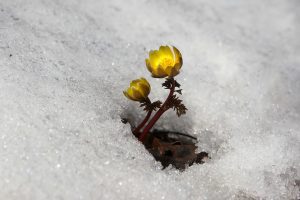 I’ll refrain from commenting on the context of this song so as to avoid spoilers, yet I wanted to include it because of how it mirrors contemplative prayer so well (note: the full song does contain spoilers). More than anything else after having left religious life, I needed to re-encounter the God I fell in love with. I needed to know that I was still loved by Jesus, when my emotions after leaving the monastery had me feeling rejected and abandoned. I found much healing here through praying in a way described by a bishop. His prayer in difficult moments was, “Lord show me how you are good here. Lord I want to see you in this situation” and he assures that when we pray in this way “God always comes through. And I mean always.” Through this prayer I was asking Jesus to show Himself, which is at the heart of the cry of a contemplative soul. I wanted to learn how he loved me through the difficult moments. I wanted to see how He was living His mysteries within my own life. I wanted to see God. As I began to pray in this way, moments of great suffering turned into moments of great intimacy with Jesus, and I’ve grown much in understading who I am to Him and who He is to me.
 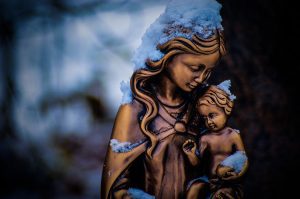 This opening song of the film actually makes quite a beautiful Marian hymn. Mary, our mother, is full of memory. She watches over us and ponders moments of our lives in her heart. As St. Mary of Jesus Crucified says, “Mary counts your steps.” We have a mother who cares for us. Loves us. Nurtures us. Heals us. This Advent, I invite us to ask Mary to lend us her heart. I invite us to ask her to permit us to see as she sees. To feel as she feels. To know as she knows. To hear as she hears. To love as she loves. To ponder as she ponders. We have a Mother who is counting our steps to our eternal home, where truly all that we long for will be found.
  By Sally Hoban.


 Reader Michaela reviews the dissertation ‘The impact of leaving the convent on a woman’s perceived relationship with God as viewed through the lenses of attachment and divorce,’ by Jennifer Cabaniss Munoz, 2018.
 Whether a woman has a secure or insecure attachment style can affect her capacity to handle the transition of leaving. For example, a woman with a secure attachment style would be expected to recover more quickly from the transition because the struggle will primarily be establishing a new identity and way of relating to God. For a woman with an insecure attachment style, in addition to establishing a new identity and way of relating to God, she might struggle with feelings of having been abandoned or rejected by God. At the end of the dissertation Munoz suggests a few potential therapeutic interventions that can assist in the transition including narrative therapy, emotion-focused therapy, and collaboration with spiritual direction.
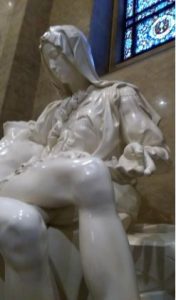 “And all through Lent we had this beautiful statue
Recent Comments