Aug 5, 2016 |
 By Amata
Some years ago, I was talking with a dear friend. She and her husband had been struggling to conceive, and she was sharing with me how painful this experience was. However, she said, if this was something that she needed to go through, to suffer, so that she could become holy, then so be it. She said she’d rather go to Heaven than have a baby, if that was what it took to get to heaven, if this experience of infertility was purifying her and sanctifying her through her pain.
Her words that day stuck with me. She’d rather go to heaven than have a baby, if that was what it took. I continued to ponder and to be amazed by those words. I grew up in a large family, where babies are seen as one of the greatest gifts God can give, and now I feel myself drawn to marriage. I love babies, and I could see the pain in my friend’s eyes as she spoke. And yet, she would rather go to Heaven than have a baby. Her desire for God, for sanctity, and for doing God’s will was greater than her desire to have a child of her own.
St. Ignatius talks about the indifference that is necessary for sanctity. He is not talking about a world in which we have absolutely no desires. Rather, he is talking about a world where our desires match God’s desires for us, where we make decisions based on God’s will, and where we subject our own desires to God’s desires for us. When I first heard of this idea, I struggled to understand what it really means. What does this holy indifference really look like in today’s world?
I think I saw it in my friend’s eyes that day. She’d rather go to Heaven. She was placing her own desires at the feet of God and accepting His will for her as necessary for her own salvation. And even as she spoke, there was a joy behind the pain. Nobody was twisting her arm making her accept the will of God. Rather, mingled with her tears there was a genuine desire for Heaven and an excitement at the thought of seeing God Himself face to face for all eternity. She’d rather go to Heaven.
I think that, in many ways, the greatest sufferings in our life come from a lack of this holy difference. If we are really
able to say “blessed be God” no matter what comes, if we can learn to let go of something because it does not correspond with God’s will for us at this moment, then I think our lives would be so much easier. Easier said than done, I know.
As I continue to ponder my own journey of discernment of religious life, through living active life and nearly joining a cloistered community, these words have stuck with me. Would I like to still be in my religious community, joking that I’ll be buried out back? Yes. But, I’d rather go to Heaven, and if living in the world as a layperson is my path to sanctity, then so be it. Would I rather have had that cloistered vocation that I explored? Somedays, yes. But, I’d rather go to Heaven.
And now, as I discern married life and am surrounded by friends and siblings with families of their own, it is easy to be frustrated. I never imagined that at this point in my life I would still be so… unsettled. Would I absolutely love to have a family of my own right now, or at least a serious boyfriend, so that I can be closer to the vocation God seems to have in mind for me? Oh, yes, by all means!
But, I’d rather go to Heaven.
Jun 28, 2016 |
By AfterEpiphany.
I think Joseph is quite a comfort to the average convent/seminary leaver. I’m not talking St. Joseph the Foster-Father of Jesus… he’s awesome, yes. But right now I’m talking about the owner of a certain Technicolour Dreamcoat.
We all recall that he was sold into slavery by his brothers who were offended that he seemed to think himself better than he really was. He was thrown into prison because he turned out to be better than the Pharoah’s wife thought he was. And if the irony of all of that wasn’t enough, throw in the fact that he was accompanied in his unjust fate by two others who deserved their punishment!
Unlike the Event for which this was a pre-figurement, where one of the thieves asked to be remembered by the Innocent One when He entered His Kingdom, in this case rather it was the innocent one who asked to be remembered:
“Only think of me when all is well with you, and please do me the great favor of mentioning me to Pharoah, to get me out of this place.” (Gen 40:14)
This request was made of the “chief cupbearer,” who promptly forgot all about Joseph when he left the prison. Joseph remained in prison for another two years.
What on earth went through Joseph’s mind and emotions over that two year period? What do you think he prayed about during that time? Did he give up hope that he would be remembered and freed? Was there some point at which he decided there was no way he was ever getting out of there, and was that belief something that sparked off the grief cycle for Joseph? Do you think He got angry at God? Perhaps he felt as though he had been forsaken? I wonder if that first little while after leaving the convent/seminary isn’t just a little bit like Joseph’s time in prison?
In the story of Joseph, we cannot help but notice that he did not return to Canaan. Yet as the adventure played out, albeit in a place other than that which Joseph had planned, it is worth remembering that God provided him with the means to put things right with his brothers, to be reunited with his father and to live a full and happy life.
Jun 9, 2016 |
By Anonymouse.
It was about four years ago now. I was on a discernment retreat and I heard Jesus speak to my heart that he was not calling me to be a religious sister. He was calling me to marriage.
I told Him about the beauty of religious life, how these women give everything to Him, their parents and siblings, their desires for children and for a spouse, their sexuality, and their hearts, to receive so much in return. I spoke to Him about how their hearts are so directed toward Him that at the hour of their death, they will not be staring into the unknown, but into the future they have with their Maker and their Husband.
He spoke to me of the great sacrifice He required of me, one that the religious life could not pull out of me in the same way that an imperfect man could. A sacrifice that would challenge me in a unique way, and squeeze love out of me, requiring me to respond with a love that is not my own. He spoke to me of a love that would pour over me every day, begging me to pour it out onto others. He heard what I spoke to Him, and yet still said, “But I will show you a still more excellent way.”
I was heartbroken, but I believed Him.
Three years after that, I lived the reality that I was not married, engaged, or dating. I was (and still am), “single as a pringle,” as one of my friends likes to say. As I tried to adjust the reality that I was not called to the religious life, but serendipitously, both of my sisters were, to two different communities, which were both different than the one I was discerning with. I felt far away from God in a way and I was tempted to wonder if I did enter the convent, how holy would I have been? Would I have been like Saint Therese in her little way, or like St. Teresa of Avila, in her big way? In response though, I was sobered by the Holy-Spirit-inspired question: is hypothetical holiness more important than obedient faith? Of course not; “Rather, blessed are those who hear the word of God and observe it.”
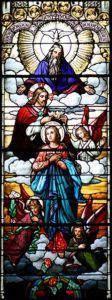
Almost exactly three years from that discernment retreat, I went on a day retreat, one based on Theology of the Body, and the keynote speaker was Dr. Janet Smith. Her words were maybe new, maybe repeated, but this time they stuck. She said that, “Marriage does not eradicate man’s loneliness, but only alleviates it.” Wow. She said that, “every human relationship, especially marriage is a sign, a symbol, of our real relationship with God.” Wow. She said that, “In images of the Coronation, Mary is the woman being crowned, but Mary is a type of the church, and thus a type of each one of us. In the image of the Coronation, imagine yourself being crowned by God the Father, God the Son, and God the Holy Spirit.” Wow. She said that “the Church is the bride of Christ, and thus each one of us is a bride of Christ.” Wow. She encouraged us to spend time in prayer imagining God the Father crowning us as His daughter, Jesus crowning us as His bride, and the Holy Spirit crowning us as His spouse. Wow.
In that moment, I realized that since the weekend I heard Jesus direct my steps away from the convent, I thought: He doesn’t want me to be His bride. He doesn’t want me. I regarded myself as unlovable and undesired. But, of course, that was (and is, and is to come) far from the truth. The expression of the spousal call may be different from the way it would be for a sister in vows, but as Dr. Smith said, I AM A BRIDE OF CHRIST simply because I am part of his Church. He is the one who makes me His bride. It is not a religious community that makes me Jesus’ bride. It is Jesus who makes me His bride. He has chosen me, and chooses me daily to be His bride. He reaffirms His love for me every day, an innumerable number of times, in a myriad of locations in the world, in the Holy Sacrifice of the Mass. There, on the cross, my bridegroom offers Himself to me. I am loved. I am lovable. I am his bride.
I do not now have a husband, fiance, nor a boyfriend (See pringle comment above). I have not found the secret to thinking something was so right for you and living the reality that you are called elsewhere. And I do not know my future. I do know that I am imperfect, I am sometimes emotionally constipated, I say the wrong things, and embody awkwardness in all of its delights. But I also know that I am lovable and loved. I know that God looks upon me and loves me. I learned from the religious community of one of my sisters that, “God sees you like no other person sees you. God loves you like no other person loves you. God does not look at you in your limits, in your failings. He looks at what is limitless in you. He looks at you in what is most profound in you.”
I have moments (days, weeks, months, etc.) when I doubt my future. When I give in to fear that what God promised
will never happen. It is in those moments that I must remind myself, that I must preach the Gospel to my own heart: everything is about Jesus. There is no relationship that has greater gravity than the one I have with Jesus. There is nothing greater than Jesus. It is in those moments that I repeat the words of St. Teresa of Avila:
“Hope, O my soul, hope. You know neither the day nor the hour. Watch carefully, for everything passes quickly, even though your impatience makes doubtful what is certain, and turns a very short time into a long one. Dream that the more you struggle, the more you prove the love that you bear your God, and the more you will rejoice one day with your Beloved, in a happiness and rapture that can never end.”
May 27, 2016 |
By Lucia
“You will not be alone, because I am with you always and everywhere. Near to My Heart, fear nothing. I Myself am the cause of your departure. Know that My eyes follow every move of your heart with great attention. I am bringing you into seclusion so that I Myself may form your heart according to My future plans” (Jesus to St. Faustina, 797)
April 27, 2014- One of the most difficult days of my life, and yet, a very important day for the Church- Divine Mercy Sunday when St. John Paul II, the “Divine Mercy Pope”, was canonized. This was the day that I came home from the convent, and yet as I reflect on it more and more, I see it as a reflection of God’s Mercy and love to me.
Mercy, we hear it so often at Mass and in Scripture. It is one of the greatest attributes of God, and yet, how many of us plunge into the depths of what it means? The Latin, Misericordia, comes from “miserere”, which means “misery”, and “cor”, which means “heart”. So, this word literally means the act of a heart entering into another’s misery. So Divine Mercy is the message that not only does God enter into our misery with us, but that He comes and brings an even greater good out of every evil and suffering.
Coming up on the two year anniversary of my leaving, God blessed me with the beautiful grace to go on pilgrimage to the country that radiates God’s Mercy. He truly took me on a journey to experience the reality of this heart reaching out to me in my misery, especially in the experience my coming home from the convent. How? Redemptive Suffering. The people of Poland have experienced so much suffering, from the destruction of cities like Warsaw during World War II, to the incomprehensible terrors that resulted in concentration camps like Auschwitz. And yet, while these people have been through evils unimaginable, they have a heart for the Lord and hope unlike any other I have experienced.
This really blew me away… How can people who have experienced such immense suffering live like this? How can they have joy and hope, when everything they loved seemed to be taken away from them? How can they rejoice in Christ when they clearly came face to face with their own weaknesses and lived through so much fear?
In my own pain coming home from the convent, I have found that it has brought me face to face with fear and my own weakness. I have often given into discouragement, thinking that I can only love God once I move past the “ups and downs” of grieving the convent. But the people of Poland really helped me to see things in a new way through the lens of God’s Mercy.
As I progressed through my pilgrimage, the answer to my questions became clear to me. Teresa Benedicta of the Cross, Maximilian Kolbe, Faustina, John Paul II…These people were not immune to fear or death…Actually they were steeped in it. But what made these people saints they were meant to be?
They encountered the immense power of Divine Mercy. They experienced evil, came face to face with fear and suffering, and yes, knew ever deeper of their helplessness amidst such evil. But they made a choice- they chose to use it as an opportunity to cling to Christ and to take part in His suffering with Him. They saw their crosses in life through a twofold lens- that God was with them in their cross, and that they could unite their cross for another. They made the decision to allow the merciful Christ to be with them in their own pain, to receive His love gushing forth from his heart, and to be one with Him on the cross. And not only did they live out their suffering with Christ, but they had faith in God in whom they trusted would keep His promises. They had the hope in the reality that the resurrection comes after the cross, and that Christ not only brings good out of evil, but an even greater good!
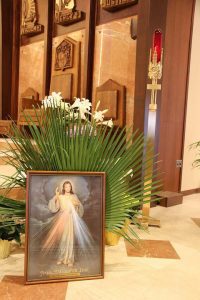
The image of Divine Mercy shows this reality well. In this image, Jesus is appearing after He rose from the dead, and yet, He bears his wounds…the wounds of His Love. His wounds are glorified, and radiate the depths of God’s Mercy to us. It is Jesus saying to me and to you, “I love you this much. I am here with you and will lead you through this.”
And perhaps what is most important is the words at the bottom. “Jesus, I trust in You.” Yes, these words seem to reflect the attitude and call that Christ presents to us in this Jubilee Year of Mercy. Jesus is asking us to trust Him, amidst worries, struggles, and even joys! When coming face to face with our weakness in our own specific journeys coming home from the convent, He wants us to trust in His goodness and in the reality that the resurrection comes after the cross. Just like Himself, He wants our wounds to be glorified- we need only to entrust them to Him!
Mar 17, 2016 |
Hello everyone!
It’s a milestone for us: three years ago on the 17th of March, our first-ever post went live on the Leonie’s Longing blog!
For a look back at where it all began, check out “Nun Ya Beeznus” by Rosa Mystica at https://www.leonieslonging.org/nun-ya-beeznuss/
To all our readers, supporters and volunteers, old and new, thank you for joining us on the journey so far – and may you have a blessed Feast of Saint Patrick!

 By Amata
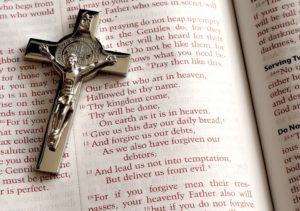 I think that, in many ways, the greatest sufferings in our life come from a lack of this holy difference. If we are really
 By Anonymouse.
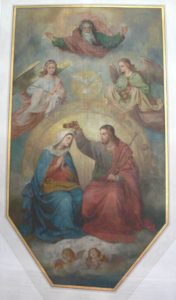 Almost exactly three years from that discernment retreat, I went on a day retreat, one based on Theology of the Body, and the keynote speaker was Dr. Janet Smith. Her words were maybe new, maybe repeated, but this time they stuck. She said that, “Marriage does not eradicate man’s loneliness, but only alleviates it.” Wow. She said that, “every human relationship, especially marriage is a sign, a symbol, of our real relationship with God.” Wow. She said that, “In images of the Coronation, Mary is the woman being crowned, but Mary is a type of the church, and thus a type of each one of us. In the image of the Coronation, imagine yourself being crowned by God the Father, God the Son, and God the Holy Spirit.” Wow. She said that “the Church is the bride of Christ, and thus each one of us is a bride of Christ.” Wow. She encouraged us to spend time in prayer imagining God the Father crowning us as His daughter, Jesus crowning us as His bride, and the Holy Spirit crowning us as His spouse. Wow.
 will never happen. It is in those moments that I must remind myself, that I must preach the Gospel to my own heart: everything is about Jesus. There is no relationship that has greater gravity than the one I have with Jesus. There is nothing greater than Jesus. It is in those moments that I repeat the words of St. Teresa of Avila:
 The image of Divine Mercy shows this reality well. In this image, Jesus is appearing after He rose from the dead, and yet, He bears his wounds…the wounds of His Love. His wounds are glorified, and radiate the depths of God’s Mercy to us. It is Jesus saying to me and to you, “I love you this much. I am here with you and will lead you through this.”
 It’s a milestone for us: three years ago on the 17th of March, our first-ever post went live on the Leonie’s Longing blog!

Recent Comments