Jan 13, 2019 |
By M. Cabri
Over a year and a half ago when I left a religious community, everything in my life seemed to be broken. My family seemed to have fallen apart while I was thousands of miles away, and I could not seem to maintain emotional equilibrium. I alternated between extreme joy and deep interior darkness. Inside, I tried not to be blinded by the fear of not understanding what was going on, and the growing sense, which I refused to accept, that I may have to leave the community. My spiritual life had been undermined as well, and I alternated between wondering if it was spiritual dryness or something I had done terribly wrong. I felt burdened by the obligations of communal prayer in a monastic community. I seemed to fall asleep in both of my meditations every day no matter how hard I tried to keep watch with Our Lord. I received no consolation at daily Mass. Whenever I went into the chapel to pray the Divine Office, rosary, or make a Holy Hour, it couldn’t be over fast enough. I was painfully agitated and restless. The silence seemed to crush me. When I could speak, I never seemed to be able to say what I needed to my superiors, which left me feeling hopeless and desperately alone.
In the months before I left, I cried myself to sleep more nights than I can count. I never seemed rested when I woke up in the morning. Every day I dragged myself to my chores, trying to tell myself wholeheartedly and joyfully that this was all for Jesus, but I found that I wasn’t even able to convince myself of that anymore. For the first time in my life, it truly seemed like Jesus was taking away the grace to live a life I had dreamed of for so long. I remembered how happy I had been as a postulant and new novice and couldn’t make sense of the inner darkness I felt now. I wrestled with feeling like I never could be enough for Him, that all my prayers and labor was in vain. I even began to wonder if He still was there, loving and supporting me. I couldn’t even look at my Sisters without crying. Finally, I just broke.
For a few blissful and painful days, I lived in a limbo of dreading I must leave and knowing my Sisters did not know what would happen. I felt interior joy (or relief) at the prospect. I sensed all I wanted was freedom from what had become oppressive to me, not realizing that I was pining for earthly treasure which could not satisfy my heart. His grace (or my willfulness) seemed to keep me in one piece long enough to smile and say goodbye to my Sisters without dragging them into my inner chaos.
From that place, I came home across the country, hoping that somehow everything would be better again. Those painful first days, I could barely go outside because I felt unable to face the world as I was. I felt immodest walking around habit-less, horror that I had left the community, shame for my shaved head and an unshakable sense of failure. I could barely tolerate going to Mass or praying, because I felt divorced by the One I had promised to marry, whom I still love. Everything reminded me of the Sisters I had left behind who were now dead to me. I saw their faces everywhere and heard their voices in my head, sharing their joys, sorrows and spiritual growth with me. To this day, I still do. I still do.
Over a year later, after being in therapy and having the advice of a wonderful spiritual director, I approached the community again. The prompt reply was that they did not think I had a vocation to their community and should discern elsewhere. The experience was like leaving all over again. I feared that no community would ever want to talk to me.
In the six months since that conversation, I have approached two communities. From both, I have received understanding, love and support. One vocation directress even praised me for my courage in continuing discernment of consecrated life. Both emphatically assured me that I could have been refused simply because the community had too many applicants that year or did not have the resources to invest in a young woman for a second try at religious life. After a long struggle, those words are beginning to set me free.
It is easy to see everything as a personal rejection. Many of us already see ourselves as damaged goods, irreparably broken and unlovable. The great mystery of salvation is that Christ does not merely come to make everything externally appear better, leaving the root problem intact. He wants to, and DOES, heal the inner brokenness! We are all wounded and damaged by sin, either our sins or the sins of others. He sees the brokenness and what He can do to make those scars radiant. We are all like shards of glass which individually can be unimpressive. But when the chips are filled, edges polished, and we are pieced together with the rest of the Body of Christ, we will be more beautiful than we ever could have imagined. The more perfect and transparent each individual piece is, the more light will shine through that piece and make the whole window radiant.
Jesus wants to shine through your life so that the world will come to know Him through you. The more you reflect Christ, the more His light will shine on people around you. Offer up your suffering, grow in holiness, and above all, continue to hope when all seems hopeless! The Body of Christ needs your suffering; don’t waste it! He IS faithful, even when we cannot feel it! Let Him heal you and know that all the saints and all of us who are journeying this path with you are praying for you!
Oct 24, 2018 |
by JHFamily
Twenty-five years ago, I stood at the cloister door of the Poor Clares, knocked, and asked to be admitted to their community. I was young, confident, and excited to begin my new life that I just knew was going to be permanent. During the first weeks, I thrived, so much so that I was allowed to move from Candidate to Postulant in four and a half weeks rather than the usual six.
By the end of the year, I had made a complete turnaround. Beset by chronic ear infections, the loneliness that came with the lack of my family’s support, and the regular adjustments to religious life, I felt I had no more to give. However, by the time I had reached home, I regretted my decision. Those days were filled with so many tears and headaches from the stress! Over the next few weeks, though, the pain subsided, and I began to pick up where I had left off. Five years later, I would be walking down the wedding aisle, content and at peace with my decision.
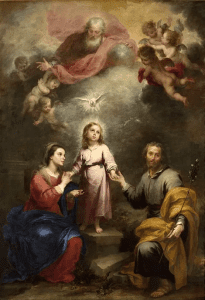
My time in the cloister was invaluable to me as a wife and mother. I had learned to submit myself to someone else, a certain amount of detachment, and the importance of obedience. Six children later, I was pleased with my little family, but even in this state of satisfaction, the truth was that deep inside, I still grappled with what I saw as the loss of my vocation. Regular dreams visited me in which I was released to enter religious life, only to realize that I belonged with my husband and children and return to the world. Over and over, God needed to show me the holiness of family life in these little dreams until I learned the lesson.
Then an accident resulted in the loss of my two boys. A daughter should have joined them in their heavenly abode, but by miraculous intervention, she was spared. The bigger miracle, however, was a complete healing of the disappointment of my youth. From that moment on, I added those virtues which are so loved in good mothers: patience, long-suffering and cheerfulness.
Since that time, I have learned that God gives two separate and distinct graces in religious life: one to enter religious life and the other to persevere in it. God often gives the first without giving the second. He has things to teach which are best learned in an atmosphere of retreat that may last anywhere from a few days to a few years before sending us out into the world. Religious life not only is the seed bed for those who will live there until death, but it also cultivates the life of virtue of those who will become the mothers and fathers that God desires.
A few days ago, my oldest daughter stood at the cloister door, knocked, and asked to be admitted to her new community. She is young, confident, and excited to begin her new life. So now we have come ‘round full circle. The end of my vocation story means the beginning of hers.
Jun 21, 2017 |
By LumenChristi.
May/June can be hard months for those of us still discerning our place in life. Weddings, ordinations, professions of vows, and entrances into religious communities are a painful reminder that another year has come without any such milestone in sight for us. We rejoice with our friends and families – do our best to put on yet another reception with love, and send yet another friend off to the convent/seminary with prayers. And sit through yet another homily about “celebrating a yes to the Lord and to one’s vocation.” And go to confession yet again for envy/self-pity/lack of trust in God.
Am I right? Or is that just me?
I read an article recently called “We said yes too” about the struggles of Catholic couples who struggle with a miscarriage or infertility. While those around them get celebrated for having many children, they often experience the implication that those who don’t have a wild 7+ member crew in tow “aren’t open to life” or “haven’t said yes.” The author goes on to explain how she and others like her have said yes – hidden yesses too deep and painful to share. Yes to giving back to God an unborn child gone too soon; yes to the surrender of hopes and dreams in the struggle with infertility; yes to allowing the gifts that God has given to be enough.
When I read her article, as a woman discerning her vocation who has hit many painful detours along the road, I identified deeply with what she said. Though my life and struggles are different, my heart leapt with bittersweet joy as every word resonated.
“I have said yes too,” I thought. Not the “yes” that gets celebrated during “vocation season.” Not the exhilarating “yes” of a vow to the Church or to another person to commit my life forever. But a silent, not-spoken-out-loud kind of yes, I had given.
The “yes” to surrender my will and my desires to God and trust him for the timing.
The “silent yes” to Him in not settling for a “celebrated yes” that I knew wasn’t His will for me.
The “yes” to being faithful in prayer even during the times where I was no longer sure who I was praying to. . .
As well as the little “yesses” too that can cost a lot at times. Yes, Lord, I will smile at my friend and share his/her joy right now even though I would rather run away and cry. . .Yes, Lord, I will bite my tongue and accept criticism in humility when a priest or leader in the church asks “haven’t I thought about my vocation?” (Believe me, I ‘ve thought about it!!! Too much maybe!”)
We, dear single, discerning ladies, have said our “yes” too. I am not arguing that these “yesses” become publically celebrated. Firstly, that would be awkward, but secondly, some yesses are meant to be hidden. As Christ lived the first 30 years of His life, so too are many of the yesses along the way to holiness, hidden – sometimes even disguised and misunderstood. Such is the brokenness of humanity and the mystery of God. But as I was reading this article and reflecting on my own “yes,” I realized how important it is to understand and treasure it myself . I think, in the future, it will help me to step back from others’ celebrations just long enough to pause, and pray. “I too have said yes, Lord and you know it. Give me the strength to keep saying yes, even when it is difficult.”
Each woman can fill in what her “yes” has been. . .
“Lord, I said “yes” to entering the religious life, following you while my family thought I was crazy. . .and then, when you sent me back to that same family, I said “yes” again just as generously, although this time it was with tears. . . “
“Lord, I followed you out of the convent and into the world, not knowing where it would lead. I’ve accepted every bump in the road and being “a fool for you” as I adjusted back to secular life . . .”
“Lord, I desire marriage and a family, but I’ve said YES to waiting for it to happen in your time and in your way. . .”
“Lord, I do not know where I’m going, but I’ve said “yes” to journeying joyfully even when I feel desolate. . .”
“Lord, being at Mass right now only brings me pain, but I say “yes” to being here with you anyway. . .”
Each of us can find a lot of these “yesses” in our lives, and I have realized it is important to remember them. I believe that for me such remembrances will be the key place where I will find the power to rejoice with those who rejoice, and to walk in faith when I would rather see.
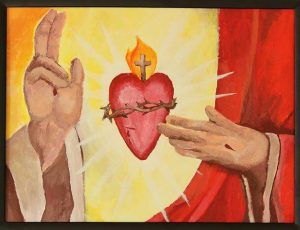
Of course, we are not alone in either the remembering or the resolving to do better. I hope it consoles you as much as it did me, to rediscover that no “yes” goes unseen by God. I think these yesses, that are the last to be thought of in this world, are the first to be remembered in His eyes, and the foremost to be felt by His heart. I think the more conscious of them that we become, the stronger we will be in remaining faithful to them.
God-willing, one day we too, will have the opportunity to make one of the “celebrated” yesses. But in the meantime, the silent ones are nonetheless real. Treasure your “yes” and allow the Lord to treasure you.
Sep 22, 2016 |
By Cinnamon.
I call it almost-discernment: where you’ve been bruised by a brush with convent life and are in no particular rush to repeat the experience, but at the same time, the idea of becoming a sister is like a distant phone in the background of your life that never stops ringing. Like when you hear about a new religious community and think, simultaneously,
a) I wonder if that will be the community God wants me to join?
and
b) I hope not because I don’t really want to be a sister anymore,
and
c) but I wish I could stop thinking about becoming a sister. (That phone is starting to drive me berserk: Lord, I’d answer it if I could figure out where it is. Could You please either point me in the right direction, or make it stop ringing?)
Discerning a religious vocation the first time around wasn’t easy by any means, but at least it was comparatively straightforward. The explanation I came up with for my spiritual director was this: the first time you enter religious life, it’s like turning a compass slowly until the needle points north and everything falls into alignment. God is the magnetic pole Who draws you to Himself, and you need only keep your eyes on the compass and follow the path north to Him.
Leaving the convent is like dropping the compass.
Of course, you pick it up again, and it looks fine on the outside – the glass unbroken, the case undented – but when you try to follow it, sooner or later you’ll find it’s been jarred out of alignment. The needle swings back and forth without stopping, on any bearing, let along north. God is still out there somewhere, and you keep waiting more or less patiently for the compass to settle down and start pointing you in the direction He wants for your life… and when it doesn’t, there’s no option but to start walking regardless, because that phone is just going to keep on ringing until you do. Discernment the second time around means having the courage to take even a single step forward, knowing that you have no real idea whether you’re heading north or south-south-west.
My post-convent discernment path has been largely comprised of zig-zags, punctuated occasionally by an “oof!” as
my faulty compass guides me straight into a tree. (I went on a nine-day orienteering camp when I was fourteen. Didn’t like it. Can you tell?) Our Lord told us, though, to keep on asking, seeking, and knocking; without a functioning compass, the walk will take longer, but one day – in His time – the underbrush will part suddenly and a clear path to Him will become visible. And He asks us to trust that, when each one of us gets to heaven and looks back down on the times when we felt most lost and helpless, meandering pointlessly in the scrub, we will see only one set of footprints.
Jun 28, 2016 |
By AfterEpiphany.
I think Joseph is quite a comfort to the average convent/seminary leaver. I’m not talking St. Joseph the Foster-Father of Jesus… he’s awesome, yes. But right now I’m talking about the owner of a certain Technicolour Dreamcoat.
We all recall that he was sold into slavery by his brothers who were offended that he seemed to think himself better than he really was. He was thrown into prison because he turned out to be better than the Pharoah’s wife thought he was. And if the irony of all of that wasn’t enough, throw in the fact that he was accompanied in his unjust fate by two others who deserved their punishment!
Unlike the Event for which this was a pre-figurement, where one of the thieves asked to be remembered by the Innocent One when He entered His Kingdom, in this case rather it was the innocent one who asked to be remembered:
“Only think of me when all is well with you, and please do me the great favor of mentioning me to Pharoah, to get me out of this place.” (Gen 40:14)
This request was made of the “chief cupbearer,” who promptly forgot all about Joseph when he left the prison. Joseph remained in prison for another two years.
What on earth went through Joseph’s mind and emotions over that two year period? What do you think he prayed about during that time? Did he give up hope that he would be remembered and freed? Was there some point at which he decided there was no way he was ever getting out of there, and was that belief something that sparked off the grief cycle for Joseph? Do you think He got angry at God? Perhaps he felt as though he had been forsaken? I wonder if that first little while after leaving the convent/seminary isn’t just a little bit like Joseph’s time in prison?
In the story of Joseph, we cannot help but notice that he did not return to Canaan. Yet as the adventure played out, albeit in a place other than that which Joseph had planned, it is worth remembering that God provided him with the means to put things right with his brothers, to be reunited with his father and to live a full and happy life.

 the growing sense, which I refused to accept, that I may have to leave the community. My spiritual life had been undermined as well, and I alternated between wondering if it was spiritual dryness or something I had done terribly wrong. I felt burdened by the obligations of communal prayer in a monastic community. I seemed to fall asleep in both of my meditations every day no matter how hard I tried to keep watch with Our Lord. I received no consolation at daily Mass. Whenever I went into the chapel to pray the Divine Office, rosary, or make a Holy Hour, it couldn’t be over fast enough. I was painfully agitated and restless. The silence seemed to crush me. When I could speak, I never seemed to be able to say what I needed to my superiors, which left me feeling hopeless and desperately alone.
  From that place, I came home across the country, hoping that somehow everything would be better again. Those painful first days, I could barely go outside because I felt unable to face the world as I was. I felt immodest walking around habit-less, horror that I had left the community, shame for my shaved head and an unshakable sense of failure. I could barely tolerate going to Mass or praying, because I felt divorced by the One I had promised to marry, whom I still love. Everything reminded me of the Sisters I had left behind who were now dead to me. I saw their faces everywhere and heard their voices in my head, sharing their joys, sorrows and spiritual growth with me. To this day, I still do. I still do.
 by JHFamily
 Regular dreams visited me in which I was released to enter religious life, only to realize that I belonged with my husband and children and return to the world. Over and over, God needed to show me the holiness of family life in these little dreams until I learned the lesson.
 By LumenChristi.
 The “silent yes” to Him in not settling for a “celebrated yes” that I knew wasn’t His will for me.
 Of course, we are not alone in either the remembering or the resolving to do better. I hope it consoles you as much as it did me, to rediscover that no “yes” goes unseen by God. I think these yesses, that are the last to be thought of in this world, are the first to be remembered in His eyes, and the foremost to be felt by His heart. I think the more conscious of them that we become, the stronger we will be in remaining faithful to them.
 By Cinnamon.
 my faulty compass guides me straight into a tree. (I went on a nine-day orienteering camp when I was fourteen. Didn’t like it. Can you tell?) Our Lord told us, though, to keep on asking, seeking, and knocking; without a functioning compass, the walk will take longer, but one day – in His time – the underbrush will part suddenly and a clear path to Him will become visible. And He asks us to trust that, when each one of us gets to heaven and looks back down on the times when we felt most lost and helpless, meandering pointlessly in the scrub, we will see only one set of footprints.
Recent Comments