Oct 29, 2018 |
 by Rosie-Gertie
What? A single vocation? You may be thinking, “this book must be about the vocation of the consecrated virgin living in the world.” This book definitely speaks to a woman seeking or already living that state in life, but does not limit itself to that particular vocation.
When I left religious life, I knew of three vocational options: religious life, marriage, or consecrated virginity. Later I became aware of and inquired into that very hidden vocation of persons dedicated to God in secular institutes. For various reasons, none of these vocations could be “it” for some of us LL followers. We remain “uncategorized,” even years after leaving religious life.
This book offers another way, for those who believe God invites them to it: that is, to choose perfect chastity for the sake of Christ as a single person in the world. From this book, we see that any woman who desires to take Christ alone as Spouse need not be hindered from doing so by her inability to enter religious life or another of the more formal ways of consecrated life. The author presents, to anyone who desires to be His and is single in the world, the option of making a private vow or simple dedication of oneself in celibate love to the Lord. Written before the vocation of the consecrated virgin living in the world was re-instated in the Church, it also alludes to, first and foremost, this particular call, but does not limit itself to that call. This is a message of hope for anyone out there who desires consecration but cannot enter religious life and, for whatever reason (and there can be reasons other than not being a virgin), cannot become a consecrated virgin.
I quote from the book, page 102: “This vocation…may be chosen even though one is forced to stay out of the other vocations…It should, in fact, be a vocation primarily for those normal and psychically sound people who deliberately choose it…[but also for] those who…are not eligible for the religious life…who could, however, choose the married state if they so desired” but who wish to be espoused only to Christ.
Fr. Unger also includes among those who could choose the state of perfect chastity in the world: widows, persons who were married but are now permanently separated, single moms, persons who would like to have gotten married but have not found a suitable companion, those who desired the religious life but could not enter, and penitents who have turned from a life of un-chastity and chosen to live their lives now in perfect continence for the love of Christ. (pages 100, 105-108).
Fr. Unger says of this grace to choose and promise celibacy in the world, “God usually gives His grace and call by making a person fit to live this type of life and by inspiring the correct motives for choosing it, and, at times, by allowing circumstances that will hinder one from choosing any other vocation…The choice can still be free, even when circumstances conspire against choosing any other vocation. If one would like to have married but must remain unmarried because of circumstances, or if one is prevented for various reasons from entering…religious life, one may…make the best of circumstances and freely consent to live in perfect chastity, since that is God’s will.” (page 100)
As for motives to live this way of life, on page 101 Fr. Unger writes, “One should have a well-balanced attitude toward life and toward the other vocations,” so as to point out that it cannot be chosen because one looks negatively at any of the other states in life. He continues, “The highest motive…is the undivided love that one wishes to bestow on Christ” and he contrasts this to “a single person living in the world who might, for all that, be doing very much good, but who lives in the unmarried state very regretfully.” And he writes of a secondary “supernatural motive of charity toward fellow men, since it frees one for a wholehearted devotion to the service of the Church and humanity.”
The vow or dedication can be made privately, by way of “internal resolution and no further formality. One could also recite a special prayer of consecration, privately, either in one’s home or before an altar in Church.” (page 59) I would also like to mention that in Volume One of An Introduction to the Vocation of Consecrated Virginity Lived in the World by the United States Association of Consecrated Virgins, Raymond Cardinal Burke is quoted on page 39 as mentioning that a woman may also offer a private vow before a bishop or priest in the context of Holy Mass.
On a personal note, I came across this book—I can’t even remember how—not long after I left religious life. At that time, I was not at all attracted to staying in the world as a single person. I wanted to enter religious life again, and as much as I wanted a life of consecration, would have preferred marriage to consecration (so I thought) if I had to remain in the world! The thought of remaining single in the world repelled me. So when I read it, I did so “at arms’ length”, and several miles distant from my heart.
Now here I am, years later, actually recommending it to my fellow Leonie’s Longing followers, because I have found so much hope and refreshment for myself in it!
I think that when a woman meets her husband, she doesn’t choose a way of life, but a person. If that person happens to serve in the military, or politics, or becomes handicapped…he remains one’s husband. Where, what environment, what lifestyle, even if it entails loneliness at times and other sufferings, is not of paramount importance. To belong exclusively to the one you love, that is what matters.
For those of you out there still trying to figure out your particular vocation, this book can help you to prayerfully consider whether or not some form of consecration in the world—either as a consecrated virgin or by making a private vow or dedication—could be the way of Love Our Lord may beckon you to. For those of you who already have chosen this route, I suspect you will find this book to be a source of great consolation and encouragement. So, read on! The Lord of Mercy has a plan of Love for each one of us. Alleluia!
The Mystery of Love for the Single: a guide for those who follow the single vocation in the world
by Fr. Dominic J. Unger, O.F.M. Cap
Franciscan Herald Press, Chicago, 1958, reprinted by Tan Books and Publishers, 2005.
Oct 24, 2018 |
 by JHFamily
Twenty-five years ago, I stood at the cloister door of the Poor Clares, knocked, and asked to be admitted to their community. I was young, confident, and excited to begin my new life that I just knew was going to be permanent. During the first weeks, I thrived, so much so that I was allowed to move from Candidate to Postulant in four and a half weeks rather than the usual six.
By the end of the year, I had made a complete turnaround. Beset by chronic ear infections, the loneliness that came with the lack of my family’s support, and the regular adjustments to religious life, I felt I had no more to give. However, by the time I had reached home, I regretted my decision. Those days were filled with so many tears and headaches from the stress! Over the next few weeks, though, the pain subsided, and I began to pick up where I had left off. Five years later, I would be walking down the wedding aisle, content and at peace with my decision.
My time in the cloister was invaluable to me as a wife and mother. I had learned to submit myself to someone else, a certain amount of detachment, and the importance of obedience. Six children later, I was pleased with my little family, but even in this state of satisfaction, the truth was that deep inside, I still grappled with what I saw as the loss of my vocation. Regular dreams visited me in which I was released to enter religious life, only to realize that I belonged with my husband and children and return to the world. Over and over, God needed to show me the holiness of family life in these little dreams until I learned the lesson.
Then an accident resulted in the loss of my two boys. A daughter should have joined them in their heavenly abode, but by miraculous intervention, she was spared. The bigger miracle, however, was a complete healing of the disappointment of my youth. From that moment on, I added those virtues which are so loved in good mothers: patience, long-suffering and cheerfulness.
Since that time, I have learned that God gives two separate and distinct graces in religious life: one to enter religious life and the other to persevere in it. God often gives the first without giving the second. He has things to teach which are best learned in an atmosphere of retreat that may last anywhere from a few days to a few years before sending us out into the world. Religious life not only is the seed bed for those who will live there until death, but it also cultivates the life of virtue of those who will become the mothers and fathers that God desires.
A few days ago, my oldest daughter stood at the cloister door, knocked, and asked to be admitted to her new community. She is young, confident, and excited to begin her new life. So now we have come ‘round full circle. The end of my vocation story means the beginning of hers.
Oct 16, 2018
by Theresa.
You may have noticed a marked improvement in our social media in 2018. That would be because of our wonderful volunteer Cate. Not only did she post our blogs and help link to interesting articles from other sites but she also created beautiful graphic content for us. It’s been a pleasure working with her and to say thanks I thought it might be fun to interview her and learn a little more about her.
How did you first hear about our site?
I’m pretty sure I found LL through a link on another blog I was reading. It was during my first year back home after having discerned to leave my consecrated community, and I was searching Google on topics that would help with the transition.
What did you like about the site?
I liked that it was serving a need in the Church that I felt should be addressed. I had wanted to start a blog myself where I talked about my discernment journey, and thought of inviting others who had been in consecrated life. I only got as far as taking some notes and drafting up a few first paragraphs of potential blog posts before happily discovering that this type of thing already existed.
Did you find Leonie’s Longing helpful? If yes, how?
Yes, it was certainly helpful to feel solidarity with other women who had similar experiences. There were some blog posts that spoke to me in a particular way and gave me insight and encouragement as I navigated this new chapter. Perhaps one of the greatest fruits was learning to be patient with myself in the process. More difficult than anything was the guilt of possibly having made the wrong decision in choosing to leave. It helped to correspond with others from LL and express those feelings with people who could relate.
What made you decide to volunteer?
I had written a couple of blog posts and had considered volunteering for a while, but my schedule always seemed too packed to add one more thing. However, when Theresa and I were emailing and she asked me if I would consider volunteering, the timing was right. It was during the slower winter months and in the midst of a rough time for me. I almost immediately knew it was right, not only because I could honestly dedicate time to it, but also because I saw that an opportunity like this would be a good outlet for me.
Cate & Theresa meet IRL!
What was your favorite part about volunteering?
Other than evening brainstorming chats with Theresa, which contained a fair amount of random chit-chat and laughter? :) I enjoyed doing something where I really understood my target audience. As I looked for quotes and created graphics, and as I read articles and decided to share them, I knew that if something struck a chord with me, it would likely be helpful to others here.
Did anything surprise you?
I’m not sure that I expected it to be such an overall positive and joyful experience. I loved being part of the team and feeling connected other volunteers and those we serve.
What are you doing next?
I’ve discerned to do two years of foreign mission work with Family Missions Company. I’ll be leaving for training very soon and will receive my assignment in the next couple of months. Being a lay missionary feels like a great fit. It wasn’t an easy step, but it’s one that I’m very grateful to be taking. Thanks be to God!
If you knew someone who was unsure about volunteering what would you say?
Go for it! You have a unique experience to share with others. We need to use our own experiences to help one another. God will use it not only for the benefit of other women but for your own growth and healing.
Sep 13, 2017 |
By Lucia Delgado.
Around this time 3 years ago, I made a decision to end discernment to religious life. It seems that I was doing the call for a priest who believed that I was called to this vocation. Deep down inside, I knew God was calling me to a different lifestyle.
Fast forward to 3 years later, I’m engaged to be married. My fiancé and I await the day when we start marriage preparation.
While there are people who are excited for us, there are those who don’t believe we should be married at all. Some people believe that I am still called to religious life especially a couple of priests.
Confusion and doubts settle in my heart. With help from the Holy Spirit, I was guided to read this Sunday’s readings for Mass.
From the prophet Jeremiah:
“All those who were my friends
are on the watch for any misstep of mine.
‘Perhaps he will be trapped; then we can prevail,
and take our vengeance on him.’
But the LORD is with me, like a mighty champion:
my persecutors will stumble, they will not triumph.
In their failure they will be put to utter shame,
to lasting, unforgettable confusion.”
Throughout his life, Jeremiah learned how to trust in the Lord in spite of persecution from others. His vocation journey was full of twists and turns; he eventually accepted God’s call to speak the truth…to be a prophet in a world of darkness.
I knew I had no decision but to trust in the Lord. My fiancé and I pray often, especially during our courtship. We also went to adoration to ask for His will for us. We both asked the Lord to give us fortitude, peace, and trust. We freely made a decision to marry; we believed that God called my fiancé and I to marriage no matter what the world thinks.
All of us are called to holiness. God asks each of us to use our gifts and talents that He gives us to use for His glory. The marriage vocation is a chance for a man and a woman to lead each other to the Lord. Also, they reach out to their offspring and lead them to the Lord. The Father drew me to this vocation because He knew that I have a heart to lead others to His Son. My fiancé and I look forward to serving together as a couple in the Catholic Church. We will assist at Mass by being Extraordinary Ministers of Holy Communion or read one of the readings of the day. We both love to pray, especially before the end of the day. We encourage one another to be more Christlike. Whether one is in religious life, single life or married life, we are called to be holy and encouraging others to follow Jesus. All vocations are pleasing to the Lord. He invites us to share, encourage, pray, and love one another.
If you are at a crossroads of making a decision about your vocation, talk to the Lord. A friend of mine told me to go to adoration to listen to God’s voice. She told me not listen to the voices of friends, priests, and others; only listen to God’s voice.
Going to adoration has helped me to listen to God’s voice especially when I was discerning with the religious community. I continue to go as a lay Catholic; I learn how to trust in the Lord’s will for my life.
Oct 5, 2016 |
By J.E. Sigler
If you are one of those women who feels that her departure from the religious life means that God has rejected her from “the heart of the Church” and relegated her to “second-class holiness” in the world, you need to keep reading.
For a graduate course in the philosophy and theology of work, vocation, and calling, I am reading a wonderful volume called The Disciples’ Call: Theologies of Vocation from Scripture to the Present Day, edited by Father Christopher Jamison, OSB. The book is a collection of essays compiled from a conference of vocation directors and religious formators in the UK several years ago. It is a strikingly modern look at issues of critical import in calling and vocation today, and it is refreshingly frank in its discussion of “the hard questions” the Church is currently dealing with in this area.
What I find particularly interesting about this book are the two completely different, conflicting even, views of vocation that are constantly emerging in it. On the one hand, there’s the Thomistic view; on the other, the Ignatian. What’s the difference?
First, let’s review what we already know: All Christians are called to holiness. By our baptisms, we are all consecrated to the Lord and required to live out some form of poverty, chastity (though not necessarily celibacy), and obedience (to God and, if married, to our spouse; if religious, to our superior and sisters; if ordained, to our bishop; etc.). On this point, all Catholics, even Saints Thomas and Ignatius, agree. The two views of vocation emerge when we ask: In addition to this first call to holiness that we all share, is there a second, additional call to a particular vocation?
St. Thomas says that there is not, and what logically follows from this is that the religious life is one response to the universal Christian call to holiness. It is a choice each individual makes, her personal response to the call God makes to everyone. But to St. Thomas, religious life is always the surer (i.e., the easier) path to perfect charity and salvation, and so, he argues, all who feel even slightly inclined to it ought to at least try it. St. Thomas believes that, basically, nearly everyone is capable of living the religious life, and since it is the most perfect (meaning, again, the easiest!) way to fulfill the original, and only, call to holiness shared by all Christians, we ought all to give it a go.
On this view, a lack of perseverance in the religious life is truly a failure to achieve “the better way,” and to return to the world is really to return to something “less than perfection.”
However, St. Ignatius says there is a second call to a particular vocation, in addition to the universal Christian call to holiness. And so, on his view, one ought to wait for this call before embarking upon any vowed state in life. St. Ignatius agrees with St. Thomas that the religious life is objectively a better path to holiness, in the sense that it makes the attainment of holiness easier, but subjectively, the religious life may not be the better path for a particular individual. And so he concludes that all Church-approved vocations ought to be given consideration by each person.
On this view, a lack of perseverance in the religious life is not necessarily a failure to achieve “the better way,” but more likely simply a sign that one was not “built” (by God) for that life (at least not permanently). And a return to the world is not a return to something “less than perfection,” but to one’s real (permanent, God-given) vocation.
As Father Joseph Bolin, in chapter four of The Disciples’ Call, points out, the Thomistic view is the traditional view of vocation and the one most often implied in historic recruitment materials to the religious life: “God is calling you, daring you to follow Him. Are you generous enough?” (p. 74). But this view places all the onus for perseverance on the individual’s will, and as Father Bolin sees it, this is a severe weakness of the Thomistic view: True, such an approach will increase vocations to religious life, and likely capture all, or at least most, of those “true” religious vocations, i.e., people who really are called to the religious life. But it also has the effect of capturing a lot of people who are not suited to the religious life by guilting or inspiring them to embark upon “the (objectively) surer path to perfect charity and salvation,” even if that path is not subjectively the surer one for them. The consequences of these “false positives” are potentially very dangerous, and well known to us.
“The Thomistic approach… will cause people who consider religious life, perhaps enter for a time, and then cease pursuing this vocation to have a negative self-image, perhaps to give up Christian life altogether, or at any rate to be satisfied with mediocrity in living the Christian vocation. For, if the will to embrace and follow the religious life as a way to love God is all that is necessary for a vocation, then leaving the religious life would seem to indicate a lack of love, an unreadiness to serve God without reservation. This lends itself to the practical conclusion that if one is not capable of attaining holiness in the easier and better way, there is really no hope of becoming holy in the lay state” (p. 80).
Of course, Father Bolin argues that this conclusion is patently false.
Many of us are familiar with these two views of vocation. But what, at least in my experience, many people do not realize is that we often conflate the two perspectives. And this, I believe, is where vocational distress begins.
Think about it: You probably felt that you had a second call to the religious life, an Ignatian assumption, as St. Thomas says there is only one call. But when you returned to the world, you may have felt, as many women do, that you somehow “failed” in or had been rejected from “the perfect way” and so are “less than,” a distinctly Thomistic assumption, as Ignatius does not hang the perseverance in religious life entirely on the individual’s will. On the one hand, you may have assumed that people are either built for the religious life, or they are not (Ignatian), and that those who are built for it love more, or are destined for more holiness (Thomistic).
But to collapse these two views is both wrong and harmful. Remember: St. Ignatius requires a second call, but he also strongly emphasizes the subjectiveness of the call to holiness, i.e., that there is a better path to holiness for each individual person, and this path is not necessarily the religious life. On Ignatius’ view, some people are built for religious life, and others are not, and both are best suited to attain holiness in the ways God made them for. St. Thomas, on the other hand, emphasizes the objective superiority of the religious life, for all or at least most, but his view also entails that the choice of religious life is just one way to respond to the universal Christian call to holiness that we all share. Whether a person responds to that call by committing to the evangelical counsels, marriage vows, or whatever else, she’s still got the same call everybody else does: “The difference between those entering consecrated life and those who do not is not a difference in the degree of their love, but a difference in the ways they choose to grow in love” (Frather Bolin, p. 81).
Personally, I am an Ignatian when it comes to discernment. Whatever you are, I hope that you can see how both views provide consolation for the woman who has returned to the world, provided you keep them straight: Either you have a second call to something other than religious life, and following that call is the best possible way for you to attain holiness. Or else you have the exact same call as religious sisters, and the degree of holiness you attain out here in the world will depend entirely upon how hard you work at it!

 by JHFamily
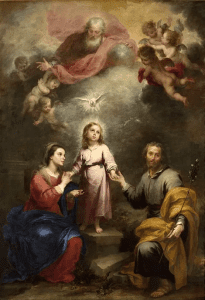 Regular dreams visited me in which I was released to enter religious life, only to realize that I belonged with my husband and children and return to the world. Over and over, God needed to show me the holiness of family life in these little dreams until I learned the lesson.
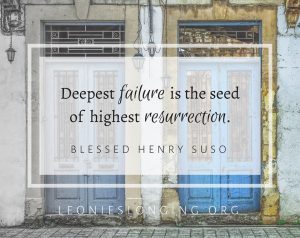 by Theresa.

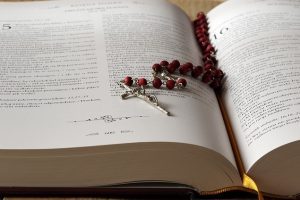 All of us are called to holiness. God asks each of us to use our gifts and talents that He gives us to use for His glory. The marriage vocation is a chance for a man and a woman to lead each other to the Lord. Also, they reach out to their offspring and lead them to the Lord. The Father drew me to this vocation because He knew that I have a heart to lead others to His Son. My fiancé and I look forward to serving together as a couple in the Catholic Church. We will assist at Mass by being Extraordinary Ministers of Holy Communion or read one of the readings of the day. We both love to pray, especially before the end of the day. We encourage one another to be more Christlike. Whether one is in religious life, single life or married life, we are called to be holy and encouraging others to follow Jesus. All vocations are pleasing to the Lord. He invites us to share, encourage, pray, and love one another.
 individual makes, her personal response to the call God makes to everyone. But to St. Thomas, religious life is always the surer (i.e., the easier) path to perfect charity and salvation, and so, he argues, all who feel even slightly inclined to it ought to at least try it. St. Thomas believes that, basically, nearly everyone is capable of living the religious life, and since it is the most perfect (meaning, again, the easiest!) way to fulfill the original, and only, call to holiness shared by all Christians, we ought all to give it a go.
 view is the traditional view of vocation and the one most often implied in historic recruitment materials to the religious life: “God is calling you, daring you to follow Him. Are you generous enough?” (p. 74). But this view places all the onus for perseverance on the individual’s will, and as Father Bolin sees it, this is a severe weakness of the Thomistic view: True, such an approach will increase vocations to religious life, and likely capture all, or at least most, of those “true” religious vocations, i.e., people who really are called to the religious life. But it also has the effect of capturing a lot of people who are not suited to the religious life by guilting or inspiring them to embark upon “the (objectively) surer path to perfect charity and salvation,” even if that path is not subjectively the surer one for them. The consequences of these “false positives” are potentially very dangerous, and well known to us.
 better path to holiness for each individual person, and this path is not necessarily the religious life. On Ignatius’ view, some people are built for religious life, and others are not, and both are best suited to attain holiness in the ways God made them for. St. Thomas, on the other hand, emphasizes the objective superiority of the religious life, for all or at least most, but his view also entails that the choice of religious life is just one way to respond to the universal Christian call to holiness that we all share. Whether a person responds to that call by committing to the evangelical counsels, marriage vows, or whatever else, she’s still got the same call everybody else does: “The difference between those entering consecrated life and those who do not is not a difference in the degree of their love, but a difference in the ways they choose to grow in love” (Frather Bolin, p. 81).
Recent Comments