Jun 17, 2015 |
By Cinnamon.
You love them, and they love you, but sometimes they just don’t get it. If you have ever heard your friends and family come out with the following lines, we’re pleased to announce that you can now nominate them for these well-known gameshows, specially re-worked for EWTN:
The line: “You’re running away to the convent.”
The show: Shark Tank.
How it works: Contestants go through several days of intense psychological testing, and then write a comprehensive and brutally honest autobiography. Next, they “pitch” the results to a panel of five Superiors from different religious communities, and try to persuade at least one of these Superiors to accept them for candidacy. Abject pleading is permitted as a last resort, but not encouraged.

The line: “Nuns live such an idle life. All they do is pray all day. You could do so much more good out in the world.”
The show: Survivor.
How it works: No exotic desert locale – just a monastery. Any monastery. But for the sake of good television, let’s make it a Trappistine monastery during harvesting season, or maybe a Carmelite monastery that’s running behind with its orders for altar bread. In any case, there will of course be elimination challenges (“Today is the first-class feast of a bishop of the Order, who was also a martyr. Your breviary has six ribbons. Good luck.”)… and watch out, because Lent is coming!
Those who make it to the end of the first year do not win a cash prize – instead, they are given the holy habit, and another year of even harder work. Anyone who is still around by the end of novitiate will receive the million dollars.

Sadly, I didn’t make up this slogan. Some pilgrims at WYD 2008 had it on their shirts.The line: “It must be so easy never to have to wonder where your next meal is coming from.”
The show: Iron Chef.
How it works: Finances are a bit tight at the moment, but fortunately, a benefactor has donated a load of produce from his farm. Therefore, for every lunch and dinner over the next week, you must prepare a unique and tasty meal with the featured ingredient:
You lose points every time someone flinches at the sight of yet another plate full of it.
The line: “It’s such a waste of your intellect.”
The show: The Weakest Link.
How it works: Simple.
What is a vow?
Buzz!
Contestant 1: A vow is a deliberate and free promise made to God concerning a possible and better good, which must be fulfilled by reason of the virtue of religion. (Catechism of the Catholic Church 2102.)
Correct.
When and where did Saint Benedict found his first monastery?
Buzz!
Contestant 2: Um… Prouille… in… 1170?
Remembering that this is a light-hearted exercise, can you think of any others?
May 5, 2015 |
There was a custom in the community for the nuns, on their way to breakfast after Prime, to stop at the statue of Our Lady with the Holy Child in the long cloister, to say three Hail Mary’s there. Wimple the cat was impatient for her breakfast and she would walk among the kneeling figures, giving them small pushings with her head; one hand after another would come out, not to push her away but to stroke her. Wimple was perverse; she would come into the refectory through the ever-opening service door and walk through the room to the other, demanding to be let out. Unlike Grock’s, Wimple’s miaow was piercing and could, at dinner and supper, interrupt the reader so that Sister Xaviera who doted on Wimple would get up and let her out. In a moment or two, the little cat would walk back in at the service door again. (From In This House of Brede, by Rumer Godden.)
On our Facebook page recently, we asked readers about their experiences with pets and other animals in religious life, and this is what they said:
- We had crazy squirrels in the Bronx! They would eat whole pizzas and bagels! And even sneaked into a sisters room and eat the peanuts out of her peanut m&m’s from her Christmas candy stash!
- We had a stray cat that hung around the Novitiate wing for a little while… loved one of the postulants so much that she earned the title “Cat Whisperer…”
- Our novitiate was by a petting zoo. We would say our rosary walking around out there. The goats were always distracting. One day an alpaca got loose and after the rosary, two sisters tried to get hold of him. It was so funny!
- We had a bird flying around the house one morning and we finally caught him with a butterfly net and a tennis racket in the refectory! It took about twenty minutes!
- The turkeys were a regular topic of conversation. My best memory was Sr. MT chasing them with a broom and slipping on the dew covered grass down the hill. (They were getting aggressive and needed to be put in their proper place.)
I’d like to add that my own nemeses in keeping custody of the eyes were the skinks that would sun themselves on the window frames outside the chapel every morning. During the first week of Lent, I got busted: the Prioress gave us a sheet of paper on which to keep a diary of our meditation topics, and I had to ‘fess up and ask her, “Is there enough space to write, ‘Started meditating on Soul of My Saviour, and ended up watching lizards climbing the wall outside”? (At least I tried to keep in mind Saint Teresa of Avila’s image of the soul as a little lizard basking in the light of God. That’s kind of on topic, right?)
I recently read a charming from The Ark (A Publication of Catholic Concern for Animals) about the pets kept in monasteries of nuns during the Middle Ages.
The Ancren Riwle, or Nun’s Rule, was the English rule for nuns written in about 1300. At first it was a rule for hermits but was soon revised to apply to all nuns. It is quite a strict and rigid rule but in part 8, “On Domestic Matters” we read: “You shall not possess any beast, my dear sisters, except only a cat.”
(Update, October 2020: The original article is now longer available online, but the magazine itself can be found here: https://catholic-animals.com/magazine/)
Creative Commons Licence. Owner: whatisthatpicture
Cue all sorts of trouble as the nuns smuggled rabbits, dogs and birds into the monastery and even into the choir – like Chaucer’s Prioress, who kept a number of “smale hounds” which she fed with “rosted flesh, or milk and wastel bread.” Apparently, bishops conducting visitations would eject these non-regulation critters from the monastery, and then depart, after which the nuns – of course – whistled their pets in again. (What the bishops would have made of the free-range turtles that wander the grounds at the Dominican House of Studies in Washington is anyone’s guess.)
As the monks of the New Skete (Orthodox) explain with beautiful simplicity, “For many of us, love for creation deepens through the relationships we form with our pets, particularly our dogs. By their very nature and need, dogs draw us out of ourselves: they root us in nature, making us more conscious of the mystery of God inherent in all things. We cannot but delight in recognizing God’s mystery in the length and breadth of our daily life.”
Today, let’s give thanks for the creatures that added laughter and companionship to our time in the convent!
Mar 18, 2015 |
By Maria Jacinta.
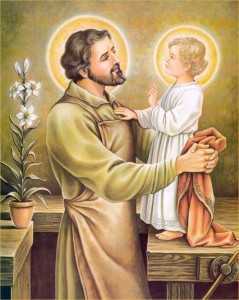
HAPPY FEAST OF ST. JOSEPH TO EVERYONE!!!
I hope many graces came from the novena posted about a week ago. I encourage you all to continue praying to St. Joseph. He is an amazing saint! Let’s take some time to reflect on the qualities of St. Joseph, along with events in his life and see how we can apply them to our own life:
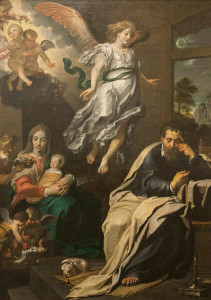
- His immediate yes to the angel:
We read in the first chapter of St. Matthew’s Gospel: “When Joseph awoke, he did as the angel of the Lord had commanded him and took his wife into his home.”
What courage it takes to answer God immediately, no questions asked! I am not saying we should make rash decisions, as careful discernment is required at times. But when we are sure that God is calling us to do something, we should not delay fulfilling what He wills.
Think about the HUGE responsibility that St. Joseph had as the spouse of Our Lady and foster father of God Himself! It takes true humility to accept such a role. It can be easy to play what I call the “false humility card” in thinking that we are not good enough to do something. Sometimes, though, God calls us to certain tasks that we think are beyond our power to accomplish. It’s true in that we are not capable of doing anything without God, but thinking we are not worthy does not make for a valid excuse in saying no. As St. Teresa of Avila says, “Humility is truth.” We know our weaknesses and strengths and should not be afraid to use these strengths! After all, “I can do all things through Christ who strengthens me!”
- His decision to divorce Our Lady quietly:
After finding out that Mary was pregnant, St. Joseph “unwilling to expose her to shame, decided to divorce her quietly.” (Matthew 1: 19)
This decision here proves that he really was a just man. He was obedient to the Law and knew very well that any woman caught in adultery was to be stoned to death. On the other hand, he may have seen something special in Mary that made him wonder how she could ever commit a sin. He knew her goodness and purity and truly loved her, so he did what was best for her. Something we can take from this is to love others for WHO THEY ARE. The more we understand human dignity, the easier this becomes.
Similar to Our Lady, St. Joseph was close to Jesus and so knows him very well. We can go to St. Joseph to better learn how to imitate Christ. St. Joseph, pray for us!!!
Feb 17, 2015 |
By Jenna Cooper, a consecrated virgin from the Archdiocese of New York.
Over the years, I’ve been privileged to be in touch with a number of women discerning vocations to consecrated virginity in the Catholic Church, with more than a few of these being former religious Sisters in the process of discerning their next step. Since consecrated virginity is not yet very well-known or well-understood, properly discerning a vocation to this particular form of consecrated life can be difficult for any woman. Yet I imagine it might present special challenges for those who have recently left a religious community.
Information and advice for former Sisters discerning consecrated virginity could fill several blog posts, but here are some basic points of consideration for anyone who finds herself in this position:
Not all women are called to be consecrated virgins.
While this may sound obvious and self-explanatory, I’ve heard of cases where a recent Sister is advised to discern a vocation to consecrated virginity by a priest, spiritual director, or former religious superior, even without anyone involved having much understanding of what the life and spirituality of a consecrated virgin actually entails. Other times, it seems women who have recently left convents consider becoming consecrated virgins almost reflexively, as though consecrated virginity were simply a sort of “catch all” category for unmarried women who needed to find a niche within the Church.
Yet consecrated virginity is not a general vocation which is categorically open to all the faithful, but is rather a relatively rare charism which results from a very specific call from God. Even a woman who meets all the canonical criteria to qualify for the consecration of virgins might not actually experience a true interior call to this way of life. And in some situations, there can be good pastoral reasons for advising women who are technically qualified to become consecrated virgins against discerning this vocation.
The upshot of all this is that no woman who has left a convent should feel in any way pressured or obligated to discern a vocation to consecrated virginity. As serious Catholics, we might sometimes be tempted to think that we should always be able to put ourselves into neat canonical boxes. But we need to remember that this is not the way that God thinks!
Our Lord loves and is pleased with everyone who sincerely seeks to do His will, regardless of whether or not one is settled into a permanent state in life. If a woman is truly called to be a consecrated virgin, this vocation will needed to be discerned on God’s time, and will come about solely as a result of His providential design and good pleasure.
Consecrated virginity is a distinct vocation in its own right.
Another common misunderstanding about consecrated virginity is that it is simply an “alternative vocation.” However, the charism of the Church’s ancient Order of Virgins is much more than simply “being dedicated to God, but without living in a convent.”
Consecrated virginity as a vocation actually pre-dates religious life by several centuries, and the spirituality of consecrated virginity is as unique as that of any religious family. For example, consecrated virginity as a form of consecrated life has a particular focus on the call to live as a bride of Christ, a special affinity with the Church’s early virgin-martyr saints, and a characteristic emphasis on the virtue of Christian virginity.
Consecrated virgins also have their own proper role and identity within the broader household of the Church. Through their consecration, consecrated virgins acquire a special bond with the local Church (and are therefore part of their home dioceses in a more “direct” way than religious, who are first and foremost members of their communities).
Likewise, consecrated virginity is also very different from simply making a private vow. A woman is consecrated as a virgin in a fully public liturgical rite, and from the day of their consecration consecrated virgins are called to bear a public evangelical witness.
Consecrated virginity has its own challenges
On the surface, a call to consecrated virginity might seem less demanding than a call to religious life, since consecrated virgins are not required to leave their homes and families or adhere to all the discipline inherent in community life. Still, my strong belief is that when a consecrated virgin is living out her consecrated life fully, this vocation is just as challenging as religious life, only in different specific ways.
One fairly obvious challenge inherent in the life of a consecrated virgin is the need for a great deal of self-motivation and self-discipline. Consecrated virgins are obligated to live serious lives of prayer (generally understood as the recitation of the Liturgy of the Hours, daily Mass in regions where this is possible, and daily time for private prayer), and they must be faithful to this even without the support of a community or the direct supervision of a superior.
Another significant challenge which is perhaps less readily apparent is the need for continual ongoing discernment. While canon law and the Rite of Consecration to a Life of Virginity call consecrated virgins to be dedicated to the service of the Church, the practical details of how this can be best lived out concretely are left to the discretion of an individual consecrated virgin and her bishop. On even a purely human level, this requires a great deal of prudence and personal maturity; spiritually, it also demands a certain kind of asceticism. Consecrated virgins need to cultivate a listening heart which is truly open to God’s will and sensitive to the actual needs of the local Church, which underscores the necessity of fostering a profound sense of interior detachment in order to serve God’s people generously and disinterestedly.
A general lack of understanding and support is another difficulty which, while not intrinsic to this vocation, is a hard reality for most consecrated virgins at this point in time. Very few dioceses have well-developed formation programs for those aspiring to consecrated virginity, and young consecrated virgins in many places often lack peers and role models. Additionally, today’s consecrated virgins are likely to encounter, at least occasionally, dismissive attitudes and insensitive comments from even good people within the Church.
Of course, a woman who truly has a vocation to consecrated virginity will be given the grace to cope with these challenges. Still, it is important for discerners to be aware of them.
To sum up:
Consecrated virginity, like any life-long commitment, is a decision which needs to be carefully and peacefully discerned. Many recent Sisters may find it helpful to learn more about consecrated virginity, while keeping in mind that not every former religious who inquires about becoming a consecrated virgin will find that this is where she is called. Yet at the same time, I would also imagine that some former Sisters may actually have been called to the charism of consecrated virginity all along, with their time in the convent serving as part of God’s providential plan for the discovery of their true vocation.
Jenna M. Cooper recently celebrated her sixth anniversary of as a consecrated virgin. She has degrees in philosophy, theology, and canon law, and she currently serves as a parish Director of Religious Education. Jenna writes a personal blog on consecrated virginity titled: “Sponsa Christi” (http://sponsa-christi.blogspot.com).
Jan 30, 2015 |
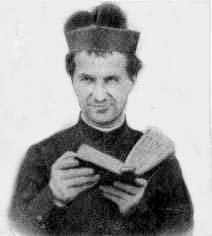
We praise You, Lord, for calling Saint John Bosco to be a loving father and prudent guide of the young. Give us his fervent zeal for souls and enable us to live for You alone. We make our prayer through Christ our Lord. Amen.
Jan 27, 2015 |
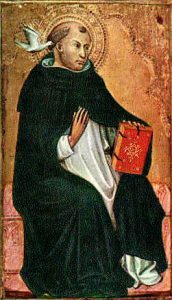
From a prayer by Saint Thomas Aquinas:
O Lord my God, make me obedient without complaining, poor without despondency, chaste without stain, patient without grumbling, humble without pretense, cheerful without dissipation, mature without undue heaviness, quick-minded without levity, fearful of Thee without abjectness, truthful without duplicity, devoted to good works without presumption, ready to correct my neighbor without arrogance, and to edify him by word and example without hypocrisy.
Grant me, Lord God, a watchful heart which shall be distracted from Thee by no vain thoughts; give me a generous heart which shall not be drawn downward by any unworthy affection; give me an upright heart which shall not be led astray by any perverse intention; give me a stout heart which shall not be crushed by any hardship; give me a free heart which shall not be enslaved by passion.
Bestow upon me, O Lord my God, an understanding that knows Thee, diligence in seeking Thee, wisdom in finding Thee, conversation pleasing to Thee, perseverance in faithfully waiting for Thee, and confidence in embracing Thee in the end. Grant that I may be chastised here by penance, that I may make good use of Thy gifts in this life by Thy grace, and that I may partake of Thy joys in the glory of heaven: Who livest and reignest, God, forever and ever. Amen.



 There was a custom in the community for the nuns, on their way to breakfast after Prime, to stop at the statue of Our Lady with the Holy Child in the long cloister, to say three Hail Mary’s there. Wimple the cat was impatient for her breakfast and she would walk among the kneeling figures, giving them small pushings with her head; one hand after another would come out, not to push her away but to stroke her. Wimple was perverse; she would come into the refectory through the ever-opening service door and walk through the room to the other, demanding to be let out. Unlike Grock’s, Wimple’s miaow was piercing and could, at dinner and supper, interrupt the reader so that Sister Xaviera who doted on Wimple would get up and let her out. In a moment or two, the little cat would walk back in at the service door again. (From In This House of Brede, by Rumer Godden.)
 that would sun themselves on the window frames outside the chapel every morning. During the first week of Lent, I got busted: the Prioress gave us a sheet of paper on which to keep a diary of our meditation topics, and I had to ‘fess up and ask her, “Is there enough space to write, ‘Started meditating on Soul of My Saviour, and ended up watching lizards climbing the wall outside”? (At least I tried to keep in mind Saint Teresa of Avila’s image of the soul as a little lizard basking in the light of God. That’s kind of on topic, right?)

 By Maria Jacinta.
 ather of God Himself! It takes true humility to accept such a role. It can be easy to play what I call the “false humility card” in thinking that we are not good enough to do something. Sometimes, though, God calls us to certain tasks that we think are beyond our power to accomplish. It’s true in that we are not capable of doing anything without God, but thinking we are not worthy does not make for a valid excuse in saying no. As St. Teresa of Avila says, “Humility is truth.” We know our weaknesses and strengths and should not be afraid to use these strengths! After all, “I can do all things through Christ who strengthens me!”
 By Jenna Cooper, a consecrated virgin from the Archdiocese of New York.
 We praise You, Lord, for calling Saint John Bosco to be a loving father and prudent guide of the young. Give us his fervent zeal for souls and enable us to live for You alone. We make our prayer through Christ our Lord. Amen.
 From a prayer by Saint Thomas Aquinas:
Recent Comments